
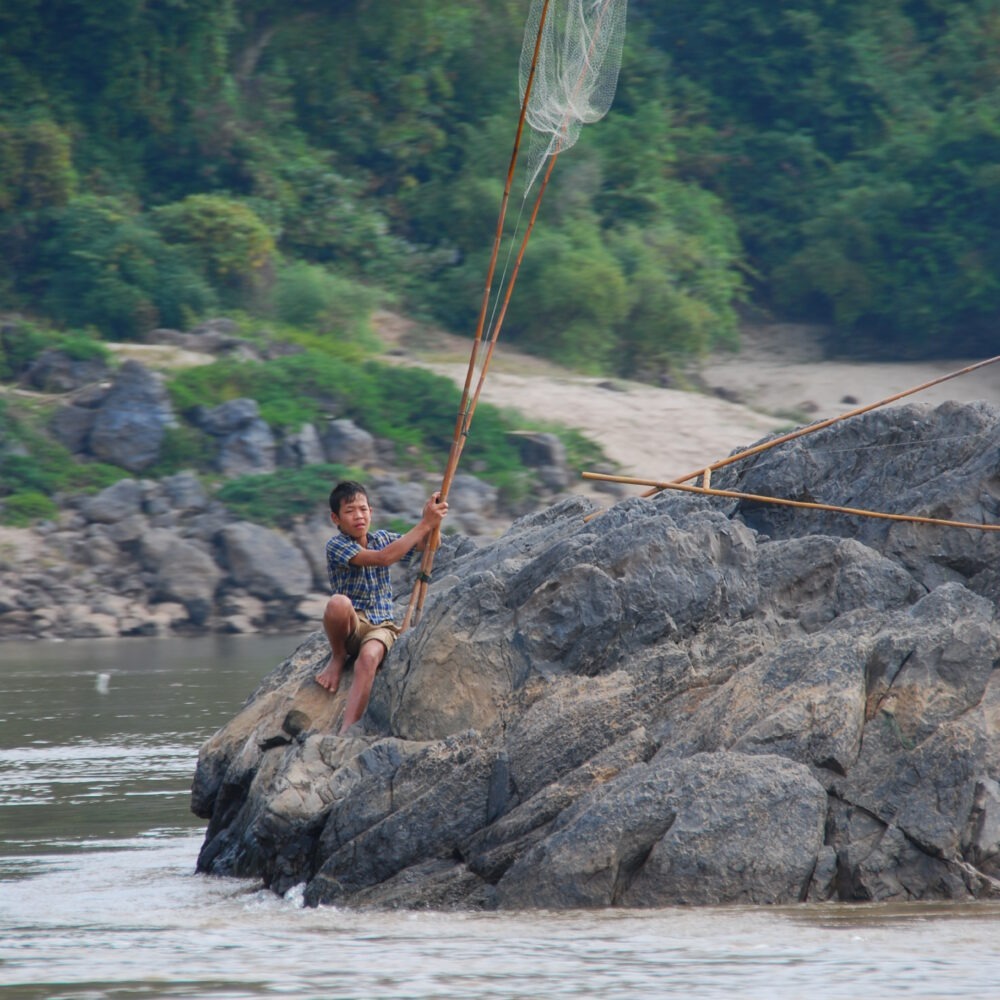
Most people who walk the Manaslu Circuit Trek never once think about what’s swimming underneath them.
The trail is in the remote Gorkha District of north-central Nepal, northwest of Kathmandu and near the Tibetan border. It follows the Budhi Gandaki almost the whole way north out of Soti Khola, crossing it on suspension bridges a dozen times before the route finally breaks off toward Larkya La. For most trekkers, that river is just scenery; loud, grey green, and something to photograph from a bridge and forget.
But, that would be missing out greatly.
The Budhi Gandaki carries a real spread of fish from the lowlands up past 2,600 meters, and the water changes character almost village by village, which means what’s likely to be on the end of your line changes too.
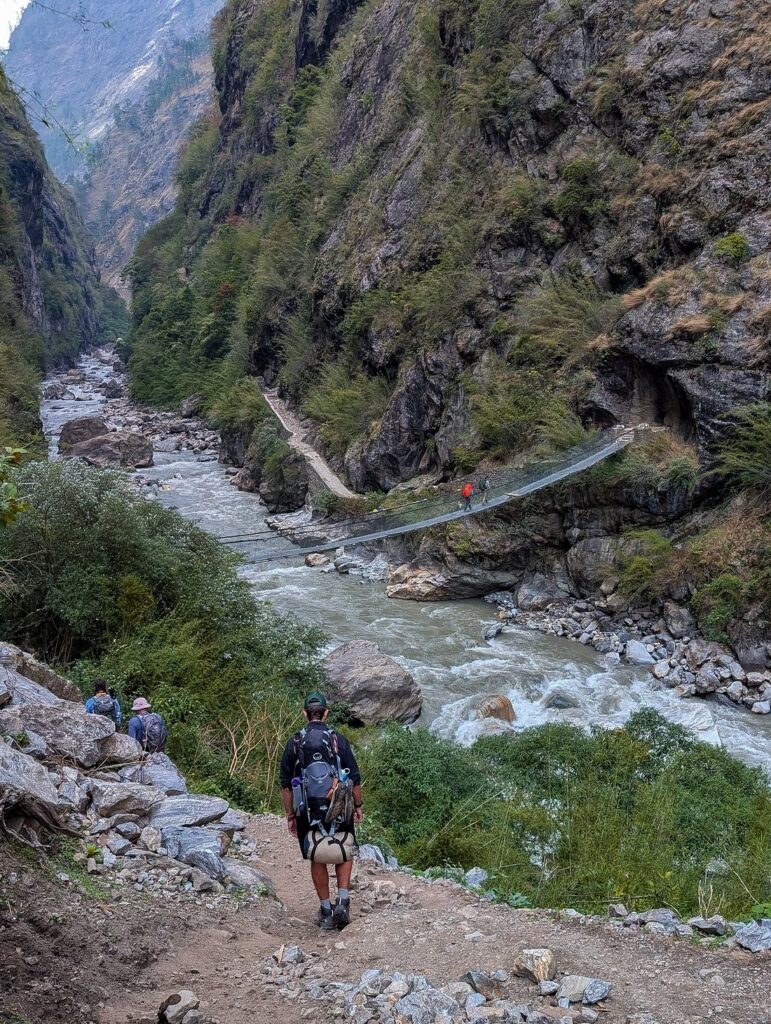
The Manaslu Circuit Trek crosses many suspension bridges, over water below that holds some little known fishing opportunities.
Machha Khola and the Lower River
Machha Khola sits low enough, and the river’s still wide and slow enough through there, that this is mahseer water. Locals will tell you the village’s name gives it away. “Machha” means fish, and the pools below town have a reputation for holding them. Catfish and freshwater eel turn up in the slower, deeper stretches as well, especially near where smaller side streams dump into the main channel. This is the warmest, most forgiving water on the whole route, and it’s also the easiest to reach. Most trekkers pass through on day one, often without realizing the river they crossed an hour out of Soti Khola is considered one of the better mahseer stretches in the Manaslu region.
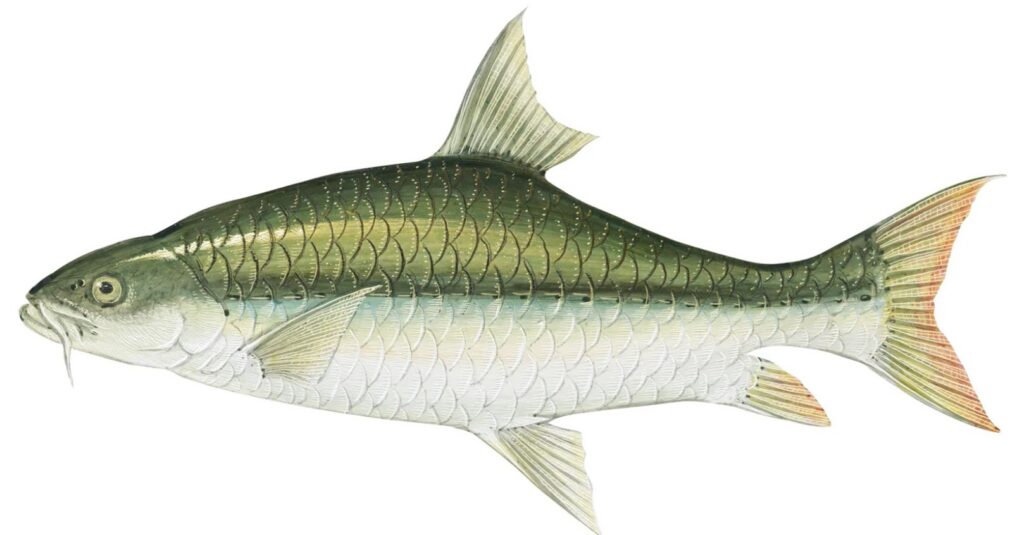
Soti Khola is a great area for mahseer fishing. (photo credit: Encyclopaedia Britannica)
Jagat and the Gorge Water
By the time the river reaches Jagat, the valley has tightened up considerably. The Budhi Gandaki here runs faster and colder, squeezed through a narrower gorge with less of the slow, sandy-bottomed water that mahseer prefer. This is the rough transition zone; you’ll still find mahseer in pockets, but snow trout, known locally as asala, start showing up more consistently as the elevation climbs and the temperature drops. The fishing here is more difficult, as is the wading. The current isn’t forgiving if you’re not paying attention. It’s also one of the more visually dramatic stretches, with the trail cut directly into rock above the water in places.
-
N1 Outdoors® “Sunset Mountain” Pullover Hoodie
$34.00 -
N1 Outdoors® Mountain Colors Tee (Various Colors)
Price range: $24.99 through $28.99 -
“Edge of the Outdoors™” Tee featuring Tuffhead Evolution Broadhead (Various)
Price range: $24.99 through $28.99
Deng and the Shift to Snow Trout
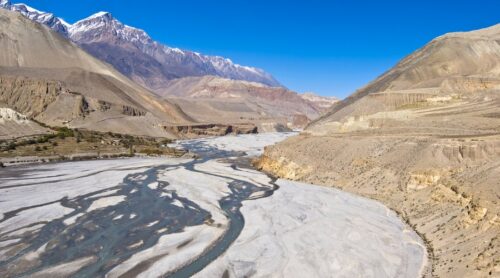
Glacial melt from the higher elevations feed portions of the Budhi Gandaki river.
Past Deng, the lowland species mostly fall away. The water’s noticeably colder by now, fed more directly by glacial melt than by the warmer tributaries lower down, and asala becomes the fish you’re actually targeting rather than something you stumble into. Snow trout in this stretch tend to hold in the slack water behind boulders and in the deeper pools where the current breaks, which is true of most fast Himalayan rivers. Find the seam between fast and slow water, and that’s usually where the fish are sitting. The river through here is narrower than it is down at Machha Khola, but it hasn’t lost any of its force.
Namrung and the High Water
Namrung marks a real shift, not just in elevation, but also in how the river behaves. The Budhi Gandaki splits and braids more here, and several smaller streams feed in from side valleys, each one worth a look if you’ve got the time to wander off the main trail for an hour.
The water’s cold enough by this point that asala are the only realistic target, and they’re smaller and warier than what you’ll find lower down. These fish have spent their whole lives in thin, fast, oxygen-rich water, and they don’t sit still for long. Past Namrung, the trail and the river start to separate as the route climbs toward Lho and Samagaon. Serious fishing more or less ends here, with the upper valley rivers running too cold and too thin to hold much of anything.

What This Means for a Trip
None of this requires a separate trip. The Manaslu Circuit Trek already follows the river for the first several days. This means a rod, a handful of flies or lures, and maybe an extra hour at the end of a trekking day is really all it takes to fish four completely different stretches of water on one walk.
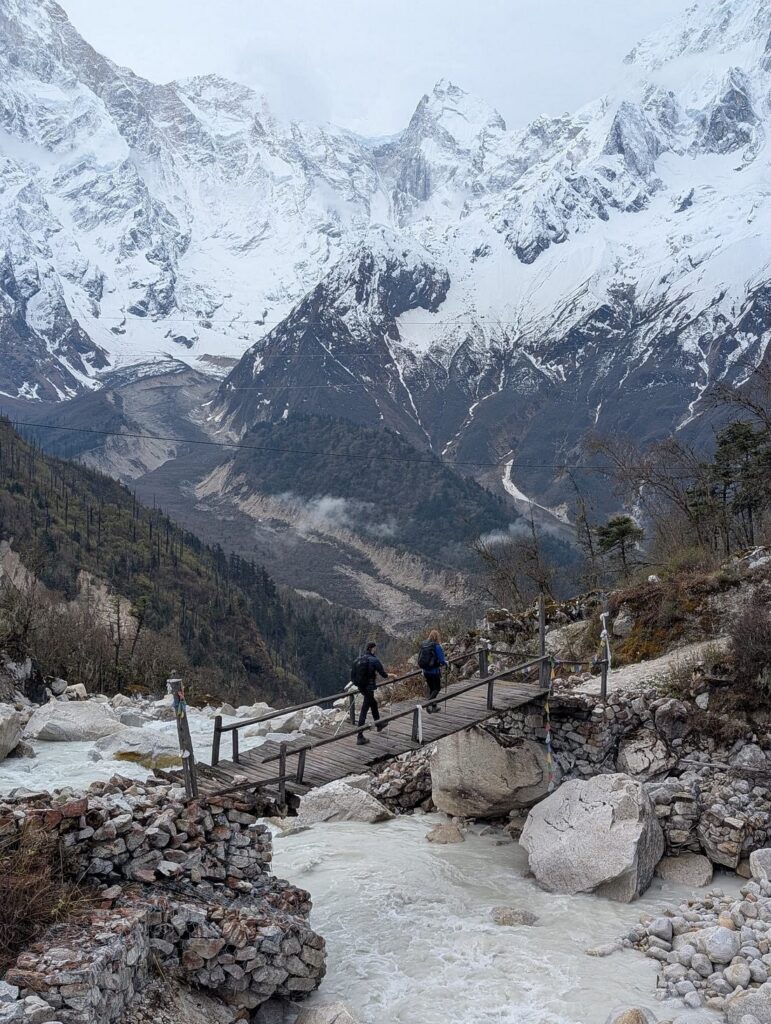
The Budhi Gandaki isn’t going to show up on anyone’s list of the world’s great fisheries, and it shouldn’t. What it offers instead is something harder to plan for, four or five days of genuinely different water, run by a river most anglers will only ever cross on a swinging bridge, on a trail that was never built with fishing in mind.
Permits matter here, as fishing in Nepal’s rivers generally requires a license. And, inside the Manaslu Conservation Area, there are additional rules worth checking before you go. It’s worth sorting that out in Kathmandu rather than assuming you can fish wherever the trail happens to cross the river. Locals along the route fish with hand lines and net traps more often than rods, and most are happy to point out where they’ve had luck if you ask.
For anyone walking the Manaslu Circuit Trek with a rod tucked into their pack, that’s not a bad trade at all.