

For people of larger body types, finding the perfect concealed carry holster is an even bigger problem (no pun intended) than it is for others.
But, regardless of body type, there are some key things you need to consider when choosing a holster:
- how comfortable is this holster?
- Is it easy to access? (Will I have trouble drawing my firearm from it?)
- Can I effectively hide it from view (thus, the term “concealed carry?”)
Unfortunately, most concealed carry holsters available today do little to help someone who has a larger frame that is trying to address the above considerations.
So, the goal of this article is to assist in making better choices when looking at a concealed carry holsters for larger framed individuals. We’ll provide helpful tips and recommendations for your best duty holsters, as well as what other options may work for you.
Addressing Unique Concealed Carry Challenges
Holster fit and function are influenced by body type, fashion choices, and daily activity. Carrying a firearm for personal protection, or as part of one’s job, requires having confidence in carrying it safely, out of sight, and with the ability to access it quickly, if needed.
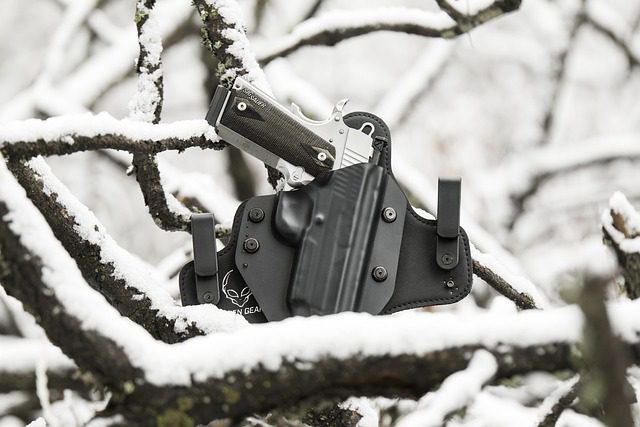
Holster fit becomes extremely important with larger body types. The ability to access a firearm quickly and keep it concealed, all while staying comfortable is key.
Common problems experienced with holsters, especially those worn by larger persons, consist of the side being pressed upon by the holster; printing (the outline of the firearm visible through clothing); the holster moving around during normal movement, and difficulty in drawing the weapon rapidly if necessary. Not only do these situations cause discomfort, but can also create unsafe conditions. Thus, determining your individual requirements will be the first step in making an informed decision.
Priorities When Choosing a Holster
The most important characteristics for the best large duty holsters include:
- Comfort: Duty holsters need to be comfortable enough so that they can be worn for extended periods.
- Accessibility: It’s imperative to have a good method of drawing the gun out of the holster (quick and easy).
- Retention: Safety comes first, which means you want your duty holster to have an effective retention mechanism so that it does not allow the gun to accidentally discharge when you’re not wanting it to or if someone else gets a hold of it.
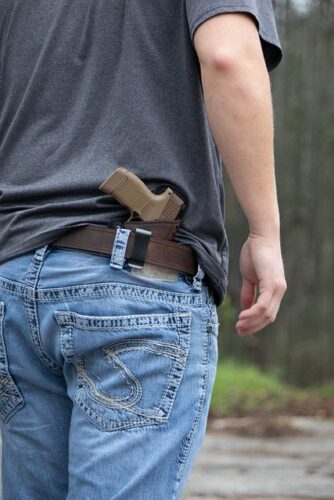
- Concealment: If you would like to conceal your firearm (wear it on your person), then you’ll need a holster that will help keep it from “printing” as much as possible and also remain concealed under all varieties of clothing.
- Adjustability: As there are many different body types, adjustable features such as cant, ride height, and compatibility with belts will greatly enhance the ability to customize the fit of the holster to better match your needs.
Types of Concealed Carry Holsters to Consider
For bigger individuals, there are particular holster designs that tend to do well versus others. This is an overview of what experts would recommend you consider:
Inside The WaistBand (IWB) Holster Designs:
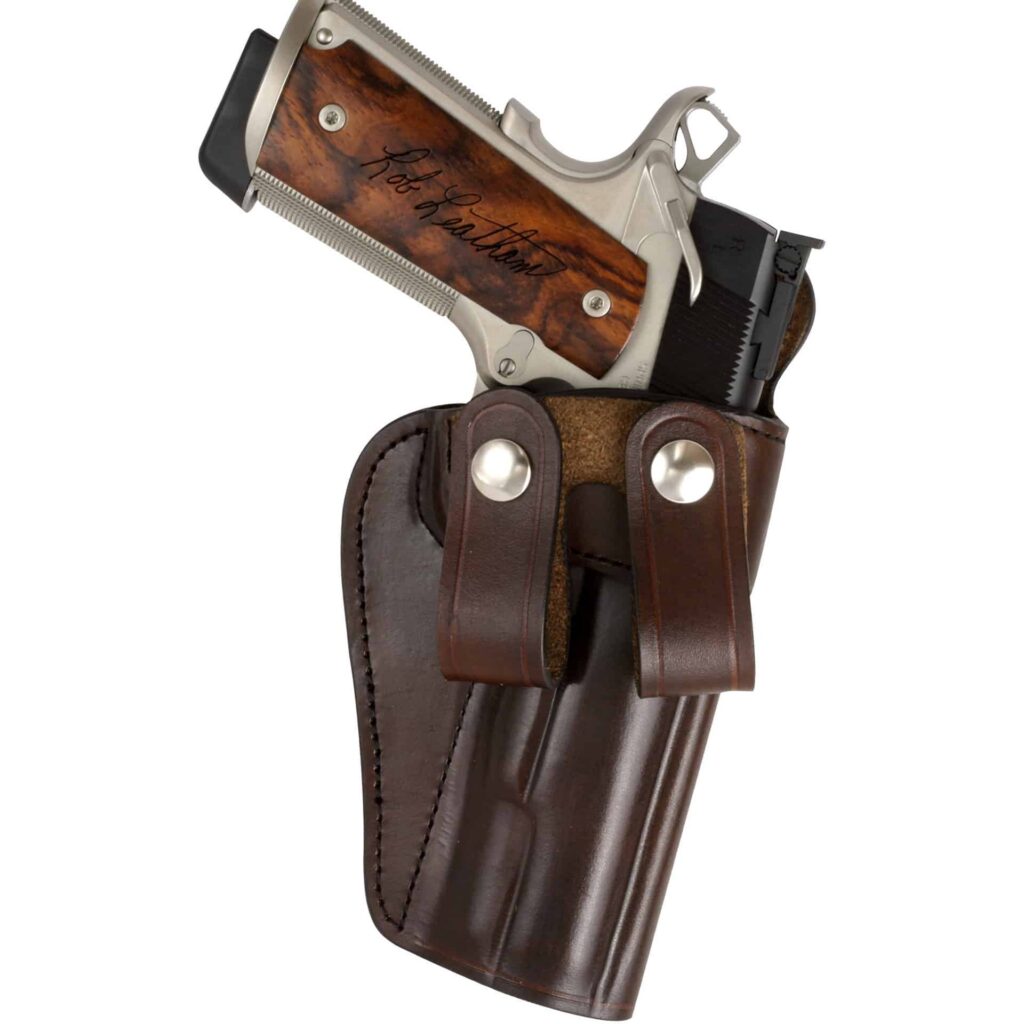
As the name suggests, Inside the WaistBand (IWB) holsters are typically worn inside your waistline, close to your body. For heavier people, it’s worth looking into IWB holsters with longer sweat guards and wider clips to help spread the weight so they don’t dig into your skin. Also, hybrid holsters have been shown to be great options because they use a combination of a rigid shell and either a leather or neoprene backing that provides both comfort and retention.
Outside The WaistBand (OWB)Holsters
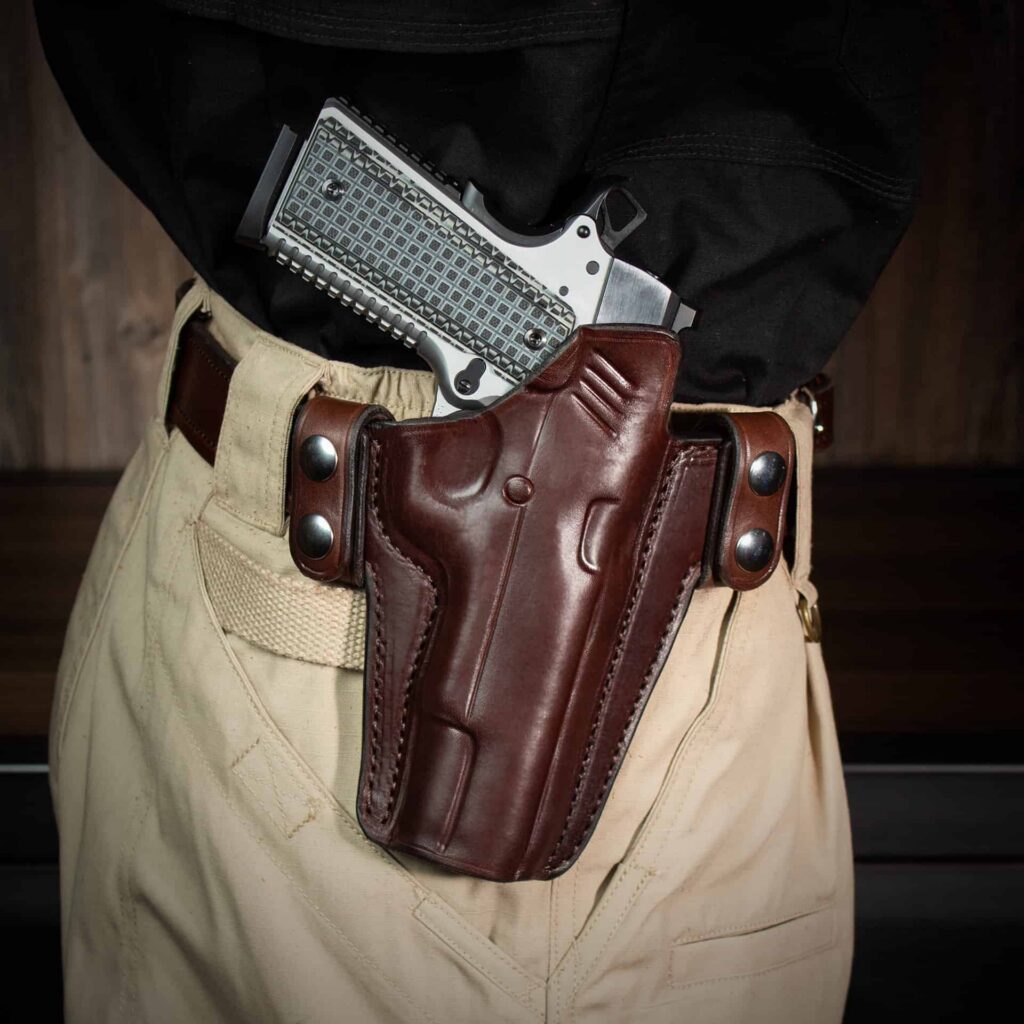
Generally less concealing, but OWB holsters can be a viable option if you wear loose-fitting clothing such as a shirt or jacket. OWB holsters also provide easy access and will typically not apply pressure directly on the body.
Appendix Carry Holsters
Popular appendix carry IWB holsters allow for extremely fast access. However, for those who are larger due to a larger stomach, this style may need to be positioned carefully, and you should opt for a very comfortable design, since the added bulk from the holster can create discomfort while seated.
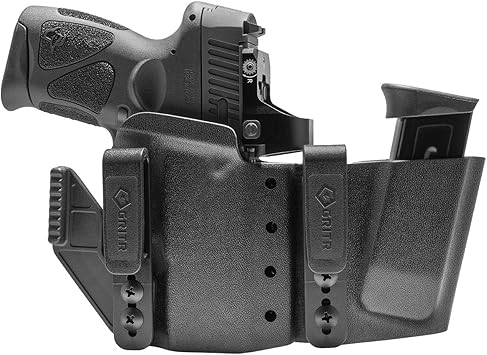
Shoulder Holster Designs
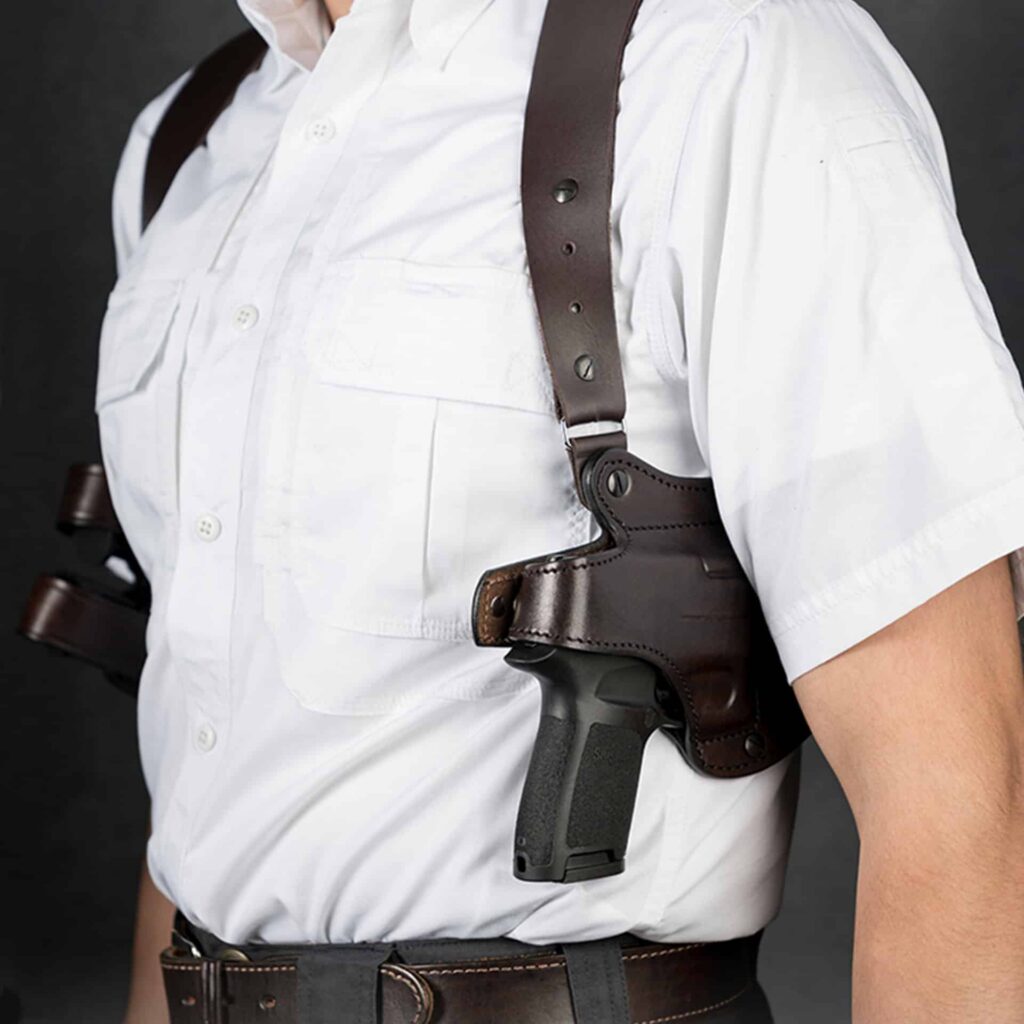
Shoulder holsters distribute the weight of the firearm across the top of your shoulders. Some larger folks find shoulder holsters to be a comfortable way to carry a firearm during prolonged sitting. However, proper covering is required.
Belly Band Holster Designs
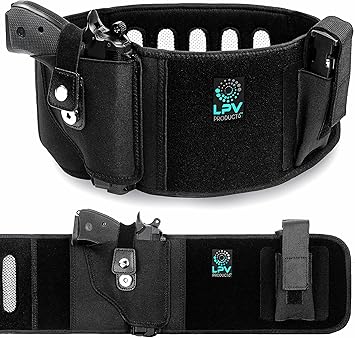
Belly bands are a type of wide, adjustable band that you wrap around your midsection. Because belly bands come in various sizes, they can provide flexibility for carrying a firearm regardless of size and/or position. However, the band may become damp with sweat and is particularly uncomfortable in warmer climates.

Key Features of the Best Duty Holsters
Regardless of your body type and size, selecting the best duty holsters will require an evaluation of how each feature improves both your comfort and performance.
- A Wide Backing Plate or Base: The backing plate on a holster gives a wide area to distribute the weight/pressure of the holster, therefore giving less chance of creating blisters, and/or slippage.
- Soft Lining and a Sweat Guard: Using materials such as Neoprene (a soft rubber), Ventilated Foam, etc., can greatly reduce chaffing and prevent sweat/moisture from coming into contact with the gun/skin.
- Adjustable Clips: Adjustable clips allow you to adjust the ride height/cant of the holster, allowing you to place the holster where it feels most comfortable for optimal concealment/access.
- Retention Devices: Retention devices come in many forms, including adjustable retention screw(s) and thumb break(s). These types of retention mechanisms allow you to control how much friction is put onto your gun while keeping it securely attached until you choose to release it.
- Compatibility With Belt Widths: If you are using a larger/heavier belt, then you will be able to get greater support/stability from a holster that is made for that type of belt.
Practical Tips for Everyday Comfort and Concealment
Practical concealed carry tips and tricks for everyday life. Comfort & concealment work together. Here are some practical concealed carry tips from people who have been carrying for years & firearm instructors:
- Choose a good gun belt: A gun belt needs to be strong enough to hold your firearm as well as your holster. Most standard belts will sag when you’re wearing a large frame, so it makes it harder to stay comfortable while concealing.
- Mind what type of shirts you wear: When choosing what type of shirt to wear for conceal carry, choose one that’s about an inch or two longer at the bottom than you normally would. Also, choose something that has patterns on it. They hide the outline of the weapon better than solid colored shirts. Darker colors are best for this reason, too. If you want to add an extra layer over the top of your shirt for additional concealment, use a jacket or overshirt.
- Find out what position is best for you to carry at: Many times, there is more than just one way to carry a weapon. Try each of the three most common ways to see which works best for you: 3 o’clock, 4 o’clock, and an appendix. Each style is very different; however, many duty holsters allow you to adjust how high the weapon sits, so you can experiment with different styles if needed.
- Consider the Material of the holster: While some types of Material such as Kydex, are great for retaining the weapon,n they can also be stiff against the body. Leather and hybrid holsters can provide a softer surface against the skin, especially during long periods of time when worn.
- Regular Practice: Regardless of what type of holster you end up using, regularly practicing drawing and re-holstering is important. Large-sized people may need to develop specific techniques for accessing the weapon from whatever location they’ve decided to carry it from, in order to get the weapon out as quickly and safely as possible.
The Role of the Best Duty Holsters in Professional Settings
For law enforcement officers, security personnel, etc., who have to carry a firearm as part of their occupation, the decision about which holster to use has significant implications. In terms of larger-built working professionals, the ideal duty holster will also be capable of meeting the same criteria listed above, but will need to put an emphasis on durability and retention.
Duty holsters are typically exposed to greater amounts of physical stress and potentially life-threatening confrontation than concealed carriers. Duty holsters should provide adequate retention capabilities (i.e., locking mechanism or level II/III retention).
Additionally, many departments and/or agencies have minimum requirements for various aspects of equipment, including holsters. Therefore, it is important to find a holster that meets your individual comfort needs as well as the safety needs associated with your position.
What Experienced Carriers Recommend
Many experienced carriers who wear large frame guns will tell you, is that each of us is different, and may need to try many different holster styles and manufacturers before we find one that fits our needs. That being said, some manufacturers seem to have an edge over others when it comes to producing holsters for larger individuals.
The fact that this article does not endorse a particular product is no reason to dismiss looking for wide, contoured, adjustable holsters and reading reviews written by people who own firearms that are very close in size and shape to your own. Peers will likely encourage you to begin with either a hybrid IWB (Inside Waistband) or high-riding OWB (Outside the Waistband), and then adjust from there based upon your daily routine, the type of clothing you most commonly wear, and your firearm model.
Finding The Best Safe Firearm Concealment for Fat Guys
Finding the Best concealed carry holster for big guys (and women) isn’t simply choosing the first one you find; it is about discovering a holster that will provide you with a comfortable and safe place for your firearm, as well as an easy way to get to your firearm when needed. A good duty holster will be able to accomplish this by combining all three (comfort, concealment, accessibility) and allow you to perform reliably in either a self-defense situation or while on duty.