
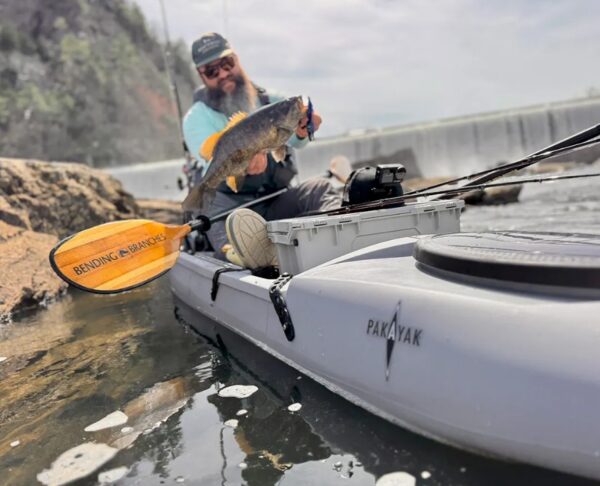
Owning a fishing kayak has traditionally meant solving a storage and transport problem first. Conventional fishing kayaks commonly measure around 10 to 14 feet, and many require a roof rack, trailer, or truck bed to move, plus a garage or outdoor rack to store it once you’re back home. For anglers in apartments, condos, or smaller homes, that physical footprint is often the single biggest barrier to owning an extremely useful watercraft that will get you out on the water doing what they love.
But now, a new category has been developed to specifically address the problem of storage space: the packable fishing kayak.
These boats are designed to be disassembled, compressed, or folded into a compact form for transport and storage, then reassembled or inflated at the launch site.
So, let’s take a closer look at exactly what a packable fishing kayak is, and cover the various types.
What Is a Packable Fishing Kayak?
“Packable fishing kayak” covers several distinct design types of kayaks that share one common goal, reducing the transport and storage footprint of a full-size fishing kayak, but accomplish it in meaningfully different ways.
Understanding which type of packable kayak you’re evaluating matters, because the tradeoffs are category-specific, not universal.
Sectional hard-shell kayaks are built from multiple rigid sections that connect at the water’s edge using clamping systems, with seals or gaskets at each joint designed to prevent water intrusion. When disassembled, the sections nest inside each other, reducing overall length considerably. On the water, a properly assembled sectional kayak behaves like a conventional hard-shell because structurally it is one.
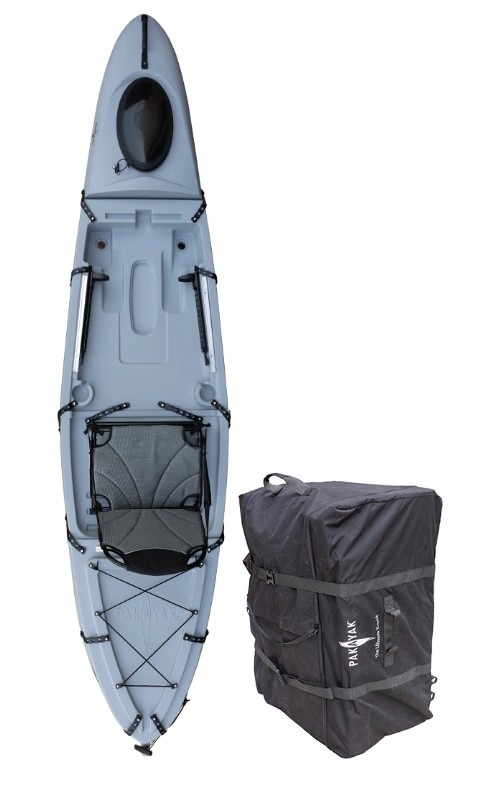
Sectional hard shell kayaks utilize rigid, connectable sections, that when disassembled, will nest inside each other, creating a smaller footprint.
One example of the sectional hard-shell approach is the Pakayak AnglerFish, a hard-shell sit-on-top fishing kayak designed to separate into sections for compact transport and storage.
Inflatable kayaks are the most widely recognized packable option. Modern drop-stitch designs are considerably stiffer than older models and deflate into a bag for easy transport. They’re generally less expensive than sectional hard-shells, though their tradeoffs differ.
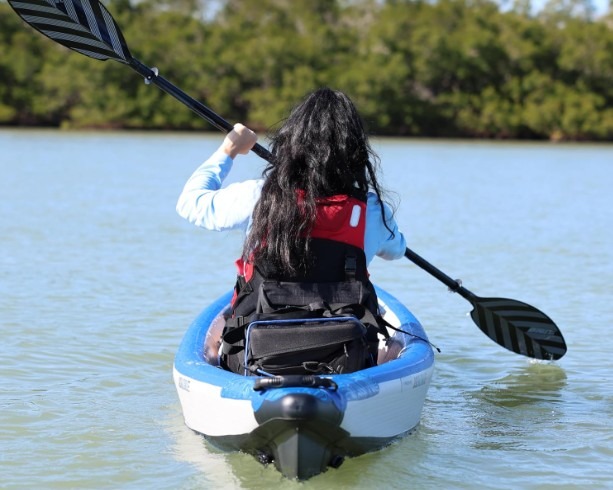
Inflatable doesn’t necessarily mean “flimsy,” as newer designs of this type of packable kayak are surpisingly stiff.
Folding kayaks use a rigid internal frame combined with a fabric or composite skin. They pack down well and have a long history in expedition and touring paddling, though most folding designs are oriented toward touring rather than fishing.
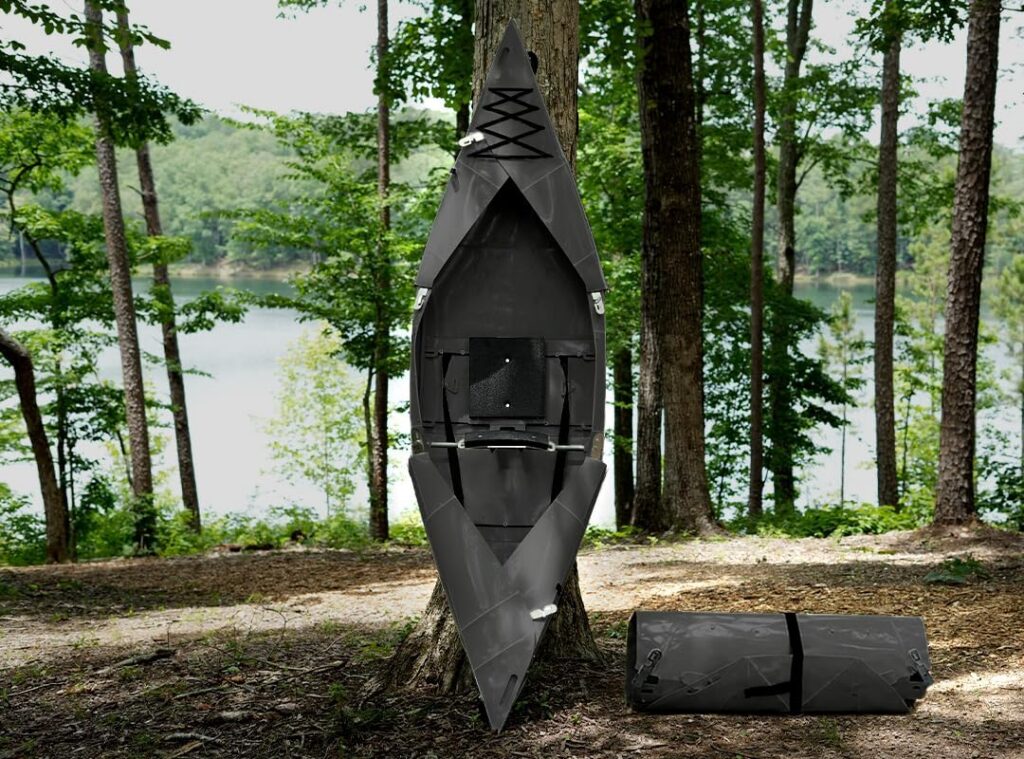
Foldable kayaks have a rigid frame and are typical made from fabric or composite skin.
Why Anglers Consider Packable Kayaks
The appeal of a packable fishing kayak usually comes down to one or more of these practical situations.
Transportation constraints: Not every angler drives a truck or SUV with a roof rack. A packable kayak can travel in a trunk, back seat, or hatchback cargo area, opening kayak fishing to anglers who previously had no practical way to move a conventional boat.
Storage limitations: Apartment living, condo rules, or lacking garage space are common reasons anglers can’t own a traditional kayak, or end up storing it somewhere inconvenient. A kayak that fits in a closet changes that calculation.
Solo handling: A heavy, 12-foot kayak is awkward to move alone, especially onto a roof rack. Sectional designs break the boat into smaller, more manageable pieces, something relevant for older anglers or those with physical limitations.
Remote launch access: Some productive fishing spots are accessible on foot but not by boat ramp. Carrying or wheeling a kayak to a remote entry point, and assembling there, can mean access to water that sees far less pressure.
Occasional use: For anglers who fish a handful of times per season, the logistics of a full-size kayak can outweigh the value of ownership. A kayak that lives in a bag and comes out when needed is a lot easier to justify.
What Are the Tradeoffs?

No packable kayak is without compromise. Understanding the limitations is as important as the benefits.
Weight: Packable does not mean lightweight. Many sectional hard-shell fishing kayaks weigh similarly to a traditional hard-shell. The advantage is that weight is distributed across sections that can be moved separately, but anglers who assume “packable” means “easy to carry solo” should verify the specific model’s total system weight first.
Assembly time and learning curve: Every packable kayak requires setup at the launch. Assembly time varies significantly by design. Some sectional systems come together relatively quickly once the user knows the process; others take longer. First-time assembly will almost always take more time than subsequent setups.
Connection system maintenance: Clamps, seals, gaskets, and frame joints require periodic inspection according to the manufacturer’s recommendations. In a one-piece kayak there’s nothing to maintain structurally. However, in a sectional or folding design, the connection points are the most critical part of the system.
Cost: Sectional hard-shell engineering comes at a premium compared with one-piece recreational fishing kayaks. Anglers on a tighter budget should weigh whether the portability benefit genuinely justifies the price difference for their situation.
Performance: A well-designed sectional kayak can provide many of the on-water characteristics anglers expect from a rigid hard-shell, but performance varies by hull design. So, evaluate each model’s hull shape, width, and weight distribution independently rather than assuming all sectional designs perform identically.
Packable Fishing Kayaks vs. Other Designs
| Feature | Sectional Hard-Shell | Traditional Hard-Shell | Inflatable | Folding |
| Hull construction | Rigid sections | One-piece rigid | Air/drop-stitch | Frame + skin |
| Transport | Compact when nested | Roof rack or trailer typically required | Very compact | Compact when packed |
| Storage footprint | Small when nested | Large | Small when deflated | Small when packed |
| Setup at launch | Assembly required | Minimal | Inflation required | Assembly required |
| Rigidity | Generally high | Generally high | Varies by design | Varies by design |
| Puncture/damage risk | Low | Low | Higher | Moderate |
| Cost range | Premium | Wide range | Wide range | Mid to premium |
No category of packable kayak is universally better than the other. Everything is a tradeoff, and the right choice depends on how you travel, where you fish, how much storage you have, and how much setup you’re willing to do.
Fishing shirts for every kayak angler
-
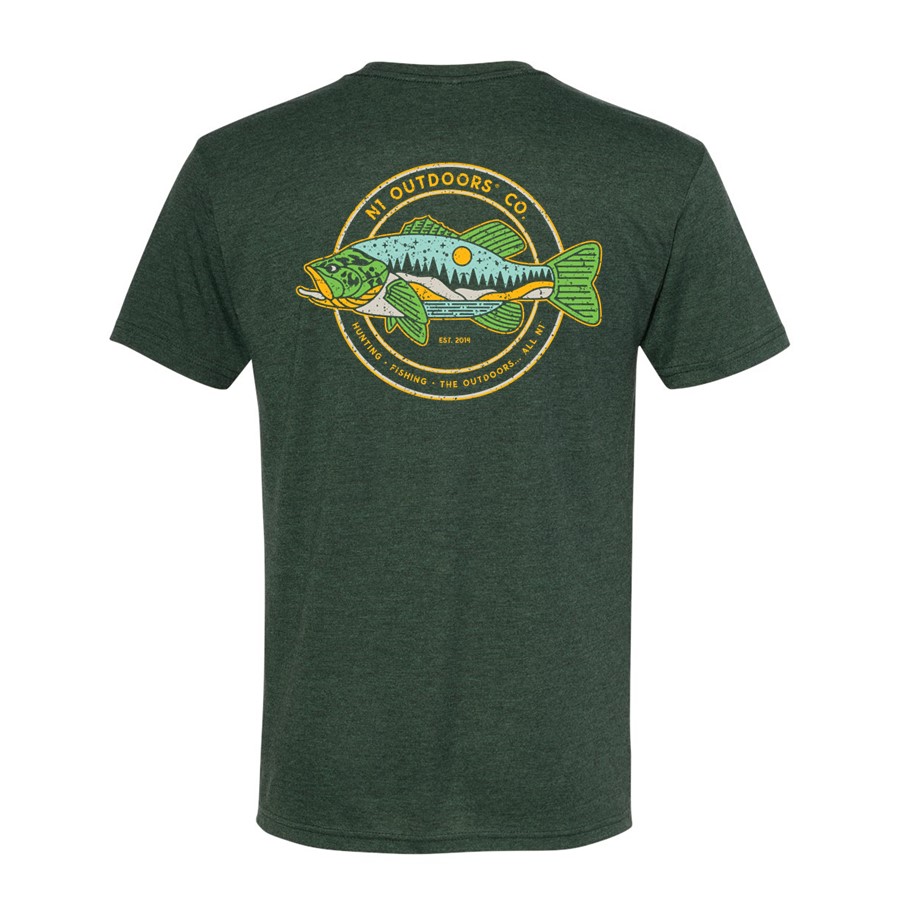
N1 Outdoors® Fishscape™ Outdoor Tee
Price range: $28.99 through $32.99 -
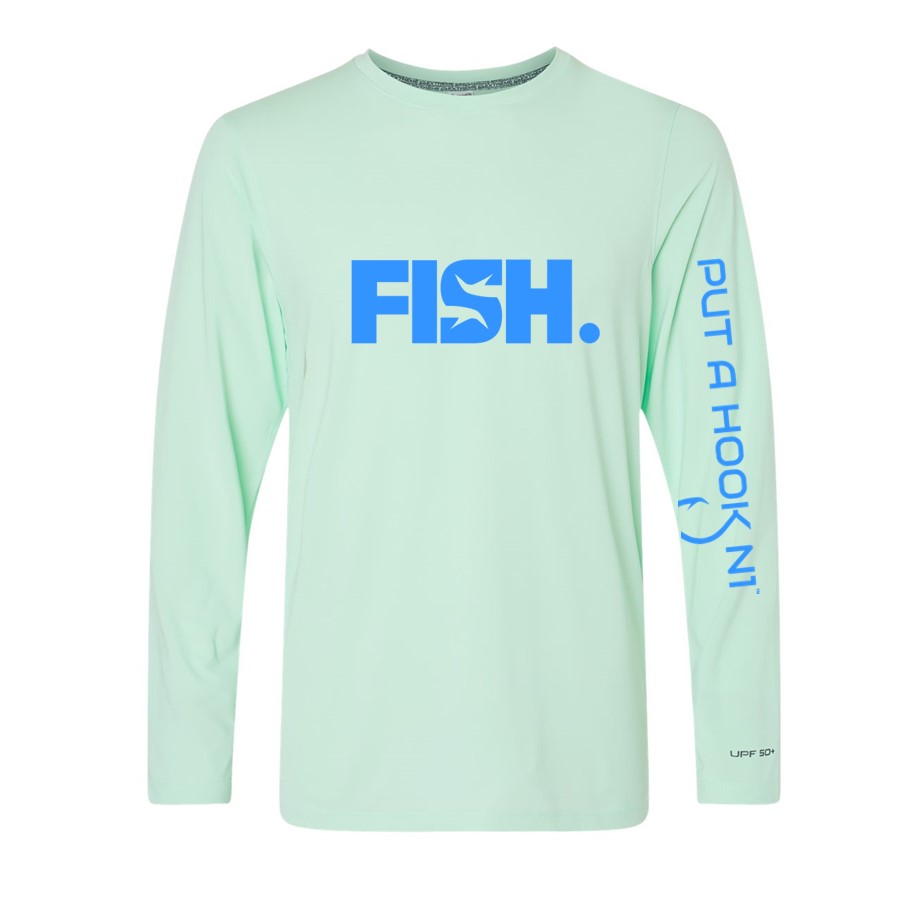
N1 Outdoors® FISH. Performance UPF 50+ Shirt
Price range: $37.99 through $39.99 -
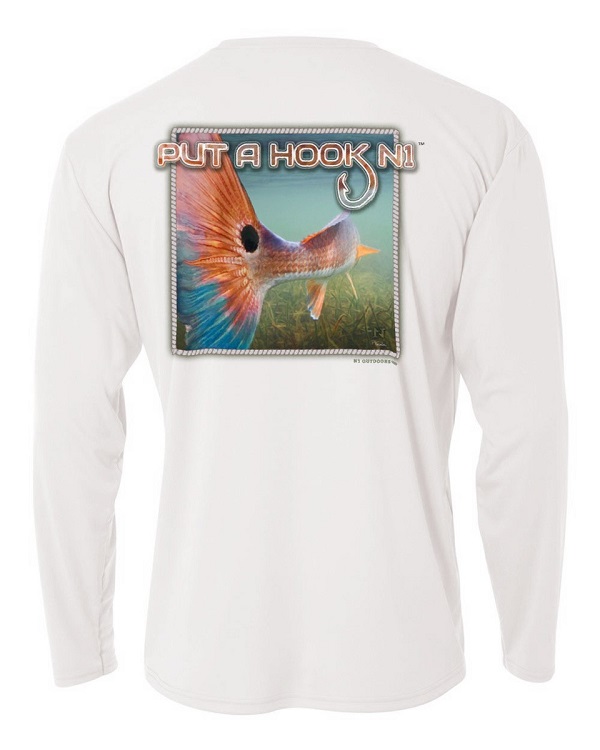
Put a Hook N1™ UPF 50+ Redfish Performance Fishing Shirt
$15.00
What to Look for When Comparing Models
Once you’ve decided the packable category that fits your situation, here’s what to evaluate.
Connection system: In a sectional kayak, this is the most critical technical consideration. Look at how sections connect, what materials are used for the seals and clamps, and what maintenance the manufacturer recommends.
Actual packed dimensions: Focus on packed dimensions (length, width and footprint), measured against your actual boat storage space and vehicle. Don’t assume “fits in a car” means it will fit in your specific vehicle without checking.
Total system weight: Factor in the bag, wheels, and accessories. Consider whether each section can be carried separately and how far you’ll carry them from vehicle to water.
Fishing-specific outfitting: Not all packable kayaks are designed with anglers in mind. Look for rod holder mounting points, gear track compatibility, tackle storage, transducer mounting options, seat adjustability, and foot peg range.
Stability for your style: If you fish standing, look for models with reinforced floor decks and wider beam dimensions. If you fish seated, hull stability during casting and fighting fish matters more. Independent owner reviews are typically more reliable than manufacturer claims alone.
Propulsion options: Some models come in paddle-only or pedal-drive configurations; some are compatible with aftermarket electric motors. So, if hands-free propulsion matters for your style of fishing, be sure to verify compatibility before purchasing.
Who Should Consider a Packable Fishing Kayak?
Anglers without dedicated storage: Apartment dwellers and condo owners who want a legitimate fishing kayak but have no practical place to keep one.
Anglers with limited vehicle options: Those driving sedans or smaller crossovers without roof rack compatibility who don’t want to invest in a truck for towing a separate setup.
Road-trip anglers: Those who travel between fishing locations and want to bring a kayak without committing to a trailer.
RV owners and boaters: Anglers who travel extensively and want a fishing kayak that fits within an existing vehicle without significant storage overhead.
Anglers targeting hard-to-reach water: Remote rivers, small lakes, tidal marshes, and backcountry locations requiring a carry-in approach suit a kayak that assembles at the bank.
Anglers returning to the sport: People who stepped back partly because a full-size kayak became too difficult to manage, and who want a setup that fits their current situation.


Frequently Asked Questions About Packable Fishing Kayaks
What is a packable fishing kayak? A kayak designed to break down, deflate, or fold for transport and storage, then be assembled or inflated at the water. The category includes sectional hard-shells, inflatables, and folding kayaks, each with different performance and maintenance characteristics.
Are packable fishing kayaks stable enough for serious fishing? Stability depends on the specific hull design, beam width, and weight distribution of each model, the same variables that determine stability in any kayak. Some packable designs are built specifically for stand-up fishing. Demo the kayak in conditions similar to your intended use where possible.
Can a full-size fishing kayak really fit inside a car? Some can. Always verify the specific model’s packed dimensions against your actual vehicle cargo area before purchasing.
How much assembly is involved at the launch? It depends on the design. Inflatables require inflation with a pump. Sectional hard-shells require connecting sections and securing the clamping system, time varies by model and improves with practice. First-time assembly always takes longer. Neither type typically requires tools.
Which Type Makes Sense for Your Situation?
If the comparison table above left you between two options, this quick framework can help narrow it down.
| If your priority is… | Consider… |
| Hard-shell performance with compact storage | Sectional hard-shell |
| Lowest packed weight and volume | Inflatable |
| Occasional use with minimal maintenance | Traditional hard-shell if storage allows; inflatable if it doesn’t |
| Frame-based portability for touring water | Folding kayak |
| Fishing-specific rigid platform with portability | Sectional fishing kayak |
No single answer fits every situation. But knowing which tradeoff matters most to you, performance, weight, cost, or maintenance, usually points clearly toward one category.
Is a Packable Fishing Kayak Right for You?
Whether a packable kayak is right for you comes down to honestly answering a few specific questions: How do you get to the water? Where do you store gear at home? How often do you fish, and how much setup are you willing to do?
For anglers whose answers point to a transport or storage problem, a packable design may open up opportunities a conventional kayak simply can’t. For anglers with a truck, a garage, and a straightforward drive to their launch, a traditional hard-shell may still make more sense. The goal is matching the kayak to the life you actually have.
Whatever type kayak you choose, good luck out there, and boat safely!