In the modern world, where children are often preoccupied with phones, social media, and digital content, helping your child develop focus can be a bit challenging. Many activities help in improving concentration and focus, but they come with a lot of challenges, such as competition, comparison, and performance pressure.
How is archery different from the other activities?
Archery is different from many other games as it requires calm attention, which helps children develop focus. Because of this, it’s much less likely for children to feel pressure while practicing archery.
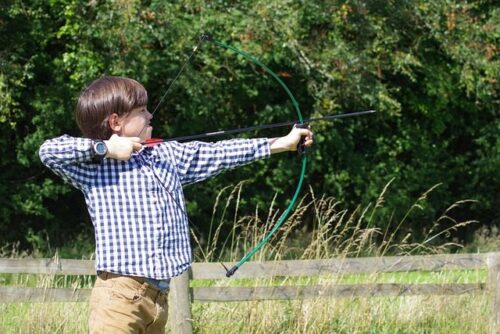
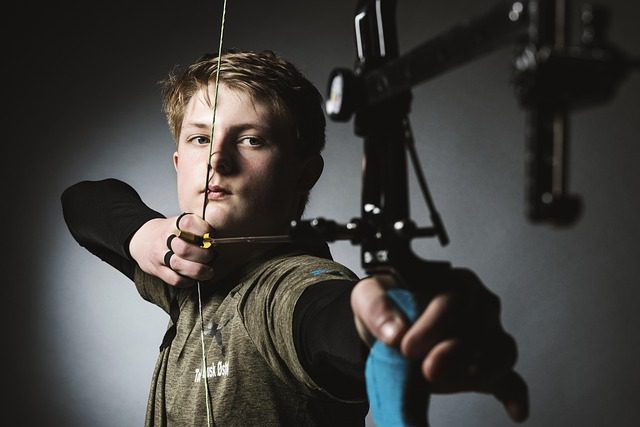
Kids archery lessons can be a great way to build focus and confidence, teaching kids to concentrate on one task at a time.
Growth from stillness
Archery lessons begin with learning to be still. Archery requires a fixed posture, therefore a child must relax, plant his or her feet, relaxing the shoulders, and keeping the eyes on the target. This calmness can’t be forced.
Many sports involve a fast pace and quick reactions, whereas archery requires patience. Because of this, kids learn to slow down, learning calmness and composure in the process. These skills can even help them throughout their lives, as they learn to deal with problems without tension or fear.
One arrow at a time
In archery, there is no rush to keep up with the clock or with teammates; you can take your own time.
Each shot has its own individual journey. It starts with nocking the arrow, then the draw, aim, and release. If it finds its mark great! If not, there is always another shot.
This cycle teaches kids to stay in the present, learn to let go of the previous shot, whether it was good or bad, and bring all their attention forward to the next shot. This ability to restart helps kids to be confident and fearless individuals who know how to keep their emotions in control.
In most sports, a scoreboard can create pressure on a player, as there is always a team to chase or a time limit. In recreational archery, as there is no scoreboard and no comparison. Without pressure, the body stays calm and composed, thus helping the archer’s body to stay relaxed.
Now, that’s not to say that you can’t be anxious in archery. A stressed mind leads to tension in the shoulders and hands, which leads to inaccuracy. Anxiety can lead to missed shots. But, there is an opportunity to improve with each arrow.
Practicing archery in a low pressure environment helps in building a strong foundation of learning from mistakes rather than fearing them. Over time, this will create muscle memory, and kids will gain confidence.
Kids Become their Own Teachers
Every target gives neutral and immediate feedback, as it becomes a silent instructor, teaching them what worked and what needs to improve. Children start noticing the small mistakes and try to correct them. They start recognizing when their stance is balanced and when it is not, as well as the difference between rushed shots and a steady release.
This self-observation after the shot builds independence and confidence. It also teaches emotional control. When children feel frustrated, they find a way to calm themselves down, think positively, and carefully start with the new arrow.
We earn a commission if you make a purchase, at no additional cost to you.
Cognitive development of children
Archery not only improves attention. but it also strengthens the core cognitive process. It teaches a child not to be impulsive, as impulsivity in everyday situations can be challenging.
Archery also sharpens skills like planning, decision making, and self-monitoring, which can help kids in their academic success and emotional regulation. Kids remember the archery sequences involving stance, aiming, breathing, and releasing, which can help boost the working memory of a child.
Archery is one of the finest examples of mind and body work together in harmony. Archery lessons can also be incredibly helpful in improving coordination. Every shot begins within a thought. This mental clarity sends signals to the body, further guiding the body towards good posture, balance, and alignment.
The release of the arrow is not forced; it is timed in the mind. The smallest physical adjustment needs a clear mental decision. In archery, success is not just about physical strength; it requires the mind and body to act as one.
Parents often make mistakes by praising their child when they score higher, run faster, and outperform others. Competition can be motivating, but it can also create pressure and self-doubt in kids. Archery helps in building confidence without such competition.
Can children improve their own archery performance?
Archery’s primary goal is to improve one’s own performance rather than competing with one’s opponent. Success is all about your own progress. Self-awareness is the key, as an archery should analyze their own mistakes if they miss the mark. And, when kids see the arrow find its mark on the target, their confidence grows.
Archery (more than a sport)
Archery has a storied history and is more than a sport; it helps in the practice of calmness, self-awareness, focus, and confidence. Each shot requires full focus, attention, and correct posture, which not only helps kids and adults alike to not only be better archers, but also to better deal with everyday challenges.
Water sports can certainly be fun and exciting. But, we must take precautions while engaging in water activities, as they can be life-threatening or dangerous.
Every year, many accidents happen in pools, lakes, and oceans, and many people lose their lives due to a lack of water safety, emphasizing why learning water safety skills is important.
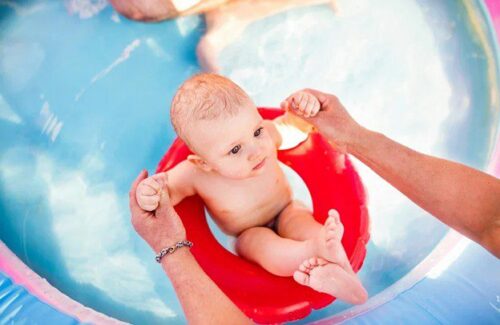
ISR (Infant Swimming Resource) is the smart choice for water safety. It’s a research-based, professional training program designed to save lives. It lasts for a few minutes, with the instructor giving a one-to-one lesson so that each child is personally trained. This personal approach helps in building a skill gradually without fear.
ISR goes beyond traditional swimming
Traditional swimming lessons teach a child how to move in pools by focusing on strokes, kicks, laps, etc. These are important skills, but they don’t necessarily guarantee the safety of an individual. With ISR swimming lessons, the primary goal is simple: staying alive until help arrives.
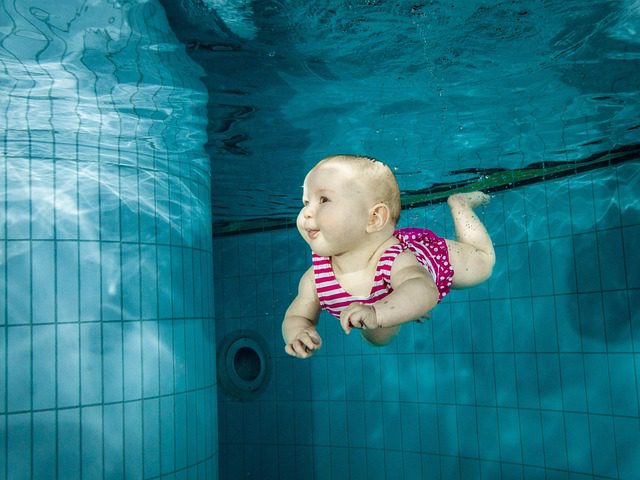
ISR swimming teaches the infants the following:
How to roll on their backs
Float safety in deep water
Proper breathing while staying calm
Self-rescue without assistance
These are not just techniques; they are lifelines. And, mastering these techniques helps a child to live and survive in the water alone. These techniques provide an extra layer of protection while swimming.
Designed for every age
Traditional swimming programs often begin at the age of 3 or 4. But, ISR begins at the age of 6 months. The most remarkable aspect of ISR is its effectiveness with infants and toddlers. The lessons are customized according to the child. A child’s age, size, physical ability, emotional readiness, and health history are kept in mind when designing an ISR swimming lesson.
Why is ISR important for young kids and infants?
According to the WHO, between 236,000 and 300,000 people die every year because of drowning. The highest death rates because of drowning are among young children who are between the ages of 0-4 years. There is also a great risk of accidental drowning around pools and bathtubs, among young kids and infants. ISR lessons teach them instinctive survival responses, helping give families peace of mind.
We earn a commission if you make a purchase, at no additional cost to you.
04/01/2026 12:00 am GMT
Build confidence
Many times safety training can be viewed as stressful and boring, whereas ISR empowers the learner. Instead of feeling fear or being afraid, they learn skills to stay calm and safe in the water.
Each small successful step of ISR swimming training strengthens the self-belief of a child. When a child learns how to breathe and float on their own, they feel more confident and secure. It reduces fear and panic, which are common reasons for drowning.
Children learn what to do in the water, and they start feeling more in control, thus building confidence in themselves. ISR training lessons lay a strong foundation to move further into swimming lessons.
Confidence gained through ISR training is physical as well as emotional. Children learn focus, patience, and resilience. They provide a powerful sense of security to a child.
Lifelong benefits: Is ISR swimming worth the effort?
ISR swimming is absolutely worth it, as it gives lifelong benefits such as:
Builds strong safety awareness amongst kids
Teaches how to stay alive in the water
Builds confidence and reduces fear of water
Provides foundation for traditional swimming lessons
Teaches quick response to drowning or water accidents
Consistent practice improves focus, which can help kids with studies, exams, and future careers
Improves emotions like empathy, helping a child throughout their life
It improves balance and body control, and improves motor skills
Helps lower parents stress level
Helps with physical development, as it strengthens muscles
Provides good cardiovascular exercise
Improves coordination and the reaction time of the body in water
Teaches children to feel relaxed in pools, lakes, beaches, and oceans
Emerging as the favorite choice around the world
Parents are more aware than ever of how important a child’s safety is. According to the Centers For Disease Control, drowning is the leading cause of accidental deaths among children between the ages of one and four years old, highlighting the importance of water safety education.
We earn a commission if you make a purchase, at no additional cost to you.
04/01/2026 12:00 am GMT
Why is ISR getting the world’s attention?
Parents are looking for an early plan of action for preventing water accidents. ISR focuses on drowning prevention and the safety of a child, and is getting global attention. It provides a structured and research-based approach, along with individually designed swimming lessons for a child. This one-on-one approach allows a child to progress at their own pace and build confidence.
People often think that swimming is only about fun or sport, but ISR swimming is also about the skill of survival and also saving lives. These skills can be used in pools, lakes, rivers, and oceans where an unexpected water accident takes place. Self-rescue provides a critical skill that can last a lifetime. ISR lessons are a lifelong investment in a child’s well-being and future enjoyment of water activities and water sports.
ISR is not just about learning to swim; it is about saving lives.
Around 850 A.D. in Tang Dynasty China, Taoist alchemists weren’t trying to build weapons. They were trying to live forever.
Their search for an immortality elixir led them to mix all sorts of compounds. One of these immortality experimental batches combined saltpeter, charcoal, and sulfur. The accidental invention by Chinese alchemists occurred when this mixture met heat and exploded in their faces.
The potassium nitrate in saltpeter acted as an oxidizer. It fed rapid combustion that released gases with violent force. Early records mention singed beards and burned-down buildings.
Early on, this invention was used for fireworks and smoke signals. But, the Song Dynasty changed that when military commanders saw potential in this volatile powder and started weaponizing it for siege warfare.
The jump from burning powder to propelling bullets with it took hundreds of years. Yet, that ancient accident still shapes firearms today. Collectors scouring estate sales and browsing gun auctions onlineare handling pieces connected to a discovery made by monks chasing eternal life.
From Fire Lances to Early Cannons
The leap from explosive powder to directed weapons happened during the Song Dynasty. Military engineers figured out they could channel gunpowder’s force through tubes instead of just scattering it. That shift gave birth to projectile-based warfare.
The Fire Lance: Gunpowder’s First Weapon
The fire lance was dead simple. Take a bamboo tube, strap it to a spear, pack it with gunpowder, and light it during a fight. The thing spewed flame and burning debris at anyone within arm’s reach.
Defenders at the siege of De’an in 1132 used fire lances against attackers climbing their walls. It worked. Over time, makers stuffed pellets and ceramic shards into the tubes. Now the weapon combined heat with flying objects—a clear step in the evolution of weapons technology toward actual firearms.
Hand Cannons and Artillery Emerge
Metal replaced bamboo once craftsmen could cast bronze tubes strong enough to handle real pressure. The hand cannon threw a single projectile using gas expansion rather than just burning debris.
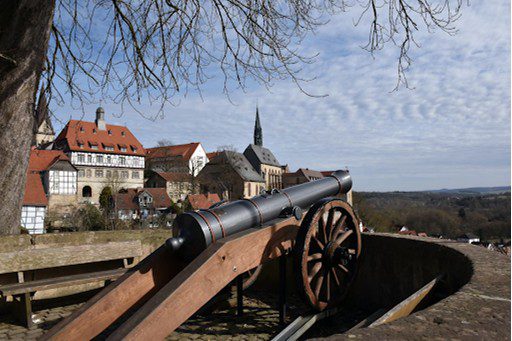
Hand cannons eventually led to cannons firing stone shot that could crack castle walls that had stood for generations. Siege warfare shifted from battering rams to bombardment. Military architecture had to adapt fast.
How Gunpowder Spread from China to Europe
Gunpowder didn’t teleport to Europe. It traveled.
The Silk Road carried more than silk and spices. Merchants swapping goods in dusty caravan stops also traded knowledge. Formulas for incendiary mixtures passed between craftsmen who spoke different languages but understood fire just fine.
Then the Mongols showed up. Their 13th-century conquests dragged Chinese siege engineers westward whether they liked it or not. These specialists knew gunpowder. They knew how to use it. And suddenly that expertise was marching toward Persia and beyond.
Arab scholars did what scholars do. They wrote things down. Islamic centers compiled treatises on incendiaries, translating Chinese concepts and spreading formulas to anyone who could read.
By the late 1200s, European monks were copying gunpowder recipes into Latin manuscripts. Local blacksmiths started experimenting. Within decades, foundries across Europe were casting their own cannons.
Europe didn’t invent gunpowder, but European gunsmiths sure got busy once it arrived through trade and war. The big headache was the ignition. Powder is useless if it won’t light when your hands are cold, it’s raining sideways, or someone is charging you. So, most early progress wasn’t about making a bigger bang. It was about making the bang happen on purpose, every time.
Matchlock and Wheel Lock Mechanisms
The matchlock hit the scene in the 1400s and finally gave soldiers a real trigger setup. A slow-burning cord, the slow match, sat in a clamp. When the trigger was pulled, the cord dropped into the priming powder, creating a flash, causing the charge. It worked… most of the time.
It was simple, which was the whole point. Armies could train around it. Load in steps. Aim. Fire in volleys. And, since you weren’t touching a glowing cord to the pan by hand anymore, you could actually hold the gun steady and try to hit what you meant to hit.
But, matchlocks had a very obvious weakness: that lit cord. Wind could mess with it. Rain could kill it. Night patrols hated it because it basically announced, “Hey, I’m over here.”
The wheel lock was an attempt to fix that. Instead of a burning match, it used a spring-wound wheel that spun against a piece of pyrite to throw sparks. There was no open flame, and it was much easier to carry on horseback. But, it was also much more complicated. It had more parts, tighter fitting pieces, and more things that could break. It worked, but it cost a lot, so most armies didn’t hand them out like candy.
We earn a commission if you make a purchase, at no additional cost to you.
03/31/2026 09:02 am GMT
The Flintlock Revolution
By the 1600s, the flintlock was the cleanest answer yet. Flint hits steel, sparks fly, and the priming pan opens as part of the same motion. One trigger pull does the job. This resulted in less fumbling and fewer timing issues. More shots actually went off as intended.
Flintlock muskets ended up ruling European battlefields for a long stretch; close to two centuries. Paper cartridges helped too. Soldiers tore one open, poured the powder, shoved the ball, rammed it down, and got back in the fight. With practice, two or three shots a minute was doable.
This changed who mattered in combat. Heavy armor that laughed at swords did not like lead balls. Knights on horseback stopped being the automatic “win” button. Infantry with muskets and bayonets could stand their ground, and cavalry had to rethink everything.
Black Powder to Smokeless Powder
For nearly 500 years, black powder was it. Every musket, every cannon, every pistol fired using the same basic mix those Chinese alchemists had stumbled onto centuries earlier.
The stuff worked. But it came with problems.
When a few rounds were fired, thick white smoke hung everywhere. This caused battlefields to turn into fog banks. Shooters gave away their positions with every pull of the trigger.
And the residue? Unpleasant.
Corrosive gunk coated barrels and gummed up mechanisms. Soldiers cleaned their weapons constantly just to keep them functional.
Then chemists in the late 1800s discovered something new. Smokeless powder burned cleaner, hotter, and pushed bullets faster without all that choking haze. as a result, velocities jumped, trajectories flattened, and fired rounds hit harder at distances that would have seemed absurd a generation earlier.
Here’s what really mattered: smaller cartridges could now pack serious stopping power. You didn’t need big, heavy rounds anymore. Compact ammunition delivered performance that previously required bulkier loads. This opened the door for modern ammunition types, balancing portability with punch.
Automatic weapons finally became practical too. Smokeless powder gave consistent gas pressure without rapid fouling. Actions cycled smoothly through magazine after magazine. There was no binding and no jamming from buildup.
We earn a commission if you make a purchase, at no additional cost to you.
03/31/2026 05:00 pm GMT
The Rise of Modern Firearms
The 1800s and 1900s were a sprint for firearms. Everyone was sick of firing once, then reloading while trouble kept moving. So, inventors fixated on solving one problem: how to get the next shot ready faster. That push produced multi-shot guns and reshaped wars and everyday ownership in a hurry, without giving up reliability.
Revolvers and Repeating Rifles
Samuel Colt got his patent for a rotating-cylinder handgun in 1836. The revolver let you fire several rounds before you had to reload. Fresh chambers lined up with the barrel as the cylinder turned. Cavalry, sheriffs, and frontier settlers finally had a compact sidearm with real repeat-fire ability.
What turned the revolver from a neat trick into a common tool? Factories. Interchangeable parts meant guns could be built in volume, repaired in the field, and kept running without hand-fitting every piece. With decent tolerances, the same pattern worked across thousands of revolvers year after.
Rifle makers chased the same idea but took different routes. Lever-actions stacked cartridges in a tube under the barrel. Working the lever would chamber a fresh round. Bolt-actions locked the breech tighter, took higher pressures, and stayed solid for long-range shooting when it mattered.
Automatic Weapons Transform Combat
In the late 1800s, inventors skipped manual cycling altogether. The machine gun arrived as a crew-served brute built for sustained fire. It ejected rounds in a repeating loop over and over.
That volume drove infantry into cover. There were no more neat charges at enemy positions. One gun crew could pin down hundreds crossing open ground before they got close.
The twentieth century brought self-loading rifles, submachine guns, and assault rifles into standard service. Semi-automatic actions fired once per trigger pull. Fully automatic versions kept going as long as ammo fed and the trigger stayed pressed the whole.
Societal and Geopolitical Consequences
Gunpowder didn’t just change fights. It altered the whole social ladder. For centuries, armor and training kept knights on top. Then muskets arrived, and a farm kid with a few drills could drop a noble.
Castles lost their magic, too. Cannons turned proud stone walls into broken piles of stone. Big guns were expensive, so power drifted toward kings and away from local lords. Either pay taxes, or face the consequences.
Once states could fund gun crews, powder mills, and steady supply lines, they built standing armies and bigger governments to run them.
Europe then carried this edge overseas. Gun-armed ships backed trading posts, and then colonies. And on the ground, muscle mattered less. A small soldier with a loaded musket could be just as deadly. Even tactics changed fast. Lines, volleys, trenches on. The gap between fighters shrank, for better or worse, too.
Gunpowder’s Lasting Legacy
A botched immortality experiment. That was the real starting point.
In 9th-century China, some people who were trying to make special medicines mixed some things together that they should not have. They got a bad surprise. But, these people, unintentionally started something that would change the world.
A thousand years have passed since then. Every rifle, pistol and shotgun that exists today can be traced back to what those alchemists did then. They made a mistake that led to the creation of guns, like the rifle, the pistol and the shotgun.
The formulas used to make gunpowder got easier to understand and more consistent. People started using smokeless powder of black powder. But the main idea stayed the same: when you have a controlled burn, it makes gas that expands quickly and this expanding gas is what makes the projectile move forward. The basic idea of the projectile and the expanding gas is still the same.
And people are still building on it. Better metals, tighter machining, and new manufacturing methods. The Tang-era monks could not have pictured modern tolerances or materials, but the chain of cause and effect runs straight back to that moment when someone leaned in too close, a beard caught fire, and history took a hard turn.