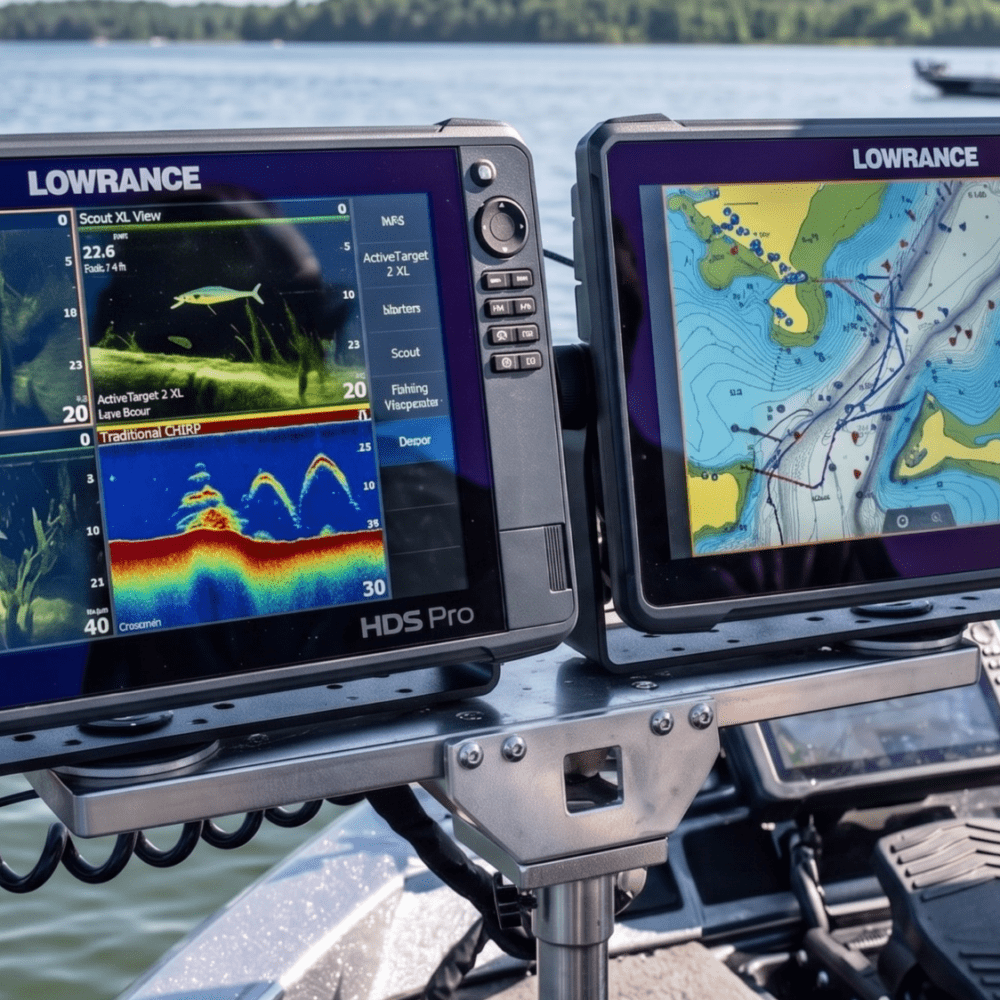
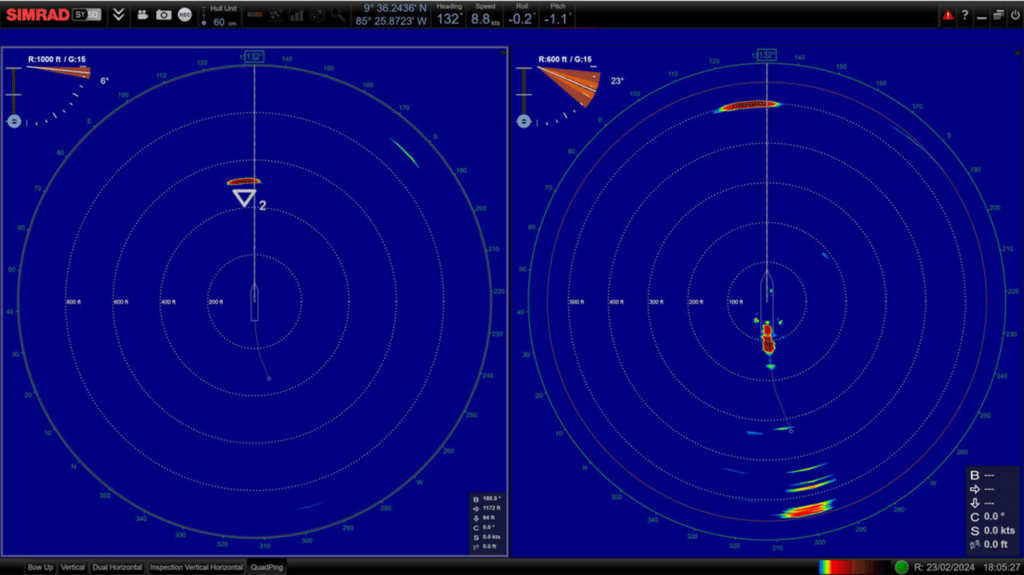
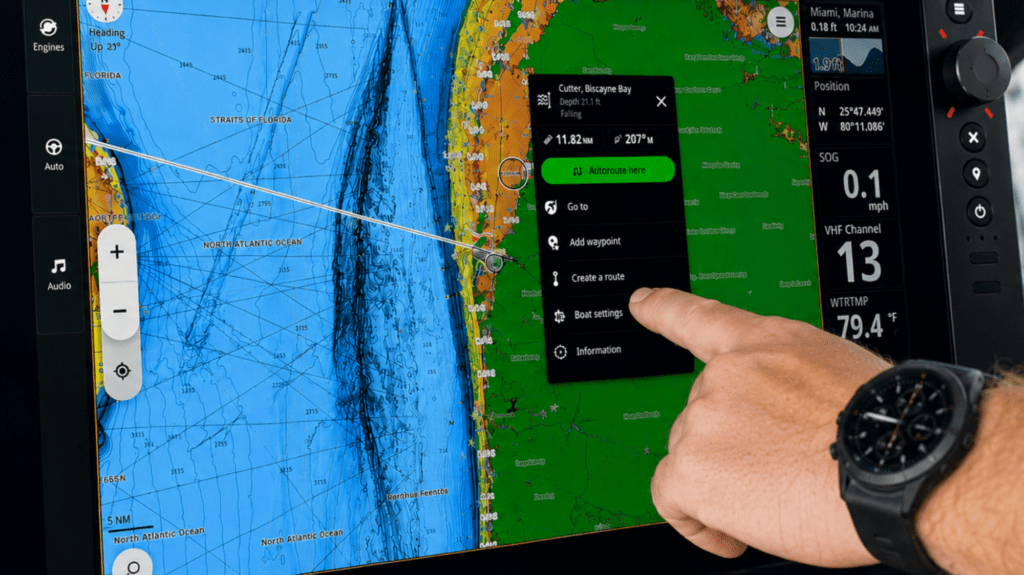
The depth sounders of your grandfather’s generation used echolocation to transform commercial fishing. They leveraged what was then state-of-the-art electrical pulse generation and sound wave emission to pinpoint cod, herring, and sardines. But those gadgets are transistor radios compared to today’s fish finders.
The advent of CHIRP sonar, the boom in mass-produced microchips, and low-cost high-resolution screens not only make fish finders inexpensive enough to keep onboard recreational watercraft but also sensitive enough to pick out individual bass, walleye, snook, and snapper.
Combining high-speed data processors, “live” transducer video, and AI to interpret all that visual evidence, the systems available today provide boaters with a window to the underwater world like never before.
How AI is Making Your Fish Finder Smarter
Artificial intelligence now directs how fish finders decipher and display information, filtering out irrelevant noise and zeroing in on the actual targets you’re looking for. Augmented by sonar precision, sophisticated mapping data, environmental inputs, and historical patterns, AI enables some fish finders to predict where the next productive fishing zone will be.
Take for instance Simrad’s Sonar AI. It can almost be considered a virtual assistant living in your fish finder. Instead of having to stare at your MFD’s screen and wait, Simrad’s Sonar AI watches the sonar returns for you. As soon as it identifies a fish, it will automatically drop a special marker for you on your screen and sound an alarm.
And like all other AI models, it continues learning. When you mark a spot on the map, the system makes note of the conditions and environment. Then, when similar patterns present themselves later, the system makes the connection and emits an audio alert. These signals become more accurate as the machine learns which signals represent game fish, bait schools, cover, and water temperature bands.
As AI intelligence and onboard computing power continue to grow, AI is expected to play a larger role in sonar interpretation, route planning and environmental awareness.
Faster Processors Mean a Smoother Experience Out on the Water
If you’ve ever used a fish finder that took several seconds to load when you zoomed in on part of a map, you understand how frustrating this can be. One of the biggest advancements in modern fish finders isn’t immediately visible – it’s what’s powering the machine.
Today’s fish finders feature powerful 6-core and 8-core processors, capable of running multiple tasks at the same time, including live sonar, CHIRP sonar, side-scanning, radar overlays, detailed charts, engine data, weather layers and navigation systems… without any lag. Up to seven times faster than older models.
Menus open and respond immediately, charts load up right away, and sonar updates feel real-time. Switching between applications is a breeze. When paired with modern transducers, these processors can interpret detailed sonar information clearly and stably, even at high speeds and deep ranges.
Next-Gen Sonar: 360-Degree Live Views and Ultra-Wide Beams
Up until now, live sonar was like a flashlight beam, only allowing you to see where you pointed it. New transducers, such as Lowrance’s ActiveTarget 2 XL, network two HD transducers together, unlocking a 360-degree view. This allows you to have a live, moving video of the entire radius around your boat
Another recent improvement is the elimination of the need for a “black box” in order to get high-definition live sonar. The black box is a large silver processing module inside a dry storage compartment, running heavy power cables to your batteries.
Garmin’s newer transducers eliminate the need for a black box altogether, moving the processing into the transducer itself, and allowing you to plug the transducer directly into the fish finder / MFD and power source. Less battery drain, and less clutter, while providing you with HD images.
Another advancement in transducers is ultra-wide beams, such as Airmar’s 73-degree Ultra-Wide Wave. In the past, most transducers had a narrow, 15-degree cone, covering only a small circle on the bottom. Airmar’s newer transducers shoot a massive 73-degree wide beam, giving fish nowhere to hide.
We earn a commission if you make a purchase, at no additional cost to you.
08/16/2026 01:04 am GMT
4K Screens Give You Clearer Information, Even in Difficult Conditions
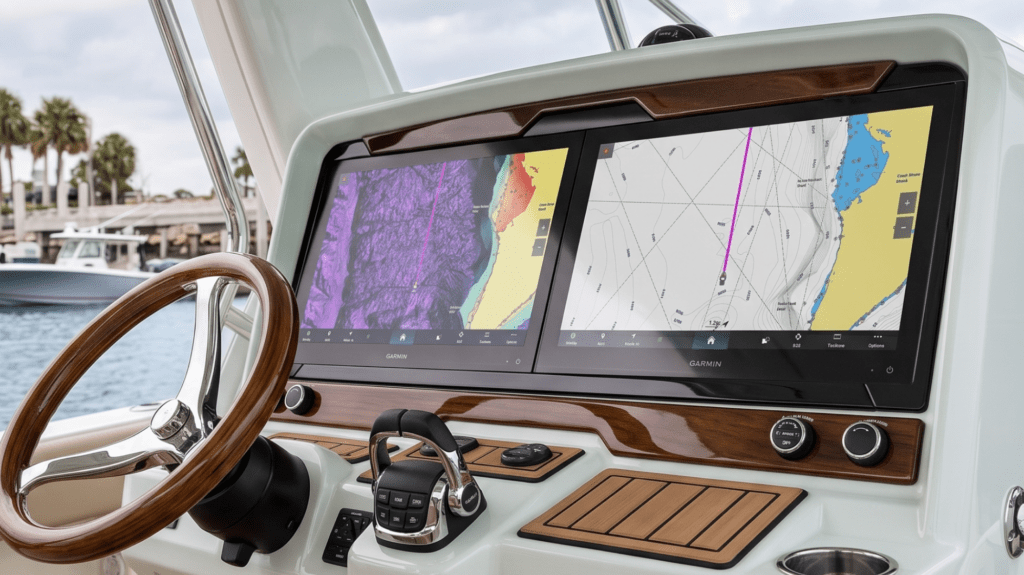
Having a 4K television in your living room has lost some of its novelty, but bringing this crystal clear screen technology to wet, sunny, rainy, or foggy conditions is a much more impressive engineering feat, and one we’ve reached. Now MFDs from major marine brands bring true 4K resolution screens.
With four times the pixels as traditional HD screens, these newer fish finder panels allow you to better differentiate between underwater structures and fish, for instance, being able to easily spot a fish next to a submerged tree branch.
Split screens are now easier to use, with each section clearly displaying the information, even in direct sunlight.
If you’re wanting to spend more of your time catching fish, today’s fish finders have the technology to allow you to do just that.
Newer fish finders and transducers are not just about getting a prettier screen or a couple of new features. This powerful, cutting-edge fishfinding technology allows you to clearly see more of what’s beneath the water and is becoming like your own personal fishing assistant armed with data, learning how you like to fish, and showing you where to find more fish. Your boat’s electronics are now doing the heavy lifting for you, and allowing you to filter out junk data – saving you time, so you can spend more of it catching fish.
Most people who walk the Manaslu Circuit Trek never once think about what’s swimming underneath them.
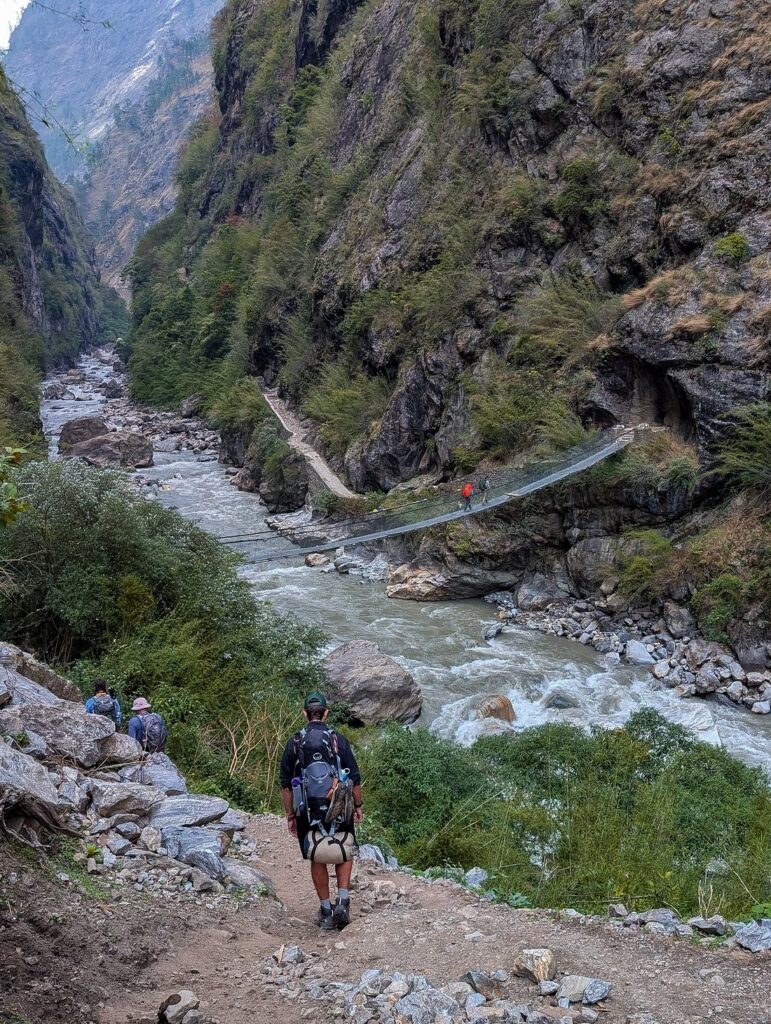
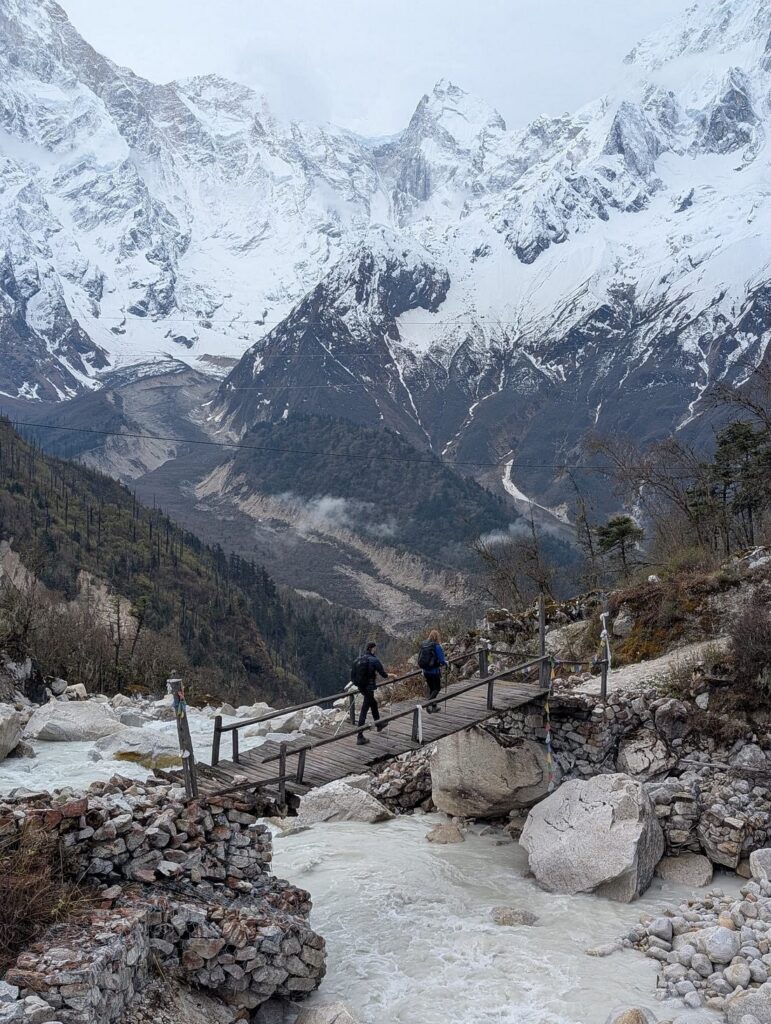
The trail is in the remote Gorkha District of north-central Nepal, northwest of Kathmandu and near the Tibetan border. It follows the Budhi Gandaki almost the whole way north out of Soti Khola, crossing it on suspension bridges a dozen times before the route finally breaks off toward Larkya La. For most trekkers, that river is just scenery; loud, grey green, and something to photograph from a bridge and forget.
But, that would be missing out greatly.
The Budhi Gandaki carries a real spread of fish from the lowlands up past 2,600 meters, and the water changes character almost village by village, which means what’s likely to be on the end of your line changes too.
The Manaslu Circuit Trek crosses many suspension bridges, over water below that holds some little known fishing opportunities.
Machha Khola and the Lower River
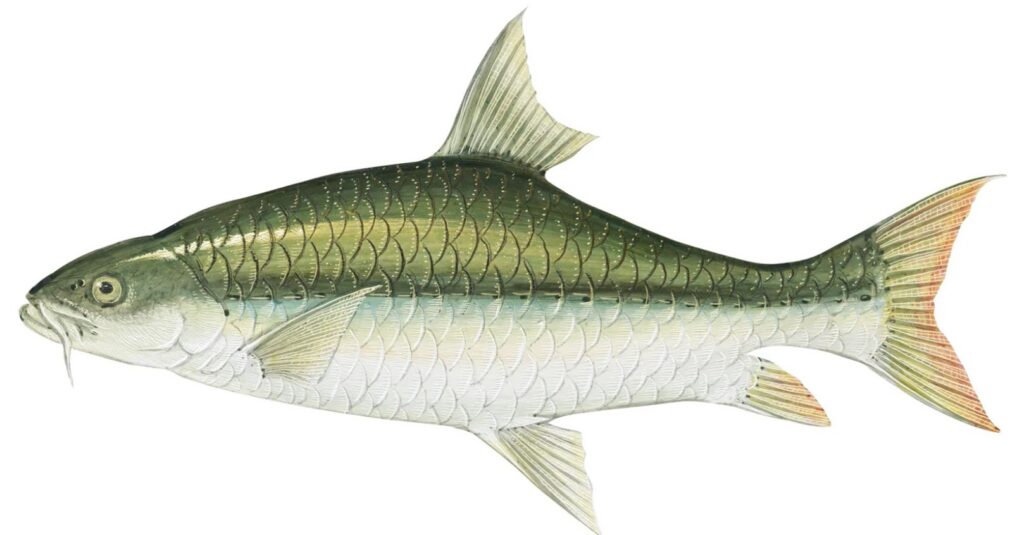
Machha Khola sits low enough, and the river’s still wide and slow enough through there, that this is mahseer water. Locals will tell you the village’s name gives it away. “Machha” means fish, and the pools below town have a reputation for holding them. Catfish and freshwater eel turn up in the slower, deeper stretches as well, especially near where smaller side streams dump into the main channel. This is the warmest, most forgiving water on the whole route, and it’s also the easiest to reach. Most trekkers pass through on day one, often without realizing the river they crossed an hour out of Soti Khola is considered one of the better mahseer stretches in the Manaslu region.
Soti Khola is a great area for mahseer fishing. (photo credit: Encyclopaedia Britannica)
Jagat and the Gorge Water
By the time the river reaches Jagat, the valley has tightened up considerably. The Budhi Gandaki here runs faster and colder, squeezed through a narrower gorge with less of the slow, sandy-bottomed water that mahseer prefer. This is the rough transition zone; you’ll still find mahseer in pockets, but snow trout, known locally as asala, start showing up more consistently as the elevation climbs and the temperature drops. The fishing here is more difficult, as is the wading. The current isn’t forgiving if you’re not paying attention. It’s also one of the more visually dramatic stretches, with the trail cut directly into rock above the water in places.
Glacial melt from the higher elevations feed portions of the Budhi Gandaki river.
Past Deng, the lowland species mostly fall away. The water’s noticeably colder by now, fed more directly by glacial melt than by the warmer tributaries lower down, and asala becomes the fish you’re actually targeting rather than something you stumble into. Snow trout in this stretch tend to hold in the slack water behind boulders and in the deeper pools where the current breaks, which is true of most fast Himalayan rivers. Find the seam between fast and slow water, and that’s usually where the fish are sitting. The river through here is narrower than it is down at Machha Khola, but it hasn’t lost any of its force.
Namrung and the High Water
Namrung marks a real shift, not just in elevation, but also in how the river behaves. The Budhi Gandaki splits and braids more here, and several smaller streams feed in from side valleys, each one worth a look if you’ve got the time to wander off the main trail for an hour.
The water’s cold enough by this point that asala are the only realistic target, and they’re smaller and warier than what you’ll find lower down. These fish have spent their whole lives in thin, fast, oxygen-rich water, and they don’t sit still for long. Past Namrung, the trail and the river start to separate as the route climbs toward Lho and Samagaon. Serious fishing more or less ends here, with the upper valley rivers running too cold and too thin to hold much of anything.
We earn a commission if you make a purchase, at no additional cost to you.
08/15/2026 01:02 pm GMT
What This Means for a Trip
None of this requires a separate trip. The Manaslu Circuit Trek already follows the river for the first several days. This means a rod, a handful of flies or lures, and maybe an extra hour at the end of a trekking day is really all it takes to fish four completely different stretches of water on one walk.
The Budhi Gandaki isn’t going to show up on anyone’s list of the world’s great fisheries, and it shouldn’t. What it offers instead is something harder to plan for, four or five days of genuinely different water, run by a river most anglers will only ever cross on a swinging bridge, on a trail that was never built with fishing in mind.
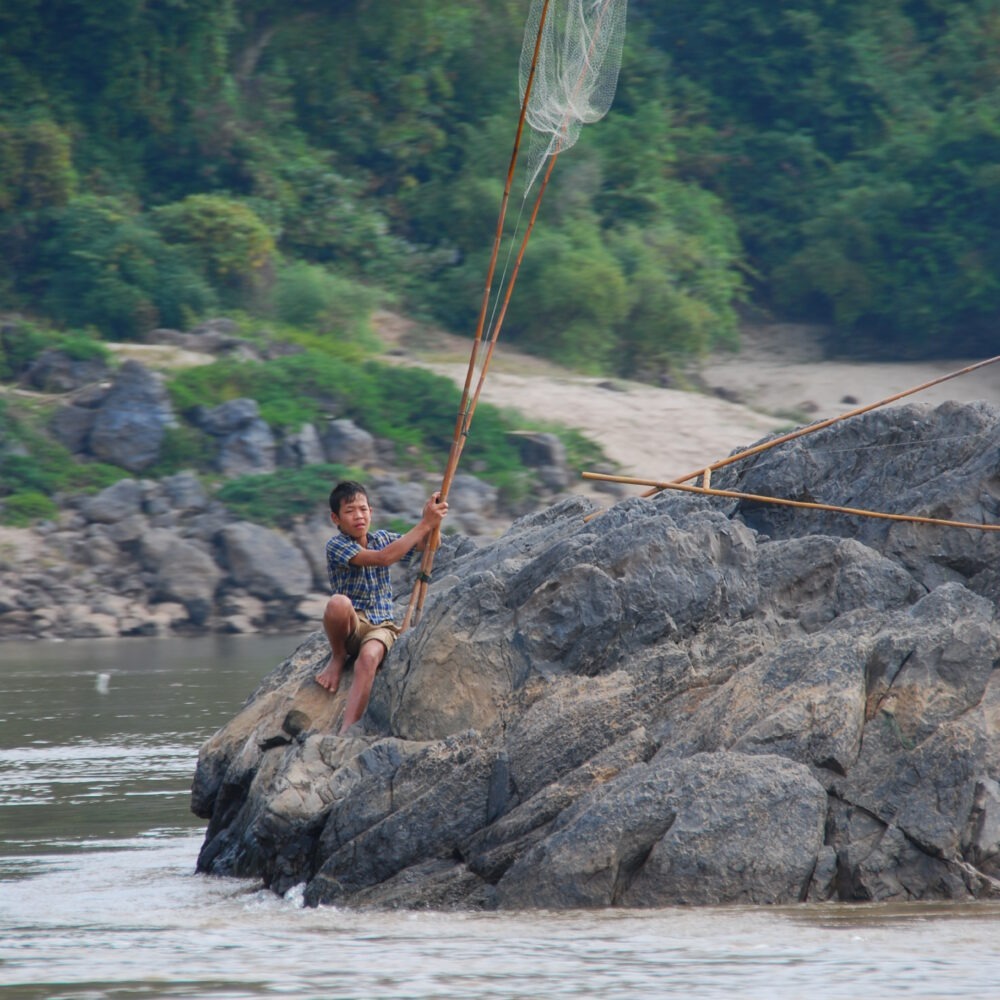
Permits matter here, as fishing in Nepal’s rivers generally requires a license. And, inside the Manaslu Conservation Area, there are additional rules worth checking before you go. It’s worth sorting that out in Kathmandu rather than assuming you can fish wherever the trail happens to cross the river. Locals along the route fish with hand lines and net traps more often than rods, and most are happy to point out where they’ve had luck if you ask.
For anyone walking the Manaslu Circuit Trek with a rod tucked into their pack, that’s not a bad trade at all.
For anyone picking up a fly rod for the first time, Summer removes a lot of the usual guesswork. Warmer conditions keep the setup simple. Longer days leave more room to practice, and frequent surface activity makes it easier to see what’s working.
Southerners don’t have to look far — the Southern Appalachians, from north Georgia through western North Carolina and into Tennessee, offer some of the best beginner trout water in the country, with wild brook trout streams and stocked tailwaters within a few hours of most major cities in the region.
From there to the Rockies, July and August deliver the classic dry-fly scene people picture when they think about the sport: trout sipping insects off the surface while you stand in a river that looks like it belongs on a postcard.
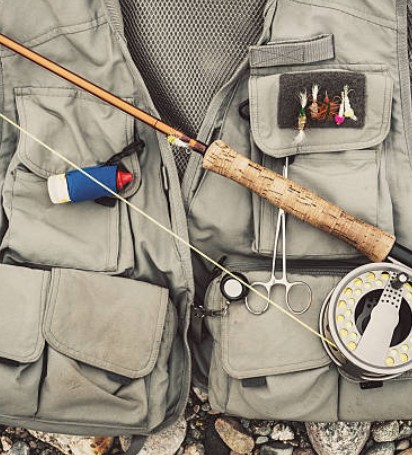
This guide breaks down exactly what gear beginners actually need to get on the water this Summer, from starter rod and reel combos to flies that match peak-season hatches.
The Core Setup: Rod, Reel, and Line
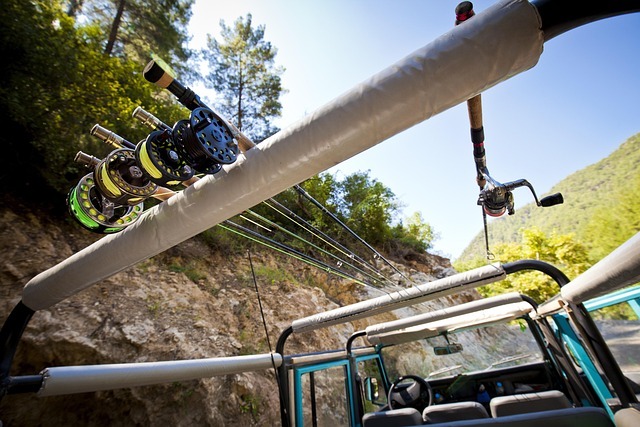
Every fly fishing setup starts with three components that work together as a system: the rod, the reel, and the line. Get them matched correctly and casting becomes significantly easier to learn.
The 5-Weight Rod
For summer trout fishing across most of North America, a 5-weight rod between 8’6″ and 9′ handles the vast majority of situations a beginner will encounter. The “5-weight” designation refers to the line weight the rod is designed to cast—more on that in a moment. Nine feet has become the standard length because it provides enough reach for most casting situations without being unwieldy for someone still learning the mechanics.
Modern entry-level graphite rods perform remarkably well. Most come as four-piece designs that break down for easy transport and storage—perfect for the trunk of a car or checked luggage.
The action (how the rod bends when loaded) is important, though beginners don’t need to overthink it. Medium or medium-fast action rods are the most forgiving and easiest to learn on. Avoid fast-action rods marketed for distance casting—they require timing and technique that beginners haven’t developed yet.
We earn a commission if you make a purchase, at no additional cost to you.
08/15/2026 07:02 pm GMT
The Reel
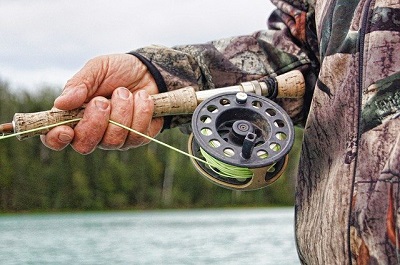
For most beginner trout fishing situations, the reel primarily functions as a line holder, which means beginners don’t need to overthink this component. Any mid-arbor or large-arbor reel in the appropriate weight range (a 5-weight rod pairs with a size 5/6 reel) will do the job. Look for models with a disc drag system rather than a click-and-pawl—disc drags are smoother and easier to adjust.
Quality has improved dramatically at every price point. Reels that cost $100 to $150 now feature sealed drags and machined aluminum construction that used to be reserved for premium models. With basic care, they’ll provide reliable performance for years to come.
The Fly Line
This is where beginners often go wrong, and it’s the most important component for learning to cast well. The fly line does the work in fly fishing—its weight loads the rod and carries the nearly weightless fly to the target. A mismatched or low-quality line makes everything harder.
For summer trout fishing, a weight-forward floating line matched to the rod weight (5-weight rod = 5-weight line) is the only choice that makes sense. Weight-forward tapers have more mass concentrated in the front section, which helps beginners generate the line speed needed for decent casts with less effort.
Budget lines work fine for practicing in the yard, but stepping up to a mid-tier line ($90-$130 range) from manufacturers like Rio or Scientific Anglers makes an enormous difference in how smoothly the line shoots through the guides and how it behaves on the water. The upgrade pays for itself in reduced frustration during the learning curve.
We earn a commission if you make a purchase, at no additional cost to you.
08/15/2026 07:02 pm GMT
Flies: What Actually Works in Summer
Fly selection intimidates beginners more than it should. Walk into any fly shop and you’ll see thousands of patterns in bins organized by categories that mean nothing if you’re new. The reality: a dozen patterns cover 90% of summer trout fishing situations.
Dry Flies for Surface Action
July and August are prime dry-fly season across most trout water. Mayflies, caddis, and terrestrial insects (grasshoppers, ants, beetles) dominate summer hatches, and trout feed aggressively on the surface when conditions are right.
Start with these patterns in multiple sizes:
– Parachute Adams (sizes 14-18): imitates a wide range of mayflies
– Elk Hair Caddis (sizes 14-18): the universal caddis pattern
– Chubby Chernobyl or similar foam hopper (sizes 10-14): for grasshopper season
– Parachute Ant (sizes 14-18): simple, effective, and trout love them
The “parachute” style (with a visible white post) makes these flies easy to track on the water—critical for beginners who struggle to see their fly amid the surface texture and glare.
Nymphs for Below the Surface
Trout do most of their feeding below the surface, even during summer. Nymphs imitate the immature stages of aquatic insects drifting in the current. They’re less visually exciting than dry flies, but they catch more fish.
Streamers imitate baitfish, leeches, and other larger prey. They’re fished with an active retrieve (short strips of line) rather than a dead drift. Streamers catch bigger fish and work well in faster water where nymphs and dry flies are harder to manage.
Beginner-friendly streamers:
– Woolly Bugger (sizes 6-10) in black, olive, or brown
– Zonker (sizes 6-10): rabbit fur creates lifelike movement
Buy flies in multiples. Losing flies to trees, rocks, and fish is part of the learning process. Having three of each pattern means you’re not sidelined the first time a trout breaks off your best producer.
Leaders and Tippet: The Invisible Connection
Leaders and tippet connect the fly line to the fly. They’re tapered (thicker at the fly line end, thinner at the fly) to transfer casting energy efficiently and make the final presentation look natural to the fish.
Leaders come in various lengths and taper designs. For summer trout fishing, a 9-foot leader tapered to 4X or 5X handles most situations. Buy pre-made knotless leaders to start—they’re inexpensive and eliminate one variable while learning.
Tippet is the section you tie to the end of the leader to replace what’s lost as you change flies throughout the day. A spool each of 4X, 5X, and 6X tippet covers the range from larger dry flies (4X) down to smaller nymphs and midges (5X, 6X). If you plan to fish streamers, add a spool of 2X — streamers attract bigger, more aggressive fish and are cast with more force, so the lighter stuff will let you down.
We earn a commission if you make a purchase, at no additional cost to you.
08/15/2026 07:02 pm GMT
Essential Accessories
A handful of small tools and accessories makes the difference between a smooth day and a frustrating one.
Nippers
A pair of small scissors or nippers cuts tippet and trimming tag ends from knots. The ones that clip onto a zinger or retractor (so they’re always accessible) are worth the extra few dollars.
Forceps or Hemostats
Hemostats and clamp-style tools remove hooks from fish mouths without handling the fish excessively. They also work for crushing barbs on hooks before fishing—barbless hooks cause less damage and release fish faster.
Floatant
Dry fly floatant keeps flies riding high on the surface. Gel or paste formulations work better than liquids for beginners. Apply it before the fly hits the water, not after it’s already waterlogged.
Strike Indicators
These visible markers suspend nymphs at the right depth and signal when a fish takes the fly. Yarn indicators are easy to adjust and gentle on leaders. Many beginners fish nymphs under an indicator all day and catch plenty of trout while they’re still learning dry-fly presentation.
Fly Box
One medium-sized fly box holds everything a beginner needs for a day on the water. Boxes with slotted foam or ripple foam keep flies organized and prevent hooks from tangling. Waterproof models protect flies from moisture and rust.
Tippet Holder
A simple tippet holder keeps multiple spools organized and accessible. Models that attach to a vest or pack eliminate the “which spool is which” fumbling mid-stream.
Summer fishing means lighter gear and more clothing options than any other season. The essentials still matter, though.
Waders and Boots
Lightweight stockingfoot waders paired with wading boots give access to more water and keep you fishing all day comfortably. Breathable waders have replaced neoprene for warm-weather fishing—they’re cooler, lighter, and dry faster.
For true summer conditions, wet wading (shorts or convertible pants with wading boots) works perfectly. The water is warm enough that getting wet doesn’t matter. Purpose-built wet wading shoes with quick-drying uppers and rubber soles or legally permitted felt soles provide traction without the bulk of full wading boots.
Sun Protection
A wide-brimmed hat, long-sleeve sun shirt with UPF rating, and polarized sunglasses are non-negotiable. Trout water is exposed, and the summer sun reflected off the water compounds UV exposure. Polarized lenses also let you see into the water to spot fish, structure, and wading hazards.
Fishing Vest or Pack
A vest or chest pack carries everything you need without requiring a backpack. Vests have fallen out of favor with younger anglers, but they distribute weight well and keep tools accessible. Chest packs (worn around the neck) offer a more modern alternative with similar organization.
Where to Fish: Finding Water Near You
Every state fisheries agency maintains online resources showing public access points for rivers and lakes. Many states also stock trout in easily accessible urban waters during the summer months specifically to provide opportunities for new anglers.
Look for:
– Designated public fishing areas with parking and clear access
– Rivers or streams with fishable water within walking distance of the parking area
– Water that doesn’t require wading across private land to reach
– Spots where you can see other anglers fishing (not to crowd them, but to confirm you’re in the right place)
Local fly shops—if you have one nearby—maintain fishing reports and can point you toward beginner-friendly water. Most shops appreciate someone walking in and asking “I’m brand new, where can I catch my first trout?” That question makes their job easier than trying to help the person who pretends to know more than they do.
Why Summer Simplifies the Starter Kit
For beginners, summer removes a lot of the usual guesswork from fly fishing. Warmer conditions mean new anglers can keep the setup simple, spend more time practicing, and focus on learning how the rod, line, leader, and fly work together.
Summer is the season when the sport of fly fishing is easiest to understand visually. Many hatches happen during daylight hours, fish are often feeding near the surface, and dry-fly fishing lets beginners watch the full sequence unfold: the cast, the drift, the rise, and the adjustment needed on the next attempt.
Summer is the ideal time to build a first kit around practical essentials rather than specialty gear. The right starter setup should help a beginner get on the water, cast comfortably, match common seasonal conditions, and avoid buying equipment they do not actually need yet.
Final Thoughts: Just Start
Perfect knowledge doesn’t exist. Perfect gear doesn’t exist. Perfect conditions don’t exist. What exists is water with fish in it and a summer season that won’t last forever.
Buy the basics. Learn the fundamentals. Drive to the nearest trout stream with public access. Rig up the rod and just start casting. You’ll tangle your line, put flies in trees, and spook fish with clumsy wading. But everyone does all of that in the beginning.
There are lists available that help make the fly fishing gear buying process less confusing. For example, Trident Fly Fishing’s beginner gear list organizes the essentials into a practical starting point.
The destination doesn’t really matter… At some point—with luck and perseverance—a trout will eat your fly. The rod will bend. Your heart will race. And the whole thing will click.