woman in red ski jacket holdking ski poles in air

How to Choose a Warm Ski Jacket: 8 Features to Look For

on . Posted in Blog

Finding a ski jacket that actually keeps you comfortable all day makes every run down the slopes more enjoyable. The fact is, not all jackets are engineered for the skiing, and knowing what to look for makes the difference between staying warm and wishing you’d grabbed another layer.

How To Choose The Right Ski Jacket (What To Consider)

So, let’s take a look at some details on how to choose a warm ski jacket and where to buy one.

1. Type of Jacket

Choosing a warm ski jacket starts with knowing the different types available.

An insulated jacket combines warmth, as well as weather protection, in one garment. This can definitely help on those cold resort days, especially if you tend to feel chilly while waiting for friends or riding the lifts.

An uninsulated shell primarily blocks wind and precipitation, allowing you to adjust the warmth beneath as the weather conditions change.

down feather

Synthetic insulation generally retains more of its insulating ability when damp, making it well-suited to wetter climates or for frequent, active use.

Fleece is a synthetic type of insulation that can provide breathable warmth beneath a shell, but most fleece jackets offer limited protection against wind and precipitation on their own.

2. Waterproof Rating

A waterproof rating measures how much water pressure a fabric can withstand before moisture begins to seep through. For example, a “10K” rating means 10,000 millimeters (mm) of hydrostatic head — the pressure represented by a water column of that height under test conditions.

Around 10,000 mm can, in fact, suit many ski resort days, while 15,000-20,000 mm or higher can be helpful in wetter, more demanding conditions. It’s important to keep in mind that these figures are general guidelines, not guarantees. How dry a finished jacket keeps you also depends on its seams, closures, openings, and condition of the jacket.

If a jacket has no numerical rating, the manufacturer’s description of its construction and intended use can still provide useful information. Water-resistant clothing may handle brief, light precipitation, while waterproof construction is better suited to sustained snowfall and wet conditions.

A durable water repellent (DWR) finish helps water bead on the outer fabric. This finish supports performance but is separate from the waterproof barrier underneath.


3. Fill Power and Insulation Weight

Fill power is another term you should be familiar with when choosing a warm ski jacket. It describes how much space a given weight of down occupies under standardized testing conditions. Higher fill power indicates greater loft per unit of weight, not automatically a warmer finished jacket.

Fill weight, or the amount of down used, also matters. A lightly filled jacket with high-fill-power down may provide less warmth than a more generously insulated alternative.

Synthetic insulation is often specified in grams per square meter. Within comparable materials and construction, higher figures generally indicate more insulation. However, different insulation technologies cannot necessarily be compared by that number alone.

Some jackets may also place more insulation around the torso than in the sleeves. Overall warmth depends on these construction choices, your layers, and how the jacket fits.

4. Breathability Rating

Breathability works hand in hand with waterproofing. While waterproofing keeps external moisture out, breathability is what lets built-up sweat and moisture escape, so you don’t get clammy underneath.

Breathability ratings need context because different tests use different measurements. For instance, higher breathability numbers indicate better performance in the Moisture Vapor Transmission Rate Scale, while lower numbers indicate better performance in the Resistance to Evaporative Heat Transfer Scale. Comparisons are most useful when manufacturers use the same method and units.

Your layering choices matter, too. A breathable jacket, for example, can’t fully compensate for wearing more insulation than your activity level requires. Balancing warmth with moisture management helps you stay comfortable during both energetic ski runs and low-energy chairlift rides.
5. Fit and Room to Layer

The right fit accommodates your usual base and mid-layers without compressing insulation or restricting movement. So, to truly test the fit, you should try on a jacket over those types of layers, as opposed to wearing over an everyday t-shirt or button up.

When you’re considering the fit and the room to layer, you want to most closely mirror what you would be wearing on a day you’d actually be wearing the jacket on the slopes. This is going to be far more helpful than if you tried the jacket on while wearing an everyday t-shirt or button up.

In addition, fit also depends on movement. Reaching forward, bending your elbows, and crouching can reveal tight areas. When doing these movements, the hem of the jacket should maintain coverage rather than ride up excessively.

Choose a fit that accommodates the layers you’ll be wearing and allow for unrestricted movement. If you’re going to be snowboarding, a relaxed or oversized fit can work well, provided the cuffs, hem, and other openings can be adjusted to limit drafts and keep snow out.

6. Seam Construction and Taping

Even if a jacket’s fabric has a 20,000 mm waterproof rating, seams can become a weak point for water entry. Sealed seams and technical fabrics are important features that help maintain comfort on the mountain in wet snow and during active skiing.

You may have never thought about it, but the thousands of tiny holes created by sewing needles when making a jacket, give moisture a path through. Manufacturers apply waterproof tape over the seams inside the jacket to block this entry point.

Critically taped seams feature tape only on the most exposed areas, such as the hood, shoulders and chest.

Fully taped seams seal all stitched seams to help prevent water from entering through needle holes. Combined with waterproof fabrics and well-designed closures, they provide stronger protection during sustained snowfall and wet conditions.

7. Powder Skirt and Ventilation

A powder skirt keeps snow from sneaking in during falls or deep-snow days. This feature sits at the waist inside the jacket and can include snaps or loops that connect to compatible ski pants, creating a sealed system that blocks snow.
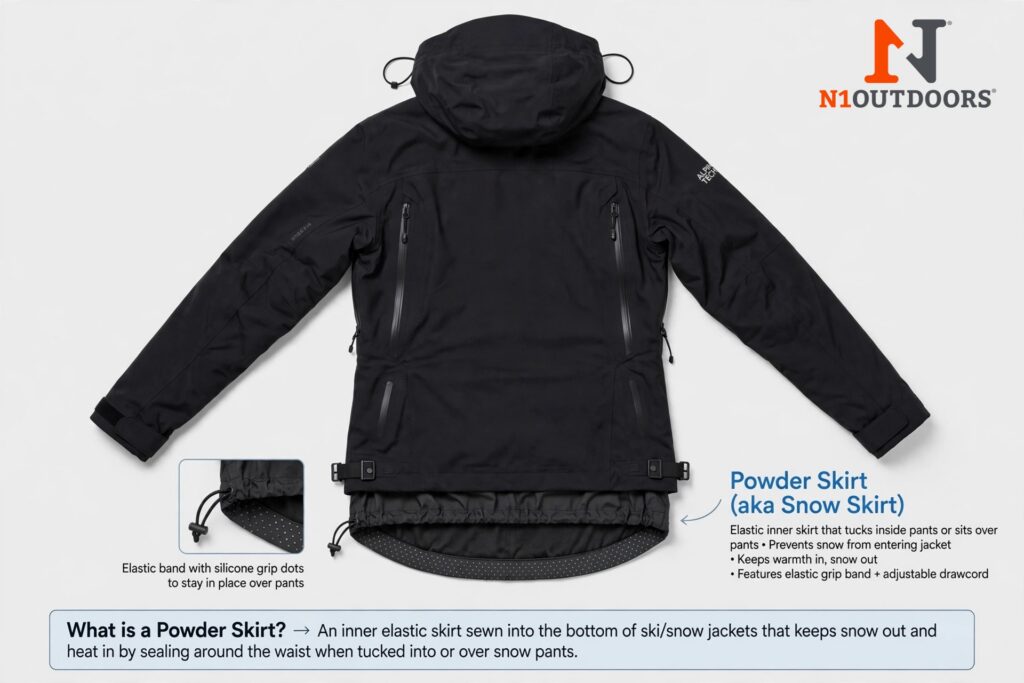
what is a powder skirt on ski jacket infgraphic

Ventilation, usually in the form of “pit zips,” lets you cool down quickly without fully unzipping. When working hard on steep terrain, these vents let you dump excess heat.

So, the powder skirt provides protection in deep snow, while ventilation regulates temperature during high-output skiing.

8. Helmet-Compatible Hood

A hood that fits over your ski helmet can make all the difference on a stormy day. Standard winter coat hoods fit over your head, but not over a helmet, leaving you without coverage. A helmet-compatible hood, however, offers a larger cut and includes adjustability features for wind and snow protection.
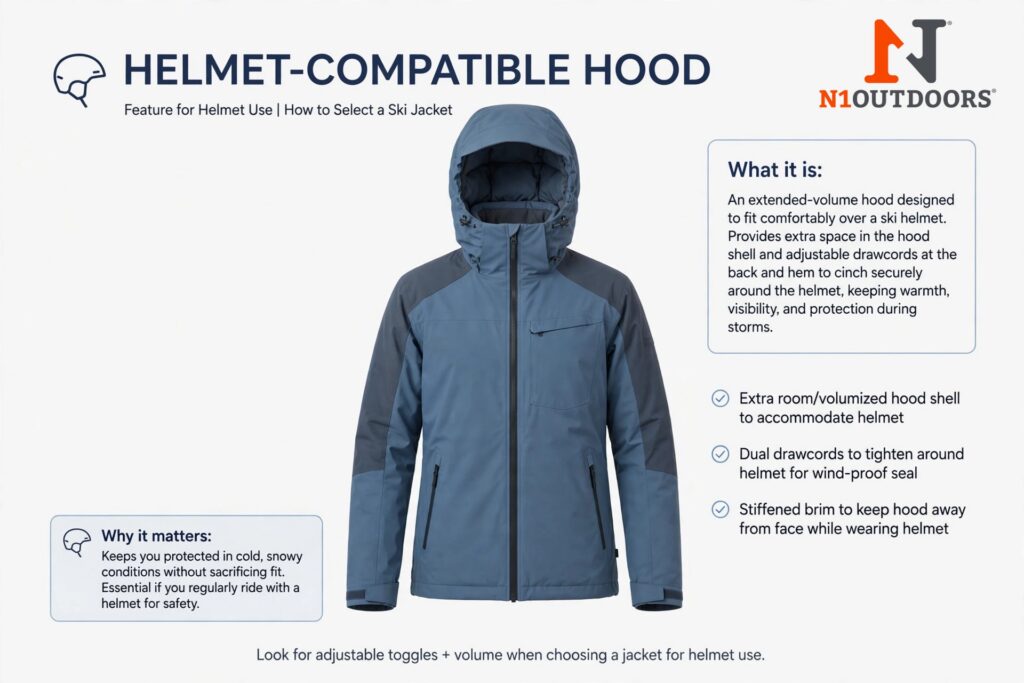
what is a helmet compatible hood for ski jacket infographic

Ski jackets generally offer two types of hoods — fixed or removable. When choosing between the two, consider whether you prioritize the security of a fixed hood or the versatility of a removable one (for milder, clear-sky days). Whichever you prefer, check that its adjustments are easy to operate while wearing gloves. You want to consider what it will be like to make adjustments in real-time.

3 Leading Retailers to Consider for Warm Ski Jackets

These three options provide good starting points for exploring ski jackets.

1. Buckman’s Ski and Snowboard Shops

Buckmans logo

Buckman’s Ski and Snowboard Shops is a family-owned retailer focused on skiing and snowboarding. Its apparel range features top brands like Patagonia, Obermeyer, The North Face, Spyder and Helly Hansen.

The staff’s expertise covers everyone from beginners to seasoned skiers and snowboarders. If you have questions about choosing a warm ski jacket for your needs, the staff can translate technical details into practical advice for your next day on the slopes.

2. REI

rei logo

REI carries ski jackets across multiple brands, with filters for insulation type, waterproofing and ventilation. These tools can help shoppers narrow their search to the features that matter for their conditions. The shop’s reputation for outdoor expertise and strong customer service makes it a reliable choice for durable winter outerwear.

3. DICK’S Sporting Goods

Dicks sporting goods logo

DICK’S Sporting Goods features a variety of insulated ski jackets from trusted brands. Its selection balances technical performance and style, offering both down and synthetic insulation, weatherproof designs and functional ski features.

The shop also provides in-depth product guides and customer reviews to help shoppers choose the ideal jacket for any winter adventure.


Ski & Snowboard Wall Rack for Garage - Fits Any Board, Wall Mount Holders, Damage-Free Storage, Space-Saving Winter Gear Organizer
$49.99
Buy Now
We earn a commission if you make a purchase, at no additional cost to you.
10/28/2026 07:37 pm GMT

Frequently Asked Questions

Here are answers to common questions about choosing and maintaining a warm ski jacket.

Q: Why do I still feel cold and damp even in my waterproof jacket?

A: If your jacket isn’t breathable enough for your activity level, sweat gets trapped and makes your inner layers damp. Moisture against your skin conducts heat away much faster than dry fabric.

Q: Should I buy my ski jacket a size bigger to fit layers underneath?

A: You should buy a size that allows you to comfortably wear your typical base and midlayers without feeling restricted. Most ski jacket manufacturers design with layering in mind.

Q: My jacket says it’s waterproof, but I get wet on stormy days. Why could this be?

A: Dampness may come from perspiration, moisture entering through openings, or leaks at seams and closures. A worn DWR finish can cause the outer fabric to become saturated, but it does not automatically mean the waterproof barrier has failed.

Q: Should I choose a down or a synthetic insulated jacket?

A: Down offers the best warmth-to-weight ratio and packs smaller, but loses insulating power when wet. Synthetic performs better in damp conditions, but is bulkier. If you ski in wet climates, synthetic makes sense. If you ski in cold, dry conditions, down gives more warmth with less weight.

Pick a Ski Jacket That Matches Your Needs

The right jacket comes down to matching these features to your skiing or snowboarding habits and conditions. Speak with a professional when shopping for gear to find the jacket that fits your style and climate. When you nail the fit and features, you’re free to focus on enjoying the mountain.

Be safe (and warm) out on the slopes!
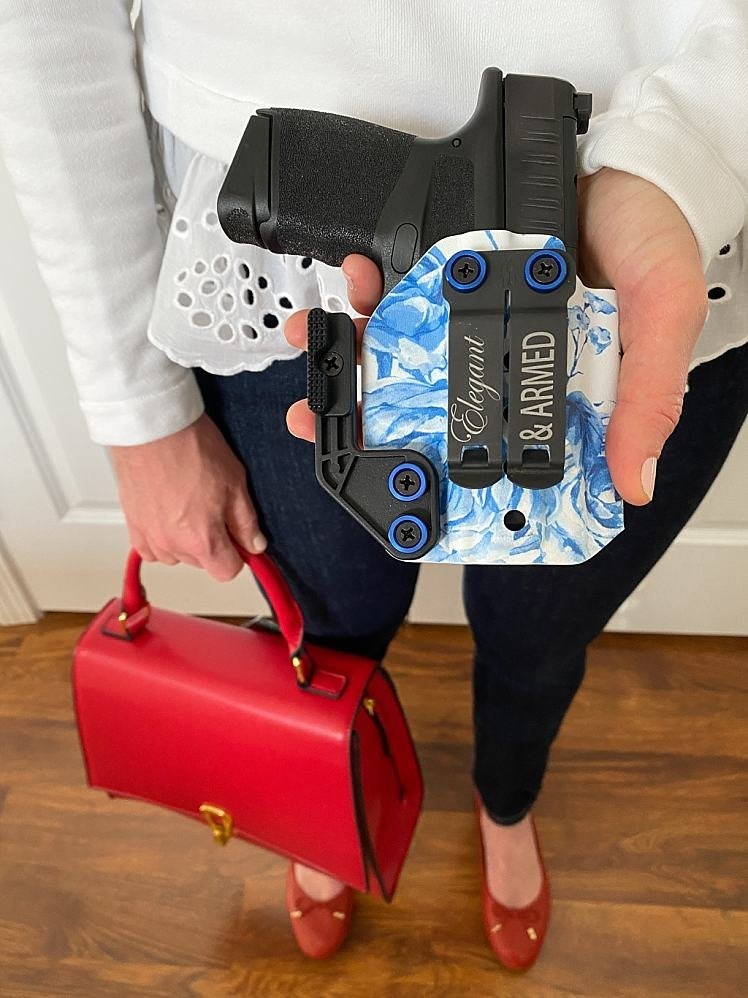
woman wearing red shoes and holding a gun in a holster

Best Ways for Women to Carry a Pistol for Home Defense and Everyday Life

When it comes to concealed carry options for women, there tends to be an initial problem… belt loops.

Here’s why…

A good share of women’s jeans have thin, decorative loops or none at all, and leggings don’t have them either, So, then maybe you opt for the standard clip-on holster sold at the gun counter. Before long, it’s sagging, tipping outward, or sliding around. Plus, hip flare, in addition to a waistline that sits higher than the pants only makes it worse.

Start With Your Body and Your Clothes, Not the Gun

Women often have a shorter torso and more hip flare than men do, and the natural waist tends to sit a few inches above where the pants actually ride. That space between waist and belt line is the reason a pistol on the strong-side hip so often tilts its grip out and prints, or pokes into the ribs whenever you sit down in a chair or a truck seat.

That’s why it’s worth standing in front of a mirror in your normal clothes before spending money.

Think about whether you wear a sturdy belt most days, or whether you’d need a holster built to work without one. Then, notice how high the rise is on the jeans you would typically wear, because high-rise pants and leggings move the whole picture up.

Then, look at your tops, since a fitted tee will show the outline of nearly any pistol, while a loose flannel or a hunting jacket does a better job of concealing. And, give some serious thought to how much of the day you spend sitting (at a desk, in the cab of a truck, in a tree stand, etc), because sitting is usually where a poor holster choice shows itself.

The Main Carry Positions

Now, let’s take a look at the typical carry positions…

AIWB (Appendix Inside the Waist Band)

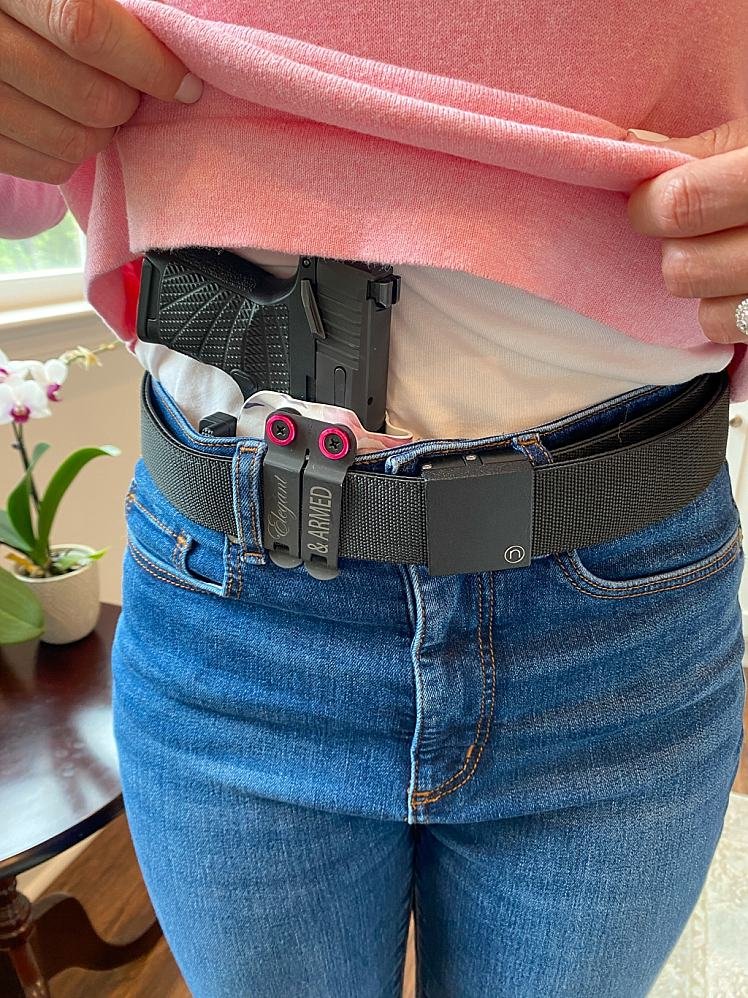
appendix-aiwb holster on woman

There are tradeoffs, or cons of the AIWB holster type, though.

Sitting for long stretches with a full-size pistol in front can get uncomfortable, and the muzzle is pointed toward the femoral artery during reholstering. So, look for a holster with a claw or wing that pushes the grip in toward the body, plus full trigger guard coverage. And, be sure to reholster slowly while looking at the holster, with your shirt held clear of it.

Strong-Side Hip (3 to 5 O’Clock)

The traditional belt position does work for some women. Typically, it’s those with a straighter hip line, and who wear a stiff gun belt. A forward cant — meaning the grip tilts toward the front — tends to help quite a bit. Ride height is a bigger deal than people expect, since a gun riding high will jab the ribs, while one riding low will dig into the hip.

Plenty of shoppers start by looking at concealed carry holsters for women with adjustable cant and ride height, then set them up at home in their own clothes until the grip stops printing.

We looked at the body shape and holster fit from a different angle in Best Concealed Gun Holsters for Fat Guys, and much of the thinking there about wider backing plates and adjustable clips applies here as well.


Cross-Draw and Shoulder Rigs

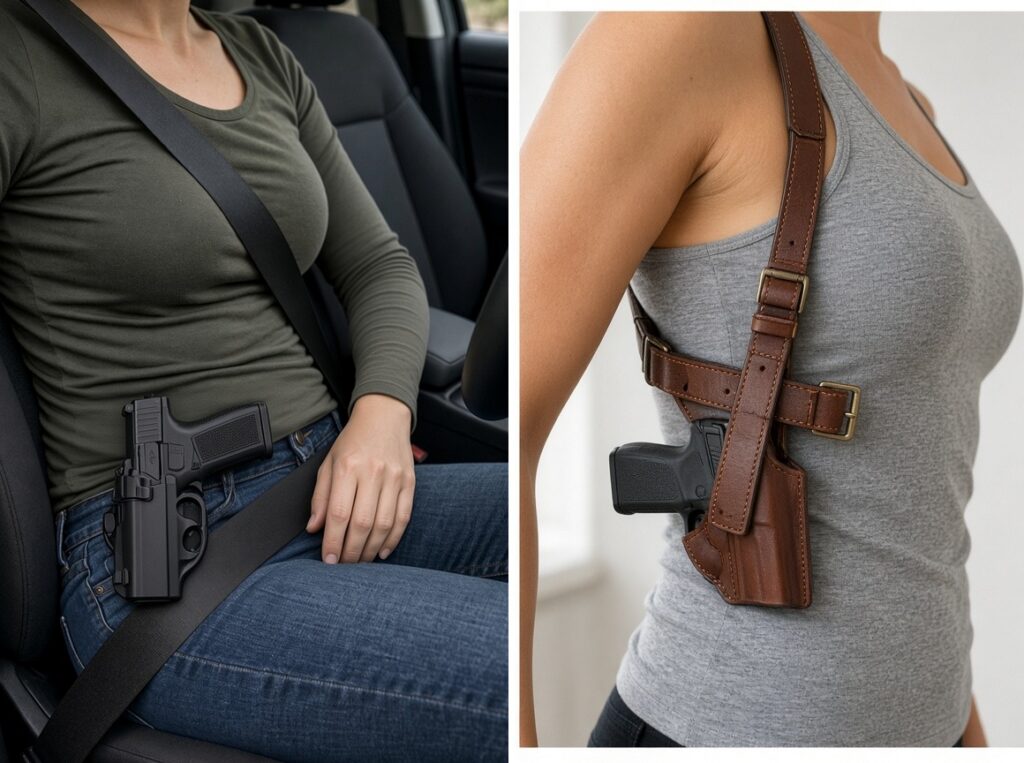
With cross-draw holsters, the gun rides on the off side with the butt facing forward. People who drive a lot, or who sit in a blind for hours, tend to like it because the grip stays reachable while seated and buckled in.

Chest rigs and shoulder holsters do something similar under a coat, and hunters who carry a sidearm for bear or hogs often use them since they stay out of the way of a pack’s hip belt. The drawback is that the muzzle sweeps across anyone beside you on the draw, so this position requires a good bit of careful dry practice. Safety is paramount!

Cross_Shoulder holster for women

Deep Concealment: Belly Bands, Corset and Bra Holsters

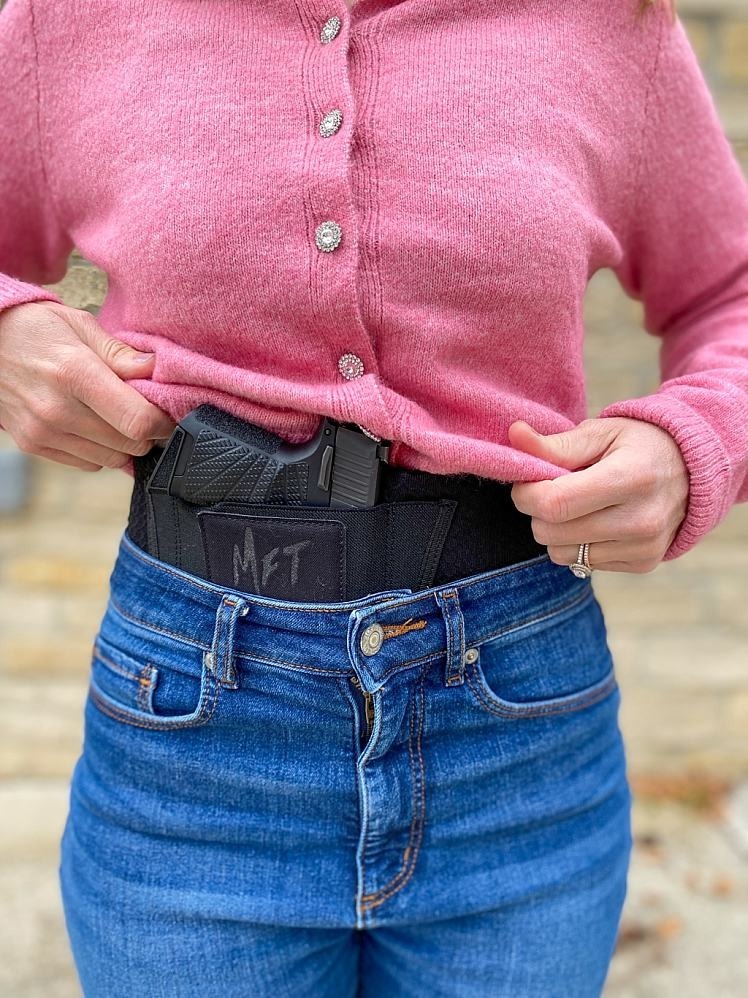
These specific gun holster types are for dresses, gym clothes, and other outfits that don’t have a usable waistband.

A belly band holster is basically an elastic wrap with a pocket sewn in, and it can hold a small pistol at nearly any spot around the torso. Most traditional holsters clip directly onto a heavy, rigid belt. But, a belly band holster is independently of your clothing, and relies on its own compression and a hook-and-loop closure to remain securely in place.

A corset holster typically has a much wider vertical profile, that spans from just under the bust down over the hips. It uses hook-and-eye rows or heavy-duty zippers to compress your midsection, with built-in fabric pouches angled along the torso to secure your firearm.

A bra holster mounts your firearm directly onto your brassiere, using the support panel or the underwire area as its main anchor point, and it isolates your firearm to your bra fame. This allows you to carry while wearing shirts, dresses or crop tops that expose the waist entirely.

Drawing from any of these types of holsters is slower, and sometimes requires you to use both hands. You may even have to utilize a firm pull from under a hem, which can cause stretching. They make good options for those days when no other holster types seem to fit. If you use this type of holster, be sure to choose one that covers the trigger guard with something stiffer than cloth.

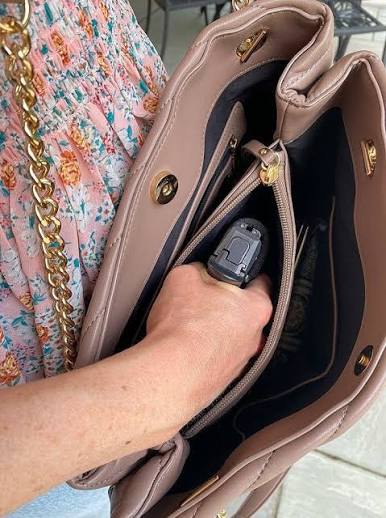
Off-Body: Purses and Packs

Off Body holster for women

Picking the Pistol Itself

When it comes to pistol choice, smaller isn’t always better.

Very small pocket pistols have a short sight radius, sharp recoil, and stiff slide springs that some shooters have trouble racking, while a compact 9mm around the size of a Glock 19 or Sig P365 XL is usually easier to shoot well and not a great deal harder to conceal inside the waistband.

For anyone who struggles to rack a slide, Smith and Wesson designed its EZ line with that in mind. Whatever you settle on, get a holster made for that specific model, since universal holsters tend to fall short on retention and trigger coverage.

The Drawstroke and Practice

A carry setup isn’t much use without a smooth draw, and that comes from repetition. Dry fire only with an unloaded gun you’ve checked yourself, and keep ammunition out of the room entirely.

Break the draw down into steps:

  1. Clear the cover garment, either pulling the shirt up hard toward the sternum with the off hand or sweeping a jacket back with the strong hand.
  2. Take a full firing grip with the gun still holstered, so there’s no adjusting afterward.
  3. Pull straight up, rotate the muzzle toward the target, and bring the support hand in near the chest.
  4. Push out to full extension.
  5. Reholster slowly with eyes on the holster and your finger outside the trigger guard.

Short sessions of around ten clean reps a few times a week will generally do more than a single hurried range trip each month. After that, a class where you draw and fire live is worth the time, and the NRA’s firearm training site lets you search instructors and courses near you, including basic pistol and concealed carry.

Home Defense: Staging Versus Storage

Some women simply keep carrying at home, which means the gun is never sitting out anywhere. If that doesn’t fit your routine, choose one staging spot and plan around it.

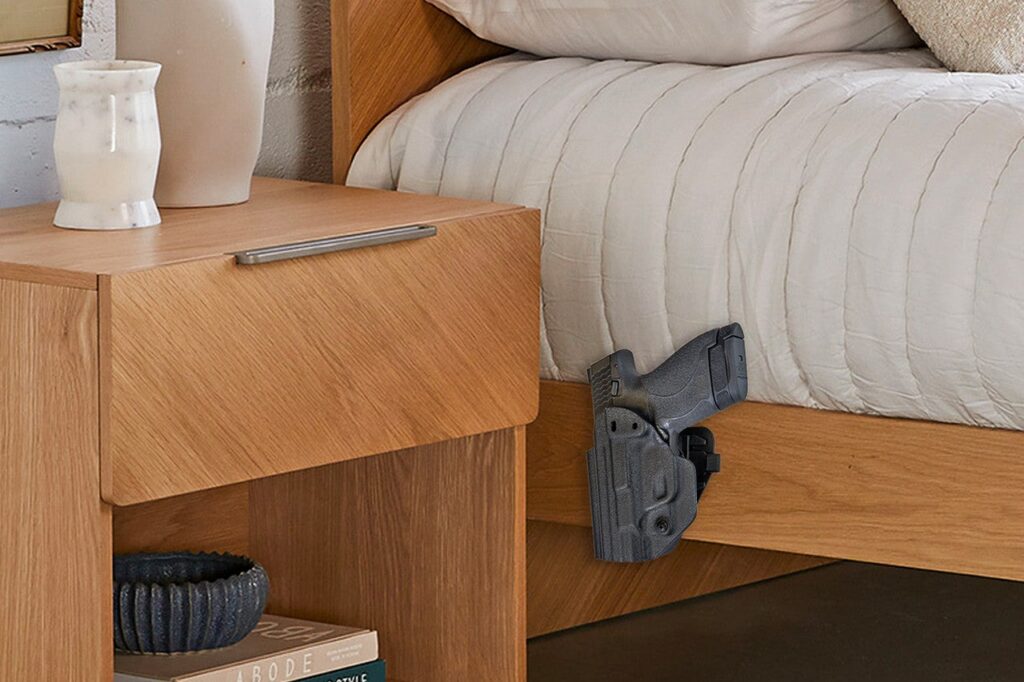
A quick-access safe beside the bed — either biometric or a simplex keypad model — opens in a second or two, though it needs to be bolted down to prevent a burglar from simply carrying it off. Keeping the pistol in its holster inside the safe covers the trigger and lets you clip it on if you need it while moving through the house. Be sure to keep a light close by too (a weapon light, a handheld, or both), since you have to identify what you’re pointing at. Also, be sure to talk through a plan with the household about where everyone goes, who calls 911, and which room you hold, in the event of an emergency.

Backup guns, long guns, and hunting rifles all belong in a locked safe. Project ChildSafe, an NSSF program, offers a practical safe storage guide and distributes free cable locks through local law enforcement agencies. If you’re deciding between a pistol and a long gun for the house, our rundown of the best home defense shotguns is worth a look.


Check the Law Before You Carry Anywhere

Carry laws differ a lot between states, ranging from permitless carry to permits that are difficult to obtain. Rules about vehicles, state parks, and carrying while hunting also vary, and some states have storage laws that apply when minors live in the home. Read your state’s statute or attorney general page directly, and the NRA-ILA state gun laws pages make a reasonable starting point when you travel. Anyone carrying a sidearm on a hunt should also check the state wildlife agency’s regulations, because handgun rules during archery and muzzleloader seasons aren’t the same everywhere.

A Few Things to Check Before You Commit

A few more things to consider before selecting a women’s holster for home defense or everyday life: Make sure the holster is molded for your exact pistol and fully covers the trigger guard, and that you’ve got either a real gun belt or a holster designed for beltless clothing.

Do your dry practice from that same holster in the clothes you normally wear. Also, be sure to bolt down the bedside safe and lock up the rest, and read the carry and storage laws from the official source, as opposed to getting information from a forum thread.

Be sure to wear the holster for at least a full day before relying on it, running errands, sitting in the truck, and bending down to lace a boot, making sure to adjust anything that rubs or shifts.

Stay safe!

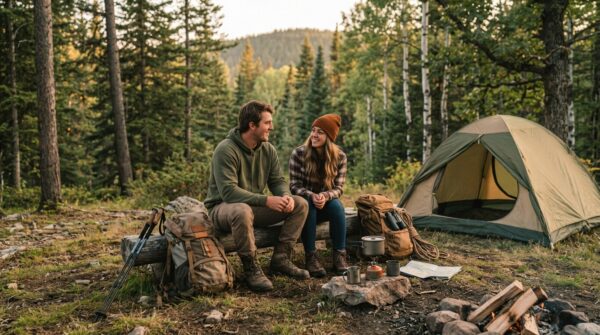
how to get outdoors for less feautured image

How to Make Outdoor Hobbies More Affordable Without Giving Them Up

It happens around April every year. The weather breaks, the trees start budding, and every outdoor instinct in your body kicks into overdrive.

You want to be on a trail. You want to pitch a tent by a river or paddle out into a quiet lake at sunrise.

But, then you open up your laptop, start looking at gear or camping permits, and reality hits you like a cold shower.

I fell into that exact trap last Spring. I was sitting at my kitchen table with a hot cup of coffee, casually adding a few “basics” to an online shopping cart for a weekend camping trip.

By the time I hit the checkout page, the total was higher than my monthly grocery bill!

A single tent, a mid-range sleeping bag, some wool socks, and a portable stove. That was it. How was it so expensive?

I closed the tab, leaned back in my chair, and felt genuinely defeated.

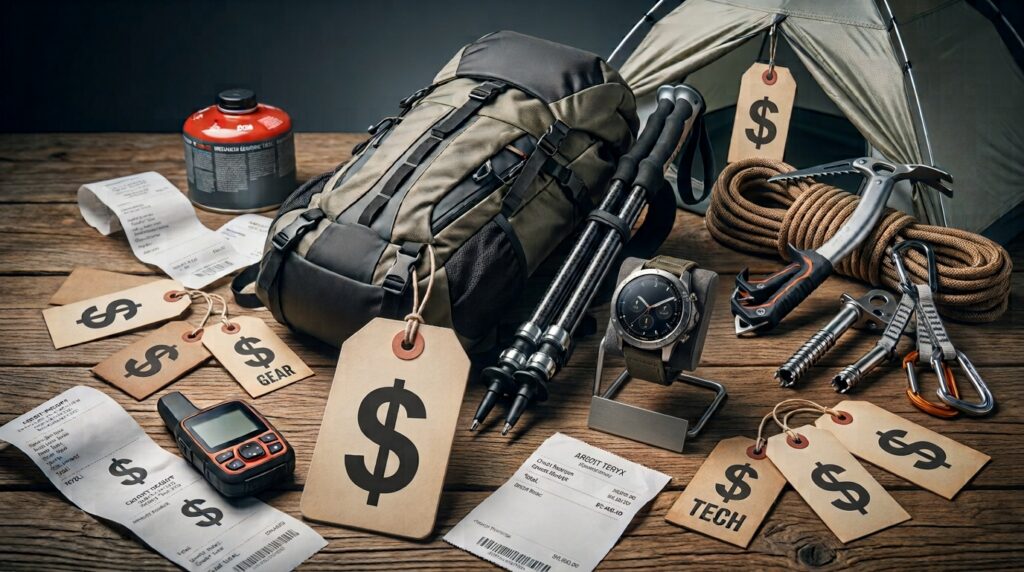
outdoor gear is too expensive

When money gets tight, the natural reaction is to just quit. You tell yourself that hiking or camping is a luxury you can’t afford right now. But, walking away from what keeps you grounded, healthy, and sane is usually the wrong move. The truth is, you don’t need to quit being a lover of the outdoors. You just need to stop buying into the idea that nature requires a massive price tag.

So, how do you keep getting out there without wiping out your savings account?

Rethink What You Actually Need

Let’s be real for a second. The outdoor industry is built to make you feel underprepared. Every season, brands roll out lighter fabrics, stronger carbon fiber, and jackets engineered to survive an Antarctic blizzard. It’s easy to feel like you’re missing out if you don’t have the latest and greatest gear.

And look, if you’re climbing Mount Rainier, buy the top-tier stuff. But, for a Saturday afternoon hike or a weekend at a state park? You simply don’t need commercial-grade equipment.

Before buying anything new, audit your closet. Basic, durable clothes you already own—sweatpants, synthetic gym shirts, a good fleece hoodie—will get you through ninety percent of three-season outdoor activities.

When you do need actual gear, buy used. Online resale sites, garage sales, and community gear swaps are absolute goldmines. A lot of people buy expensive equipment with big intentions, use it once in their backyard, get busy, and list it online a year later for twenty percent of what they paid.

Another option we constantly overlook? Borrowing. If you only camp once or twice a summer, why buy a four-person tent that’ll sit in your closet gathering dust 350 days a year? Ask a friend. Most outdoor enthusiasts love lending out their extra gear because it means someone else gets outside.

Have you checked with a neighbor or asked around your group chat before pulling out your credit card? I guess we all forget that sharing used to be normal.


Stop Driving Across the Country for Fresh Air

man on mountain viewing sunrise

So, look closer to home instead.

Almost every town has county parks, regional conservation areas, state forests, or public river access points within a 30-minute drive. They might not have dramatic mountain peaks, but they offer quiet trails, dense trees, and fresh air for a fraction of the cost. Making micro-adventures close to home a habit keeps your gas tank full and turns outdoor time into a regular routine instead of a rare, expensive event.

To keep track of how these shorter local trips fit into your broader financial picture, track your monthly recreation allowance. A free budget app can help you set realistic limits for gear, gas, and park entry fees, ensuring your outdoor adventures stay completely stress-free. And that’s the point—peace of mind shouldn’t cost a fortune.

What hidden local trails are sitting twenty minutes from your house right now that you’ve driven past a hundred times?

Learn to Fix What You Already Own

We live in a throwaway culture. The moment a zipper jams or a small tear shows up on a rain jacket, our default reaction is to throw it away and browse for a replacement. But, learning basic maintenance is probably the single best way to save thousands of dollars over a lifetime of outdoor hobbies.

Clean your gear. It sounds simple, but dirt and trail grime degrade synthetic fabrics, ruin zippers, and strip away waterproof coatings faster than almost anything else. Wash your boots after a muddy trail run. Store sleeping bags loosely in a closet rather than crammed tight in a compression sack for months.

And when something tears, patch it.

Sitting down at your kitchen table with a ten-dollar repair kit and patching a tear on an old rain shell is weirdly satisfying. That little patch gives the gear character. It turns a scuffed item into something that tells a story about where you’ve been.


Find Your People and Share the Costs

Going solo is great, but outdoor hobbies are almost always cheaper with a crew. Joining a local hiking group, paddling club, or informal meetup group opens up a ton of shared resources.

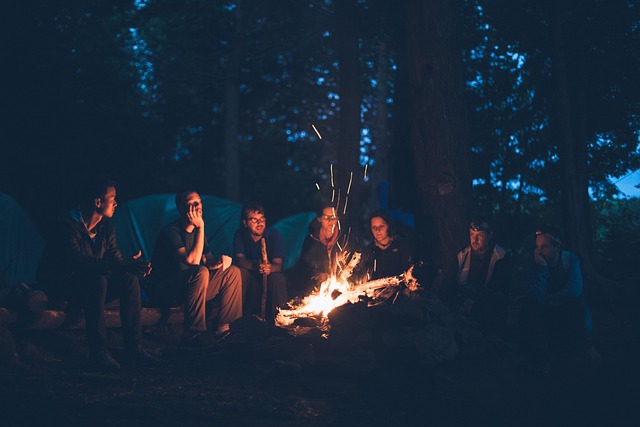
group camping around campfire

Why carry the entire financial weight of an adventure by yourself when you can share it with friends?

Making The Outdoors Affordable… Strip It Down to the Basics

At the end of the day, making outdoor hobbies affordable comes down to a shift in perspective. Nature doesn’t care what logo is printed on your jacket. The real benefits of being outside—the physical movement, the quiet, the fresh air, the mental break from screens—are completely free.

It really is that simple.

So, get out there, go do some camping, enjoy the simplicity of sitting on a river bank, doing some fishing. Maybe even find a new biking trail to traverse.

By focusing on local spots, caring for what you own, buying second-hand, and keeping things simple, you can build a routine that nourishes your mind without wrecking your wallet. You don’t have to give up the trail. You just have to change how you walk it.