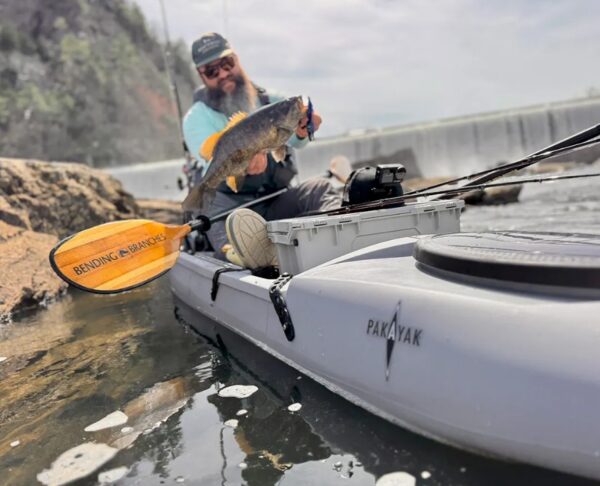
man holding bass while fishing in packable kayak

Packable Fishing Kayaks: What Anglers Should Know Before Choosing One

Owning a fishing kayak has traditionally meant solving a storage and transport problem first. Conventional fishing kayaks commonly measure around 10 to 14 feet, and many require a roof rack, trailer, or truck bed to move, plus a garage or outdoor rack to store it once you’re back home. For anglers in apartments, condos, or smaller homes, that physical footprint is often the single biggest barrier to owning an extremely useful watercraft that will get you out on the water doing what they love.

But now, a new category has been developed to specifically address the problem of storage space: the packable fishing kayak.

These boats are designed to be disassembled, compressed, or folded into a compact form for transport and storage, then reassembled or inflated at the launch site.

So, let’s take a closer look at exactly what a packable fishing kayak is, and cover the various types.

What Is a Packable Fishing Kayak?

“Packable fishing kayak” covers several distinct design types of kayaks that share one common goal, reducing the transport and storage footprint of a full-size fishing kayak, but accomplish it in meaningfully different ways.

Understanding which type of packable kayak you’re evaluating matters, because the tradeoffs are category-specific, not universal.

Sectional hard-shell kayaks are built from multiple rigid sections that connect at the water’s edge using clamping systems, with seals or gaskets at each joint designed to prevent water intrusion. When disassembled, the sections nest inside each other, reducing overall length considerably. On the water, a properly assembled sectional kayak behaves like a conventional hard-shell because structurally it is one.
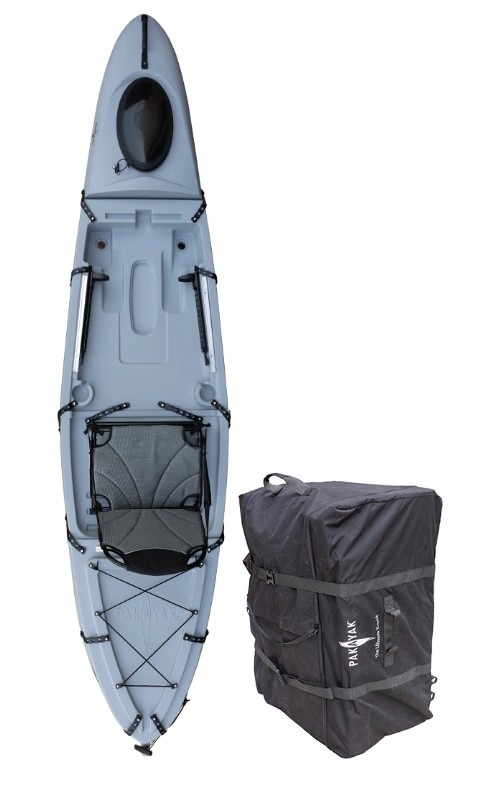
sectional packable kayak

One example of the sectional hard-shell approach is the Pakayak AnglerFish, a hard-shell sit-on-top fishing kayak designed to separate into sections for compact transport and storage.

Inflatable kayaks are the most widely recognized packable option. Modern drop-stitch designs are considerably stiffer than older models and deflate into a bag for easy transport. They’re generally less expensive than sectional hard-shells, though their tradeoffs differ.
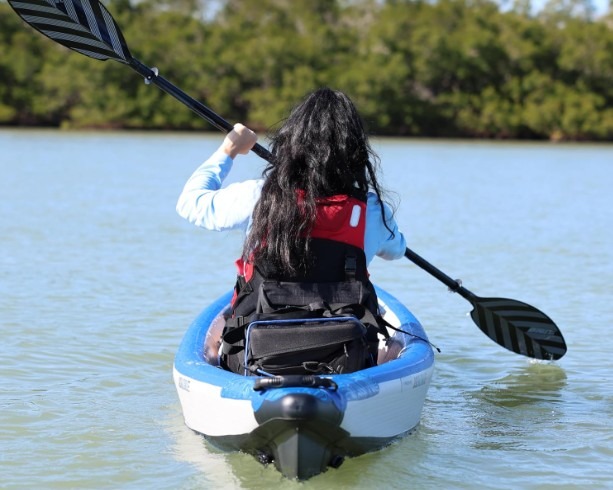
woman paddling an inflatable kayak

Folding kayaks use a rigid internal frame combined with a fabric or composite skin. They pack down well and have a long history in expedition and touring paddling, though most folding designs are oriented toward touring rather than fishing.
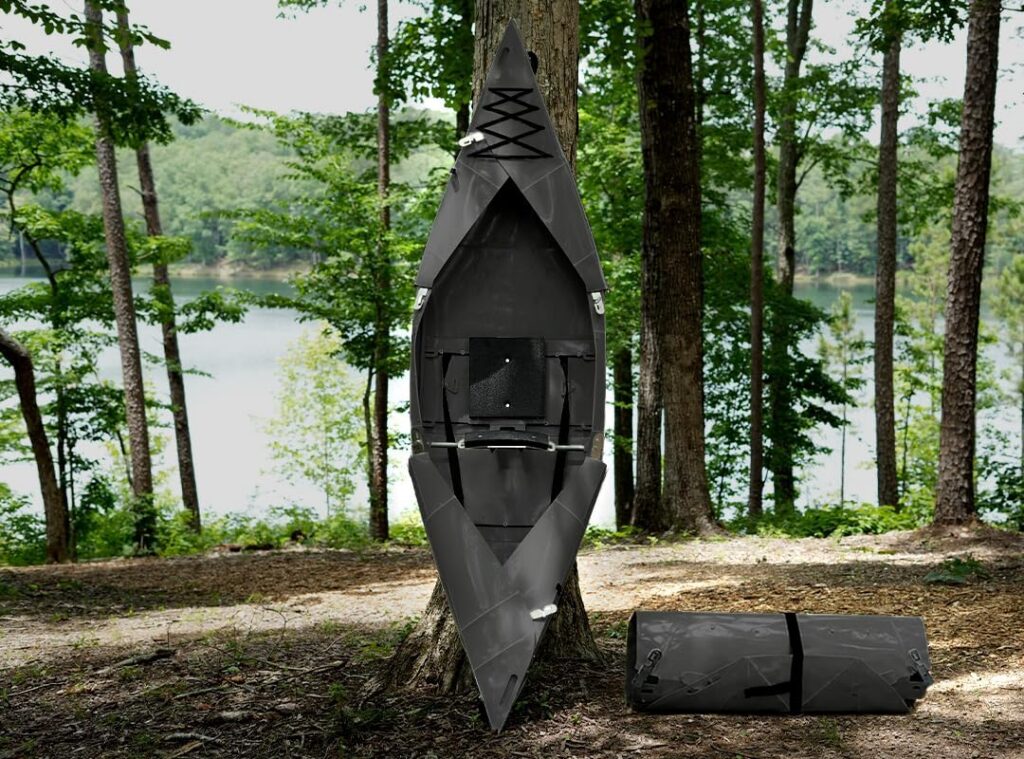
foldable kayak against tree

Why Anglers Consider Packable Kayaks

The appeal of a packable fishing kayak usually comes down to one or more of these practical situations.

Transportation constraints: Not every angler drives a truck or SUV with a roof rack. A packable kayak can travel in a trunk, back seat, or hatchback cargo area, opening kayak fishing to anglers who previously had no practical way to move a conventional boat.

Storage limitations: Apartment living, condo rules, or lacking garage space are common reasons anglers can’t own a traditional kayak, or end up storing it somewhere inconvenient. A kayak that fits in a closet changes that calculation.

Solo handling: A heavy, 12-foot kayak is awkward to move alone, especially onto a roof rack. Sectional designs break the boat into smaller, more manageable pieces, something relevant for older anglers or those with physical limitations.

Remote launch access: Some productive fishing spots are accessible on foot but not by boat ramp. Carrying or wheeling a kayak to a remote entry point, and assembling there, can mean access to water that sees far less pressure.

Occasional use: For anglers who fish a handful of times per season, the logistics of a full-size kayak can outweigh the value of ownership. A kayak that lives in a bag and comes out when needed is a lot easier to justify.

What Are the Tradeoffs?

fishing from kayak at dusk

Weight: Packable does not mean lightweight. Many sectional hard-shell fishing kayaks weigh similarly to a traditional hard-shell. The advantage is that weight is distributed across sections that can be moved separately, but anglers who assume “packable” means “easy to carry solo” should verify the specific model’s total system weight first.

Assembly time and learning curve: Every packable kayak requires setup at the launch. Assembly time varies significantly by design. Some sectional systems come together relatively quickly once the user knows the process; others take longer. First-time assembly will almost always take more time than subsequent setups.

Connection system maintenance: Clamps, seals, gaskets, and frame joints require periodic inspection according to the manufacturer’s recommendations. In a one-piece kayak there’s nothing to maintain structurally. However, in a sectional or folding design, the connection points are the most critical part of the system.

Cost: Sectional hard-shell engineering comes at a premium compared with one-piece recreational fishing kayaks. Anglers on a tighter budget should weigh whether the portability benefit genuinely justifies the price difference for their situation.

Performance: A well-designed sectional kayak can provide many of the on-water characteristics anglers expect from a rigid hard-shell, but performance varies by hull design. So, evaluate each model’s hull shape, width, and weight distribution independently rather than assuming all sectional designs perform identically.

Packable Fishing Kayaks vs. Other Designs

FeatureSectional Hard-ShellTraditional Hard-ShellInflatableFolding
Hull constructionRigid sectionsOne-piece rigidAir/drop-stitchFrame + skin
TransportCompact when nestedRoof rack or trailer typically requiredVery compactCompact when packed
Storage footprintSmall when nestedLargeSmall when deflatedSmall when packed
Setup at launchAssembly requiredMinimalInflation requiredAssembly required
RigidityGenerally highGenerally highVaries by designVaries by design
Puncture/damage riskLowLowHigherModerate
Cost rangePremiumWide rangeWide rangeMid to premium

No category of packable kayak is universally better than the other. Everything is a tradeoff, and the right choice depends on how you travel, where you fish, how much storage you have, and how much setup you’re willing to do.


What to Look for When Comparing Models

Once you’ve decided the packable category that fits your situation, here’s what to evaluate.

Connection system: In a sectional kayak, this is the most critical technical consideration. Look at how sections connect, what materials are used for the seals and clamps, and what maintenance the manufacturer recommends.

Actual packed dimensions: Focus on packed dimensions (length, width and footprint), measured against your actual boat storage space and vehicle. Don’t assume “fits in a car” means it will fit in your specific vehicle without checking.

Total system weight: Factor in the bag, wheels, and accessories. Consider whether each section can be carried separately and how far you’ll carry them from vehicle to water.

Fishing-specific outfitting: Not all packable kayaks are designed with anglers in mind. Look for rod holder mounting points, gear track compatibility, tackle storage, transducer mounting options, seat adjustability, and foot peg range.

Stability for your style: If you fish standing, look for models with reinforced floor decks and wider beam dimensions. If you fish seated, hull stability during casting and fighting fish matters more. Independent owner reviews are typically more reliable than manufacturer claims alone.

Propulsion options: Some models come in paddle-only or pedal-drive configurations; some are compatible with aftermarket electric motors. So, if hands-free propulsion matters for your style of fishing, be sure to verify compatibility before purchasing.

Who Should Consider a Packable Fishing Kayak?

Anglers without dedicated storage: Apartment dwellers and condo owners who want a legitimate fishing kayak but have no practical place to keep one.

Anglers with limited vehicle options: Those driving sedans or smaller crossovers without roof rack compatibility who don’t want to invest in a truck for towing a separate setup.

Road-trip anglers: Those who travel between fishing locations and want to bring a kayak without committing to a trailer.

RV owners and boaters: Anglers who travel extensively and want a fishing kayak that fits within an existing vehicle without significant storage overhead.

Anglers targeting hard-to-reach water: Remote rivers, small lakes, tidal marshes, and backcountry locations requiring a carry-in approach suit a kayak that assembles at the bank.

Anglers returning to the sport: People who stepped back partly because a full-size kayak became too difficult to manage, and who want a setup that fits their current situation.
Frequently Asked Questions About Packable Fishing Kayaks

What is a packable fishing kayak? A kayak designed to break down, deflate, or fold for transport and storage, then be assembled or inflated at the water. The category includes sectional hard-shells, inflatables, and folding kayaks, each with different performance and maintenance characteristics.

Are packable fishing kayaks stable enough for serious fishing? Stability depends on the specific hull design, beam width, and weight distribution of each model, the same variables that determine stability in any kayak. Some packable designs are built specifically for stand-up fishing. Demo the kayak in conditions similar to your intended use where possible.

Can a full-size fishing kayak really fit inside a car? Some can. Always verify the specific model’s packed dimensions against your actual vehicle cargo area before purchasing.

How much assembly is involved at the launch? It depends on the design. Inflatables require inflation with a pump. Sectional hard-shells require connecting sections and securing the clamping system, time varies by model and improves with practice. First-time assembly always takes longer. Neither type typically requires tools.

Which Type Makes Sense for Your Situation?

If the comparison table above left you between two options, this quick framework can help narrow it down.

If your priority is…Consider…
Hard-shell performance with compact storageSectional hard-shell
Lowest packed weight and volumeInflatable
Occasional use with minimal maintenanceTraditional hard-shell if storage allows; inflatable if it doesn’t
Frame-based portability for touring waterFolding kayak
Fishing-specific rigid platform with portabilitySectional fishing kayak

No single answer fits every situation. But knowing which tradeoff matters most to you, performance, weight, cost, or maintenance, usually points clearly toward one category.

Is a Packable Fishing Kayak Right for You?

Whether a packable kayak is right for you comes down to honestly answering a few specific questions: How do you get to the water? Where do you store gear at home? How often do you fish, and how much setup are you willing to do?

For anglers whose answers point to a transport or storage problem, a packable design may open up opportunities a conventional kayak simply can’t. For anglers with a truck, a garage, and a straightforward drive to their launch, a traditional hard-shell may still make more sense. The goal is matching the kayak to the life you actually have.

Whatever type kayak you choose, good luck out there, and boat safely!
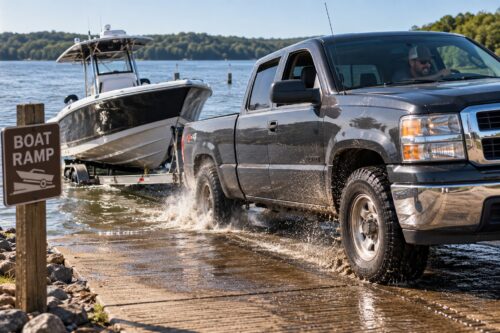
truck pulling boat out of the water

Gas vs. Diesel Trucks | Which Should I Get For Towing A Boat Or Trailer?

Last summer I pulled our boat up the last grade before the lake, the one that bends right before the boat ramp turnoff, and I felt the truck give up about two-thirds of the way through it. Not stall-out give up, just that slow fade where the pedal is on the floor and the speedometer is losing the argument anyway.

My father-in-law was behind me in his diesel truck with a camper twice the weight of my boat and trailer combined, and he came up that same hill without ever dropping out of the passing lane. I spent the rest of that drive doing the math on what he was driving that I wasn’t.

That math comes down to one word: torque.

It’s the number that decides what happens the moment you point a loaded trailer at a hill, and it’s the number most first-time tow vehicle shoppers never ask about, because horsepower gets all the attention on the window sticker.

Gas vs. Diesel Starts With What You Are Really Towing

When considering gas vs. diesel trucks for towing, before anything else, figure out the real number.

What do I mean by number?

No, not the brochure number for your boat or camper. It’s the number for the loaded weight of what you are towing once you’ve added fuel, water, gear, and whatever you or the previous owner left bolted to the frame. For example, a 24-foot bowrider boat with a full tank and gear aboard tows very differently than the same boat listed dry on a spec sheet, and the gap gets wider with a travel trailer once it’s loaded for a two-week trip instead of a weekend getaway.

Once you have the loaded weight data, the question of gas versus diesel stops being about brand loyalty and starts being about physics.

boat sitting on trailer with no truck

A gas engine generates its peak power high in the RPM range, which means it has to rev to get there, and revving hard while towing a loaded trailer on a grade is the one situation where a gas engine starts to feel like it’s working against itself.

Conversely, a diesel engine makes most of its pulling power low in the RPM range, right where a loaded trailer needs it. That’s the difference between the two trucks that were sitting side by side at the ramp (well, once I actually arrived at the ramp).

Why Torque Wins on the Hills That Matter

Torque is what gets a loaded trailer moving from a dead stop and what keeps a truck climbing steadily without having to downshift and rev to find more power.

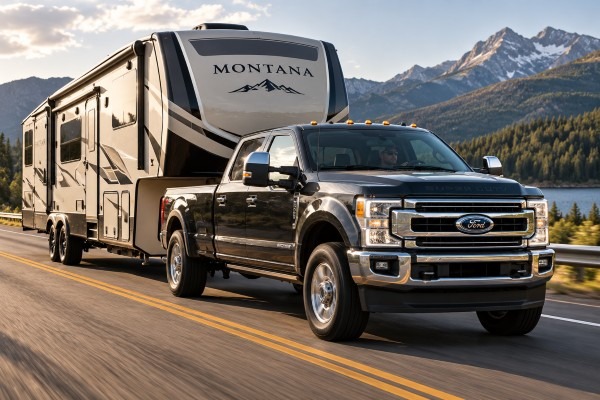
ford truck towing a camper

That’s the gap my father-in-law’s truck was showing me on that hill that day. His diesel wasn’t working any harder than mine. It simply had more pulling force available at the RPM where a loaded trailer needs it. As a result, the truck never had to strain to keep climbing.

What Changes Once Towing Becomes Routine

A lot of families that love the great outdoors end up in the same spot. The truck was fine for the first season of light towing, and then the boat got bigger, or a large camper got added into the mix, or towing stopped being an occasional weekend thing and became every other weekend from Spring through Fall.

That’s usually the point where an owner starts noticing the same fade I felt on that hill. And, even if you already own a diesel truck, you might start asking whether there’s a way to get more out of your current truck, instead of trading up to a bigger one.

That’s where a tuner comes into the conversation.

A tuner adjusts the calibration the engine and transmission use to respond to load, throttle input, and grade, and for a truck doing real towing, what matters most is how much of that low-end pulling force the calibration lets the engine use. Factory tunes are written conservatively for a wide range of drivers, most of whom never load a trailer anywhere close to what a family with a boat and a camper will pull behind the truck.

The question at that point isn’t whether the truck can pull more. It’s whether the calibration it left the factory with is letting it. A diesel tuner built to boost towing torque is the usual answer. So, if your truck is already working weekends and towing on grades, finding out whether your calibration is hindering you is the question that needs answering.


Matching the Upgrade to the Truck in the Driveway

The part that trips people up when deciding to buy a tuner is assuming that they all work the same, regardless of what diesel vehicle they have.

They don’t.

A tuner built for one engine code, transmission, and model year does not transfer to a different year of the same truck, even with the same badge on the tailgate And, loading the wrong tuner file is how an owner can end up not only with a truck that doesn’t tow better, but also shifting oddly or throwing a fault code the week before a trip.

So, the key information you need to find out before buying a tuner is not the regarding brand or price. More importantly, does the tuner listing name your engine code and model year, or, just your truck brand?

EngineGo sorts its tuner catalog by engine and model year rather than by the nameplate on the truck bed. A buyer can find this information in about 60 seconds, giving the buyer confidence that they are purchasing the right tuner. If you don’t see the information on the tuner listing that tells you what engine and model of vehicle that the tuner is for, and you can’t get that answer from the seller, you may want to consider buying elsewhere.


GEN-Y Hitch Mega-Duty 6" Drop Hitch Ball Mount 2.5" Receiver 21,000 lbs USA
$459.95
Buy Now
We earn a commission if you make a purchase, at no additional cost to you.
09/18/2026 04:47 pm GMT

Back at the Ramp

I didn’t trade my truck in after that hill. I looked into what was different about the diesel my father-in-law was driving, and torque was the honest answer. Not horsepower, not brand, but rather how much pulling force was available at the RPM where towing happens.

If your outdoorsy family is closer to towing every other weekend than towing twice a year, that’s the number to consider before the next trip to the lake, rather than after a hill takes the fight out of your truck the way that one took it out of mine!

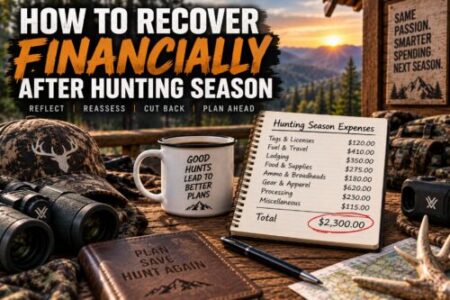
how to recover financially after hunting season

How to Reset Financially After an Expensive Hunting Season

on . Posted in Blog, Hunting

The excitement carried on the crisp, Autumn air through the early morning deer woods brings deep satisfaction to every hunter. But, the raw truth is that as much as hunting season is a beloved annual ritual, it also carries high costs.

From updated gear and licensing and tag fees, to travel and vehicle maintenance, the expenses of this hobby/passion called hunting can add up quickly.

That’s why when the hunting season wraps up, many hunters face a tough financial reality. Credit card balances have grown, savings accounts look lean, and yet the monthly bills keep coming.

So, how do you handle the aftermath of hunting season without completely wrecking your budget?

Well, managing post-season expenses requires deliberate steps, clear priorities, and smart planning.

So, here’s a practical guide to restoring your finances after an expensive hunting season, and who knows, reading it could be the free thing about your hunting season!

Assessing the Damage

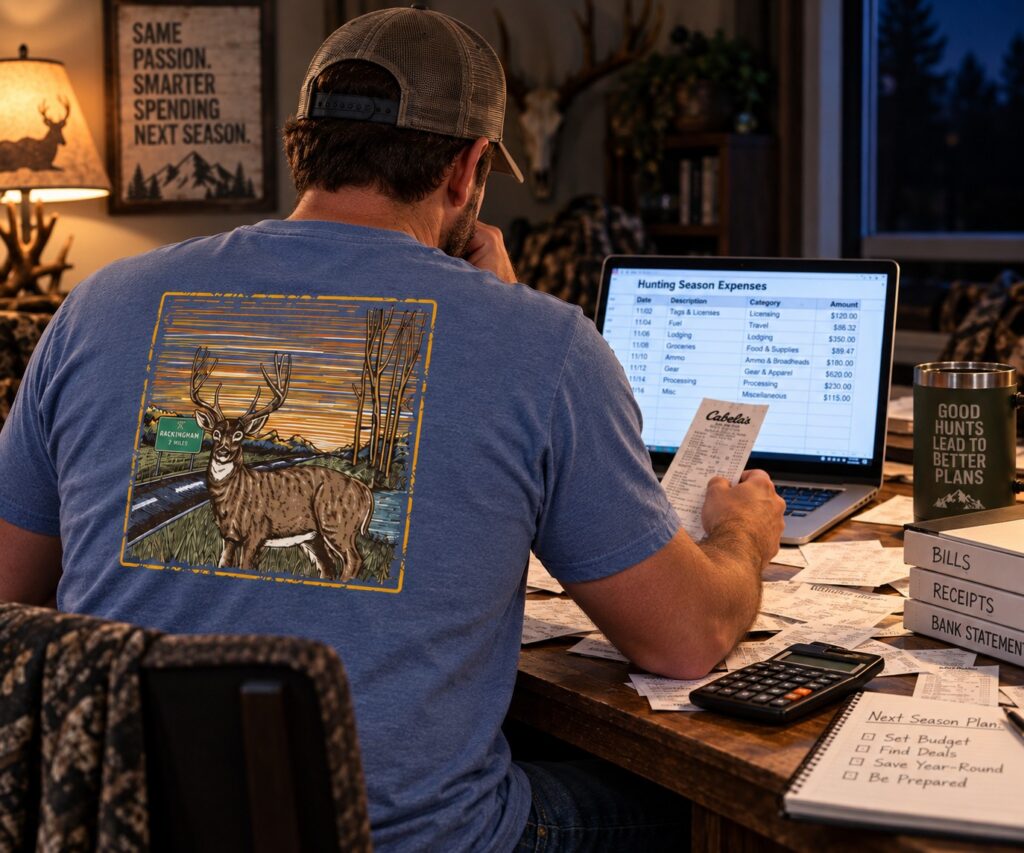
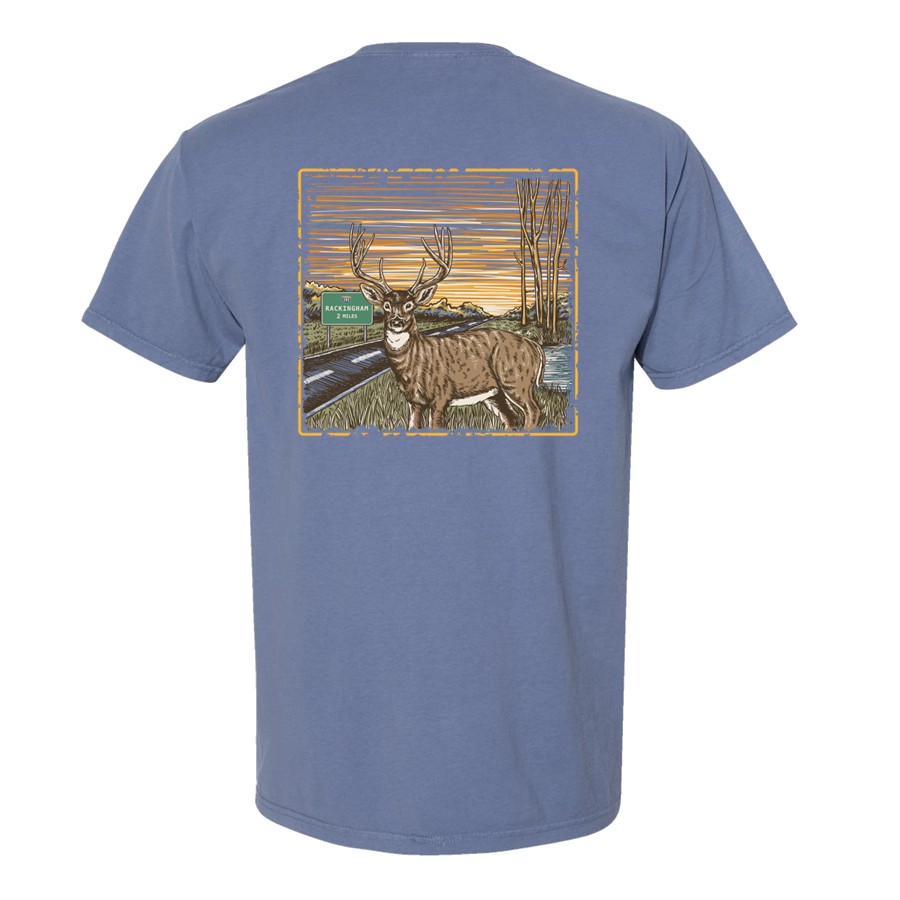
man budgeting for hunting season wearing the rackingham whitetail t-shirt from N1 Outdoors

Categorize your spending into standard groups:

  • Gear and Apparel: Boots, cold-weather clothing, optics, safety gear, and ammunition.
  • Travel and Logistics: Fuel, vehicle maintenance, lodging, permits, and tags.
  • Processing and Storage: Meat processing, taxidermy, specialized storage, and freezing equipment.
  • Miscellaneous: Meals on the road, emergency gear fixes, and extra licenses and tags.

Seeing the full number can feel overwhelming. But clarity gives you control. Knowing your total debt or depleted savings figure gives you a concrete target for recovery. And that’s the whole point.


Prioritizing High-Interest Expenses

If you funded your hunting trips using credit cards, carrying high-interest debt into the winter months can quickly compound your financial strain. High interest rates eat up money that could otherwise build your savings or go toward daily living expenses.

Have you listed out your balances by interest rate yet?

Focus on paying down high-interest credit cards while keeping up with at least the minimum payments on lower-interest balances. Now, if you’re facing a harsh reality that you’ve run up multiple debts, and figuring out how to navigate them all, maybe combining them makes sense. Tools like a loan consolidation calculator can help you evaluate options for combining debt into a single payment with a lower interest rate.

Simplifying your payment structure helps reduce stress and lower overall monthly costs, letting you pay down remaining debt much faster.

Adjusting Your Winter Budget

We have all felt that post-holiday, post-season budget pinch before. Once you know what you owe, build a temporary winter recovery budget. The goal during the post-season months is to free up extra cash flow so you can restore your finances.

Look for flexible spending categories where you can temporarily reduce expenses:

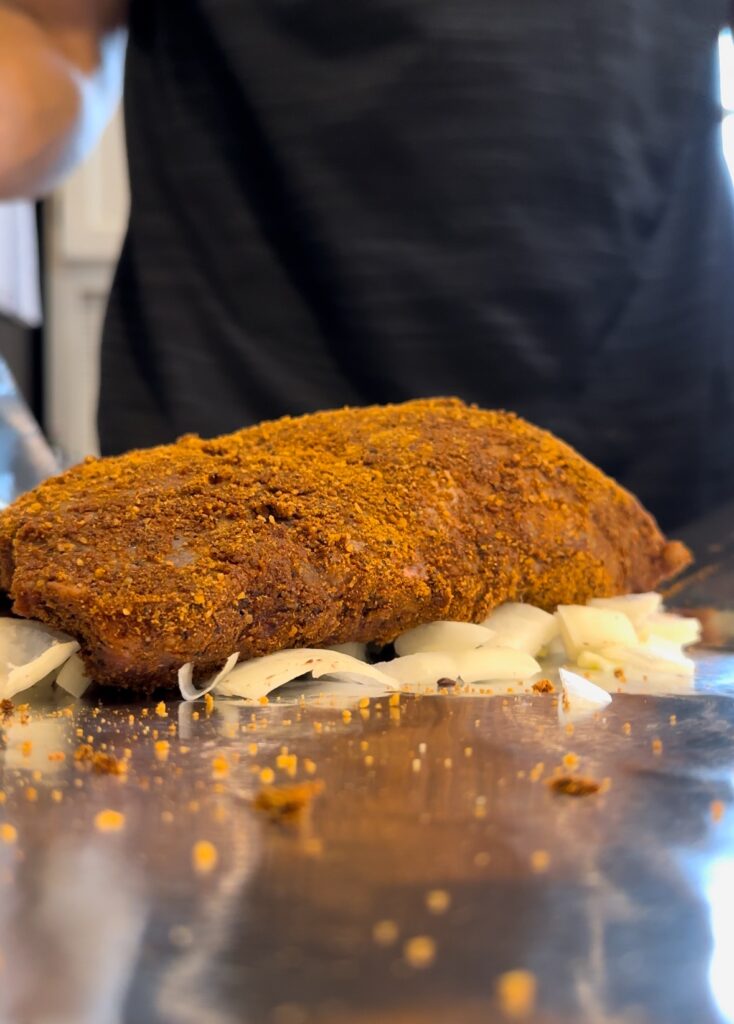
  • Dining Out: Shift toward home-cooked meals and meal prepping (hopefully, you have meat in the freezer from a successful hunting season! More about that further down…)
  • Subscriptions: Pause streaming services or unused gym memberships during the colder months.
  • Discretionary Purchases: Put a temporary hold on purchasing non-essential items, including off-season sales.

And that small shift makes a real difference. Redirect the savings from these small budget adjustments directly toward your debt payoff or savings replacement plan.

Leveraging Your Harvest

One overlooked financial benefit of a successful hunting season sits directly in your freezer. Wild game meat is a clean, nutritious source of protein that can significantly cut your grocery bills throughout winter and spring.

deer meat with rub

Maintenance and Off-Season Care

Proper maintenance of gear protects your financial investments. High-end boots, firearms, bows, optics, and clothing degrade rapidly if stored improperly. And, as fun as it can be to buy new gear, the idea is to keep from overspending on gear that could have lasted longer if properly cared for.

Take time after the season to thoroughly clean, repair, and store your equipment:

  • Clean and oil firearms and bow components to prevent rust.
  • Wash technical clothing according to manufacturer guidelines and apply waterproofing treatments if necessary.
  • Condition leather boots and dry out footbeds completely before storage.
  • Remove batteries from electronics like trail cameras, headlamps, and rangefinders to avoid corrosion.

Proper gear care ensures you won’t need to buy replacement equipment next year, keeping future seasonal expenses significantly lower. Take care of your gear, and it takes care of you.

Building a Dedicated Hunting Fund

Do you treat your hunting trips as a major seasonal surprise, or as an ongoing budget item? If you’ve just been spending without a plan, changing that perspective changes everything. To prevent financial stress from recurring next year, establish a dedicated savings plan for future hunting seasons.

Calculate your overall expenses from this past season. Divide that total by twelve to determine your baseline monthly savings goal per month. Open a separate high-yield savings account dedicated solely to outdoor recreation.

Automate monthly transfers into this account. By the time opening day arrives next year, your travel, tags, and gear upgrades will be fully funded in cash, keeping your standard budget intact. Now, doesn’t that sound a whole lot better than post-hunting debt heartburn?


Evaluating Unnecessary Upgrades

Part of post-season recovery also involves evaluating your purchasing habits. Reflect on the gear you bought before or during the season.

Now, ask yourself:

  • Did every piece of equipment prove necessary?
  • Which purchases delivered genuine utility versus impulsive interest?
  • Could older equipment have served the exact same purpose?

Outdoor marketing often creates a sense of urgency around buying new gear. But developing a critical mindset regarding essential gear versus optional upgrades keeps your wallet healthy while keeping your focus on functionality. After all, half the stuff in the catalog isn’t going to make us better woodsmen anyway.

Rebuilding Emergency Savings

If you dipped into your emergency fund to pay for seasonal costs, rebuilding that safety net should take top priority once high-interest debts are cleared.

An emergency fund protects you against unexpected car repairs, medical bills, or home maintenance. Returning your liquid savings to a comfortable level, typically three to six months of basic living costs, ensures overall stability before you plan your next dream hunting trip.

Moving Forward with Confidence

Enjoying the outdoors should bring fulfillment without leaving a trail of financial stress. By confronting your seasonal spending, streamlining high-interest debts, adjusting your winter budget, and planning ahead for next year, you regain total financial control.

Smart financial recovery isn’t about giving up your passion for hunting. It’s about creating sustainable habits that let you pursue outdoor traditions year after year with total peace of mind.