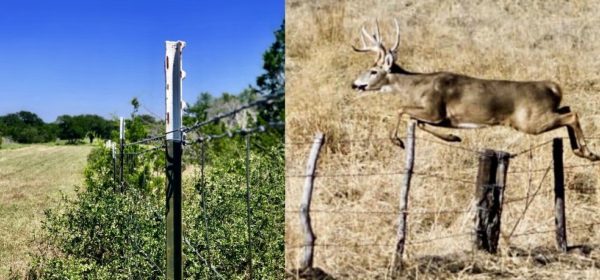
deer jumping fence

Torn Britches, Fence Posts and Deer Intel: Scouting Fence Lines

By Jerald Kopp

I consider myself a 365 hunter. That means, among other things, that I do a lot of scouting during the off-season. This goes for familiar and new hunting properties alike and it’s always paid dividends. In my mind, it matters.

Shortly after the whitetail season, I carefully seek new buck bedding areas and check known ones. Likewise, I look for new trails. Sure, there are those known heavy paths that deer traditionally travel on properties. However, it’s always common for new ones to surface. It’s the new ones that need learning on an ongoing basis.
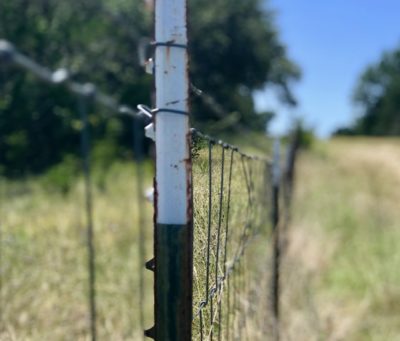
property fence line

When it comes to deer hunting, fence lines do far more than simply mark property boundaries. They could hold valuable insight into deer travel patterns.

You don’t need deer sign to shoot a buck? I disagree. Sure, you can study aerial property views and hunting apps, but there is no substitute for putting your eyeballs on the hard facts.

>> Join the N1 Outdoors mailing list

Remote Control

Whether a 20-acre micro-property or a ten thousand-acre hunting mecca, the reflex action is often to seek and study heavy timber, thick creek basins, and ag field-hugging woodlots. And often these places are in the thick of things. That is, in the middle of the ranch and in hard to reach places.

This is, where the mature bucks are. These have to be the honey holes, right? There is certainly a mystique about these remote deer havens.

Though hunters differ in how much they are willing to pressure these areas, most will walk them; or at least areas adjacent to them. It’s in these sections where trails, rub lines, scrapes and bedding areas are discovered or confirmed.


Optimal Setups Determined

Finding these heavily visited and traveled areas leads to deer stand location strategies. Most of us already know this. It’s no shocker that we often see old rotted boards within and atop old trees next to heavy game trails.

Whitetails, especially bucks, tend to follow the path of least resistance. And, unless you hunt an extremely large property, free-range deer commonly cross food sources, draws, and fence lines. The latter seemingly is often ignored. So…


Don’t Ignore Fence Lines

It seems that we often fail to see the elephant in the room – or in the case of deer scouting, the worn dirt found through property boundaries. Whether because we think we already know all the crossings or it just doesn’t cross our minds, it’s too valuable a piece of intel to overlook. These days, on regular and known grounds, I annually walk the fence lines for travel sign.

Whitetails create new routes all the time and, for that matter, can disregard old ones. The latter can happen for a variety of reasons such as new hunter pressure. In fact, I recently walked the boundaries of my latest property (in June) and found two new trails; and one of them lead directly to a bedding area not 150-yards from one of my tree stands.

Score!

It’s for this reason that it’s a great idea to follow through by following such trails as far as you can (or they remain noticeable). Similarly, you can often reverse things and follow interior trails to fence line crossings.
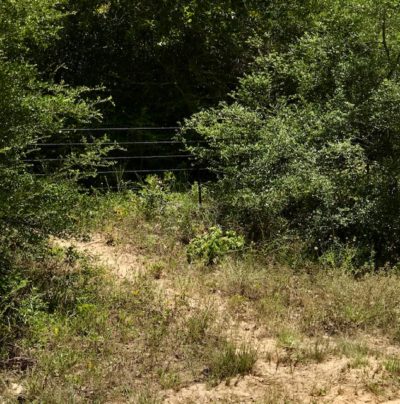
deer trail near fence line

Don’t ignore scouting fence lines on your hunting property for deer travel sign. These fence lines often provide a funnel where deer move along as well as cross to get to and from food sources and bedding areas.

Finally, once the fence line funnel has been identified, set up 200-300 yards away, watch, and verify. Physically witnessing early morning and late evening deer movement through these paths is bowhunter gold.

The only step left at this point is to find a logical location closer to the action. In fact, the early season is a great time to cash in on fence line paths. During this stage, some whitetails are still in their more predictable patterns. There are also still some bachelor groups around.
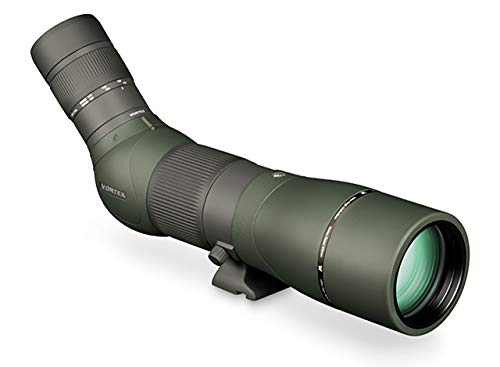

Vortex Optics Razor HD Spotting Scope 22-48x65 Angled
$1,049.00
Buy Now
We earn a commission if you make a purchase, at no additional cost to you.
01/18/2026 11:04 am GMT

Why Did the Buck Cross the Fence?

I can’t think of a punchline, so here goes…

There are various reasons why fence line recon is valuable. Obviously, if there are food and nutrient sources across properties, deer will regularly traverse accordingly. This is common in free-range areas.

Did you ever notice that you see a lot of rubs and scrapes along fence lines? I have. The fact is that even in more open country, fence lines have structure. Trees and other brush typically grow there. Birds drop seeds there and so on.


It’s sweet edge structure.

Maybe the real question is, other than seeking what’s on the other side, why do whitetails like fence lines?

Deer are naturally edge creatures, hence, preferring edge cover. This is, for example, common in parts of Texas where structure is a logical threshold from which to hit crops or the next brushy section. It’s deemed a safe transition area.


The Property Line Maestro

Among other things, this all means that, as hunters, we can capitalize on existing cross-property travel patterns.

But what If no natural fence line funnels exist? Simple, create one.

Here we have a chance to do a little behavior modification. Specifically, use the mini woodlots and strips of cover along property boundaries to lead deer to routes favorable to us as hunters. For example, direct them toward grain field edges, small openings, or even open country.

Do some selective brush cutting along the fence. Better yet, lower the fence itself by loosening the top wire and attach it to the next lower one. Cable ties or pieces of wire work well for this. Remember, the path of least resistance. Utilizing these methods may be what it takes to get deer making tracks where you want them to go.


The Blind Has to Go Here

We know it when we see it. You know, the pocket of brush just inside of a shadowy oak canopy or a natural spot within a clump of cedars. Plus, in smaller woodlots such as these, there are often few choices for blind placement.

For bowhunters, in particular, this allows us to lead whitetails within range of where we want to sit. Also, note that this tactic is particularly effective during early season when some deer (even some bachelor groups) are in their more predictable summer patterns.

Hunting Etiquette and Backpedaling

A couple of qualifiers; First off, this article was written primarily with bowhunting in mind. Secondly, I don’t condone baiting property lines (even where legal). In such states, I don’t even condone placing game feeders within sight of the fence.

At least in my case, scouting and modifying edge structure takes place on cross-fencing within properties, as well as true property boundaries. For the latter, tread lightly and with courtesy.

I can’t define the parameters around property boundary hunting etiquette. There a lot of different ideas out there. In Texas, I was always told that it was bad hunting manners to place a blind within 100 yards of the fence. Admittedly, the vast majority of these hunters were gun hunters.

Obviously, hunting property boundaries is a volatile topic – and for good reason. Hunters have an age-old tradition of preserving acceptable behavior in the woods, and I’m not suggesting anyone should violate it. This tactic has little to do with hunting fence lines. However, it has everything to do with scouting, as well as modifying and capitalizing on whitetail travel patterns.

Over the years, I’ve accumulated a lot of torn jeans and shirts at the hands of barb-wire fences and the brush around them. As a whitetail hunter, I think it’s been well worth it. If you haven’t already done so, walk the perimeter and develop a plan of action. It just may pay big dividends this deer season.
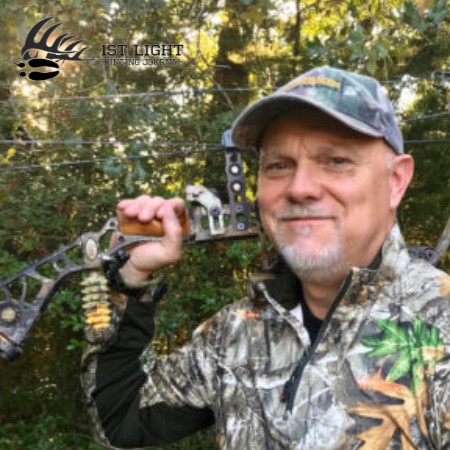
jerald kopp of first light hunting journal
Jerald Kopp, of 1st Light Hunting Journal and Empowerment Outfitters
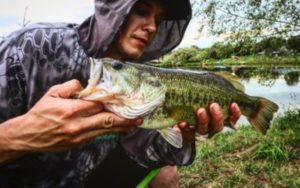
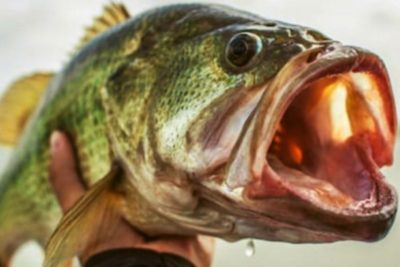
largemouth bass in hand

Drop Shot Rig 101 | The Best Rig for Deep Water Bass

on . Posted in Blog, Fishing

Written by: Ralph W. Peiper

In this article we’ll cover the basics of what I believe is the most effective setup for catching bass in deep water, the Drop-Shot Rig. You’ll learn exactly what the dropshot is and how to effectively catch fish.

We will also cover the proper terminal tackle to use as well as how to rig and tie it up. The best and favorite soft plastics that produce quality fish will also be covered. This all added up will help you increase your chances at catching that new personal best!

Scroll down to go straight to the step-by-step instruction for how to rig a drop shot.

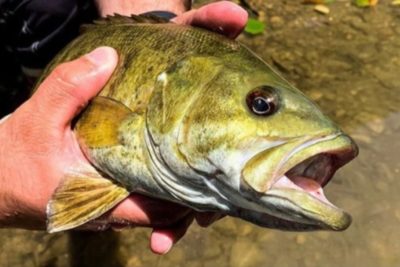
smallmouth bass in hand

The Drop-Shot Rig is one of the most effective ways to catch bass suspended in deeper water.

The Drop Shot Rig | What Is It?

What exactly is the Drop-Shot Rig you may ask? Basically, it’s a rig with the weight below your hook, where the bait is suspended above the bottom, allowing you to fish deep water, where bass are often suspended and feeding.

The drop-shot is an extremely versatile setup (not just for finesse fishing) and can be constantly evolved and experimented with.

Many fisherman, from amateur to pro, believe the drop shot is not only the best, but also the most effective rig for catching bass year-round.

So, everyone who loves catching bass should learn how to tie the Drop-Shot Rig.


Minn Kota 1358894 Terrova Freshwater Electric-Steer Bow-Mount Trolling Motor with Universal Sonar 2 & i-Pilot GPS, 80 lbs Thrust, 60" Shaft
$2,499.00
Buy Now
We earn a commission if you make a purchase, at no additional cost to you.
01/18/2026 11:04 am GMT

Hooks and Weights Needed For Drop-Shotting

The hooks and weights for the drop-shot rig have evolved over the years from experimental, into highly effective terminal tackle, made specifically for this rig.

When choosing your hooks, go with a circle or finesse hook for best results.

The drop shot rig can be used with a variety of baits and methods including the wacky rig and Carolina rig.

Personally, I like to use an octopus style drop-shot hook as the fish usually set the hook for you rather than having to set it on your own.

Go with a size 1 or 2 hook depending on bait size and species you are targeting. The smaller the better. Less profile means less chance of a fish getting wise to your setup.

You can use other knots, such as the palomar knot with the drop-shot rig, but the uni-knot is what I recommend for this setup.


Just about any weights will work. Weight size depends on the depth of water you are fishing and the wind conditions. 1/8 oz is the standard, while no bigger than ¼ oz should be used.

Specialized tungsten weights are designed with a clip on top so you can run your tag end through and clip it to your line with a simple overhand knot. This allows for quick release, should you get hung up on the bottom allowing you to reel in your hook and bait.

That’s all there is too it when it comes to terminal tackle. Now, let’s move on to the baits.


Baits Used With The Drop Shot Rig

The baits for the Drop-Shot Rig are endless, ranging from flukes to worms to a few unknown fishing objects (UFO).

The best baits to use, however, are those that mimic bait fish, since they are the what bass feed on the majority of the year.

Fluke styles work best for hungry and active fish. But, when the bite is slow, put on a straight worm to encourage a nibble from a finicky fish.

It is never a bad idea to experiment and try something new. You can hook up a creature bait, or my personal favorite, the Keitech Swing Impact. The slightest twitch will incite a feeding frenzy. Always remember flukes and worms work best but sometimes choosing the bait less casted could be your glory day on the water.


St. Croix Rods Mojo Bass Spinning Rod, MJS
$269.00
Buy Now
We earn a commission if you make a purchase, at no additional cost to you.
01/18/2026 11:02 am GMT

How To Rig A Drop Shot | Step-By-Step Instructions

The setup for the Drop-Shot Rig is quite simple once you get the hang of everything... See below

Time needed: 1 minute

How to rig a Drop-Shot step-by-step:

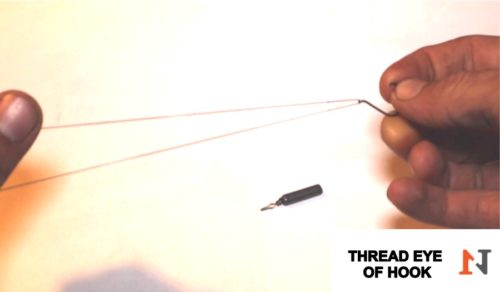
  1. Thread the hook.

    Thread the fishing line through the eyelet of the hook. Be sure to leave an appropriate amount of tag line to tie your weight to. A tag length of 12” to 16” works best.

    threading eye of hook on drop shot rig

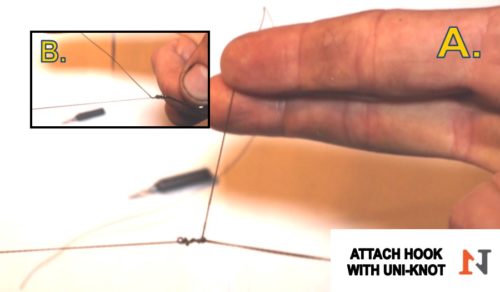
  2. Tie your hook knot.

    A Uni-Knot works best when tying your line to your hook. See instructions on how to tie a Uni-Knot.

    attaching drop shot hook with uni knot

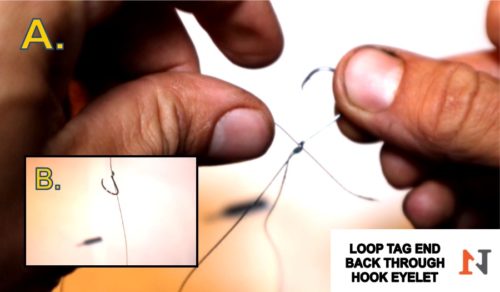
  3. Loop tag end back through hook eyelet.

    Before tying your weight, be sure to loop your tag end through the eye of your hook, so that when your weight touches the bottom, it positions the hook horizontally, creating a more natural look to your bait. This also provides an optimal hook set.

    putting tag end through hook eyelet

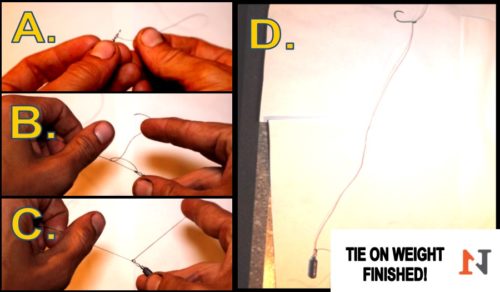
  4. Attach your weight.

    Now, just tie your weight on with a simple overhand knot and all you need is bait!

    hands tying on drop shot weight

Scroll down for more info on how to fish the Drop-Shot Rig.


Bait Placement And How To Fish It

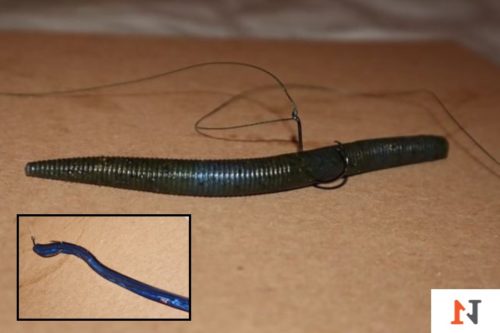
Soft plastic placement is key with the Drop Shot Rig. Go through the head portion of the bait. This will give your bait a more natural look as it moves up and down with the hook in the water column.

Wacky rig and Texas rigging the bait on the hook also works well depending on the situation and conditions.

The drop shot works great with a baitcaster and can be Finessed, Dead Sticking and vertically jigged, however the majority of the time, just work it like you would a Carolina or Texas Rigged setup.

When you are around schools of active fish, try twitching, hopping or shaking the bait to get a reaction strike from a hungry bass. After, you want to get a hook in that bass’s mouth!


Millennium Marine Spyderlok, for Boats and Anglers Gen II
$184.99
Buy Now
We earn a commission if you make a purchase, at no additional cost to you.
01/18/2026 11:01 am GMT


When the fish bite gets tough, dead stick your bait or slightly shake your bait without shaking your weight this can get even the most stubborn of bass to bite.

Work around points and rock pile or humps, deep in the water column, fishing any structure where foraging bait fish might congregate.

Don’t be afraid to experiment a little, because anything can work for a hungry bass.

You can use the Drop-Shot for other fish as well, like trout.

So, rig up a dropshot on your bass fishing rod today!

I hope this article about the Drop-Shot Rig was informative and helps you to put a hook N1 and land that new Personal Best so when all your fishing buddies ask how you did it you can confidently say, “The Drop Shot Rig is the most effective rig for bass fishing anywhere at any time!”

ralph peiper holding smallmouth bass
You can follow Ralph Peiper on Instagram: @sgt_smallmouth or subscribe to his YouTube Channel.

^Header image and smallmouth bass image in this article provided by Brad Alan (Instagram: @tactical_testosterone)

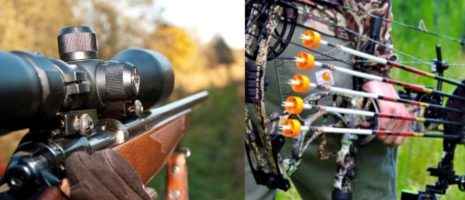
rifle and bow hunter

Are You A Pro Hunter? [or just a complainer?]

I listened intently as a popular outdoor podcaster explained, in great detail his disdain for rifle hunting – and rifle hunters. He pontificated for 30 minutes about its inherent lack of challenge and illegitimacy in the deer woods.

Promptly following his passionate albeit exhaustive diatribe, he said, “but that’s okay. Not everyone has to hunt the same way.”

His ending statement came too late – at least in my mind.


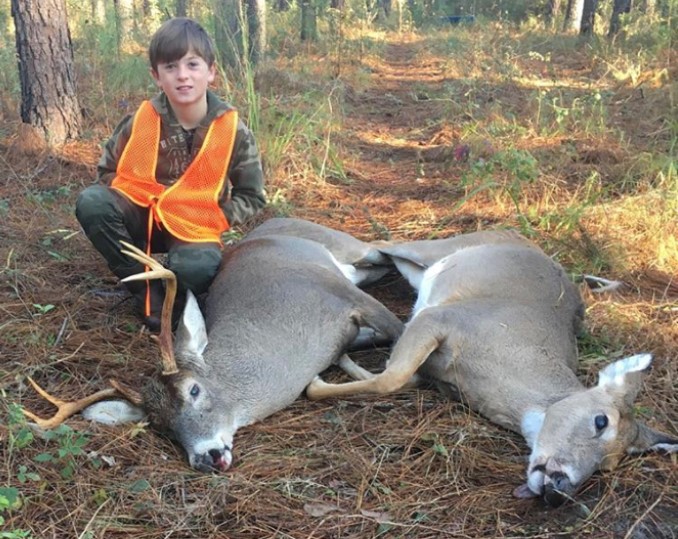
boy with buck and doe

Is rifle hunting, or any other type of hunting for that matter – “better” than another? And, is that really the point?

Days later, I listened to another show where several minutes of banter were dedicated to the lameness that is hunting with an outfitter.

Here, you got the impression that, anything short of traversing public land with not much more than a bow and climbing sticks, was a “short cut”. 

I’d never felt so lazy in my life (not really, I’ve got pretty thick skin). The negativity and chest puffing seemed to increase with the sound of each new cracking beer tab in the background.


Though these are guys that consistently provide a lot of entertaining and useful hunting information, they are like many other outdoorsmen – they’re not pro hunters…

A Pro Hunter is…

So, by now you’ve probably figured out that this article has a misleading title.

Jim Shockey is a pro hunter. Larry Weisuhnn is a pro hunter. Charles Alsheimer was a pro hunter.  Though just three of many examples, these sportsmen have a lot of cred, with gobs of skill, skins on the wall, knowledge of wild game, and efforts for conservation.

man punching deer tag with buck

With hunting numbers down in the U.S., hunters should promote hunting in general, instead of bickering about topics surrounding which type of hunting is better and which buck is big enough to harvest.

But they have more than that.

It’s no secret that hunting numbers are down in North America. Indeed, it’s a pivotal time for our hunting heritage and future. Obviously, the anti-hunting sentiment plays a large role here for sure. However, it’s obvious that many members of the hunting contingent are intent on eating their young.

A recipe for disaster – outdoor future thwarted.


What is pro hunting? Yes, it has a lot to do with expertise, accomplishments, and positive contributions to habitat, and the like. However, in this vernacular, to be a pro hunter simply means to PROmote.

Promote the way you prefer to hunt, your weapons of choice, or other philosophies.

I’m “pro-bowhunting because I prefer to get closer to the deer I hunt.” I’m “pro-public land hunting because I find it challenging and I get to seek new places and find deer there.” I’m “pro-private land hunting because I like to have more control over my hunting grounds and deer management.”


If You’re Not A Pro, Then What Are You?

In my mind, problems arise when people become “con” hunters. So, what about this word con?

Definitions include “against” or “contrary.”


Ameristep Care Taker Ground Blind, Mossy Oak Break Up Country, Model: None
$103.99
Buy Now
We earn a commission if you make a purchase, at no additional cost to you.
01/18/2026 08:06 am GMT

Maybe you’ve heard comments like,  “I get irritated with guys that shoot the first buck they see – if I see one more photo of a guy posing with a young 8-pointer, I’m going to explode. They have no idea what they’re doing.”


Now there is a con I hear often. How about just promote hunting?

Cons can of course also be good if offered up in a non-confrontational or non-combative manner. After all, independent thought and respectful discussion and debate is healthy.

It’s a slippery slope though and some folks have a hard time maintaining a healthy balance.


Play Nice

“Slinging mud doesn’t get anyone anywhere. When we have problems with fellow hunters, hunting policies, or anything else, resolving issues the right way is a must,” says outdoor writer, Josh Honeycutt.

Arguably, mental wrestling matches regarding hunting issues are healthy. However, it’s a fact that, like in any community, the entire hunting collective doesn’t play nice.


So, perhaps it’s best to develop (or stick with) your pro hunter side (or at the very least, emphasize it). It can slow the momentum of the negative trends inherent in the current hunting and the outdoor culture.

Put differently, embrace the “if you don’t have anything nice to say, then don’t say it” mindset. Consider approaching social media channels and deer camp fire pits as a pro hunter.


Michael Waddell once said, “I don’t care if you hunt with a recurve, rifle, a powerful crossbow, or anything else as long as you’re safe and legal.”

A pro hunter statement if I ever heard one.

This may all sound trite and dramatic, but it’s worth thinking about. Perhaps it’s best to concentrate on our pros.

With that, hunt well and play nice.

jerald kopp of first light hunting journal
Jerald Kopp of 1st Light Hunting Journal and Empowerment Outfitter Network.