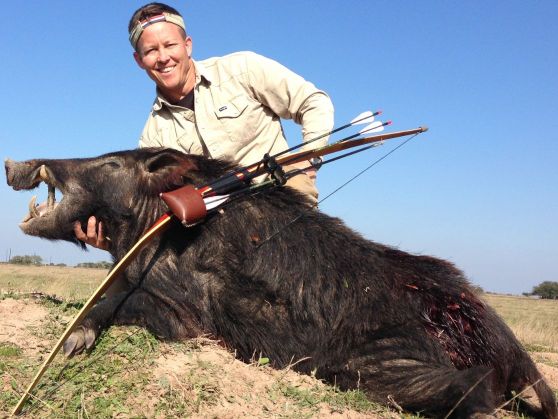
ranch fairy troy fowler with feral hog

In-Depth Arrow Testing with The Ranch Fairy [PLUS: Kinetic Energy & Momentum Calculator!]

When it comes to your bowhunting setup, knowing the “Kinetic Energy” of your arrow allows you to know how much energy that arrow possesses due to motion, from being shot by your bow. The “Momentum” tells you how much force it will take to stop your arrow when it reaches its intended target.

Kinetic Energy and Momentum Arrow Calculator

Kinetic Energy and Momentum Calculator
Arrow weight Value must be between 250 and 1000 grains.
move slider or enter value
grains
Arrow speed Value must be between 100 and 500 Feet Per Second.
move slider or enter value
fps
Kinetic Energy:
0
Momentum:
0
ranch fairy approved logo

If you know your arrow’s weight (in grains) and your arrow’s speed (Feet Per Second), then you can use our Kinetic Energy and Momentum calculator above to find out each! Simply move the sliders or enter the values in the blanks. And, if you really want to take a deep dive into the Kinetic Energy of arrows, check out what the Ranch Fairy is up to below…

Kinetic Energy And Bowhunting (How I Got Here)
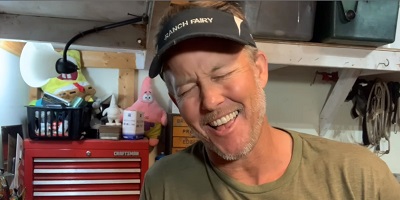
the ranch fairy troy fowler

As you may already know, the ‘ole Ranch Fairy (that’s me) is quite out of the norm in his measuring of arrow systems. (If you aren’t aware, I am definitely one of the strange ones in the bowhunting world.) 

In all fairness, I have been heavily influenced by Dr. Ed Ashby’s 12 Arrow Penetration Factors and his almost 30 years-long Natal Study.  These are, in fact, the basis for my YouTube channel and all of the research I have been doing therein.

Anyway, just to set the record straight, the biggest overlap between Dr. Ed, the Ashby Bowhunting Foundation, and the Ranch Fairy is simple: We want to know the highest performing projectile for all impact points to pass through the animal you are hunting.  


How to use the kinetic energy and momentum calculator for your bow!

The goal is maximum arrow lethality

I like to put it this way: Archery is shooting a target… bowhunting begins at impact with the target.

Finally, I am constantly seeking higher performance and am always questioning what I know today

Why?

Because the longer I live, the more I look back and say, “wow, my assumption about bowhunting 3 years ago (along with many things in life, not just bowhunting) was flawed.”

I keep learning because I kept asking “why” and kept trying to find out ”why.”


The Science Of Arrow Flight

So, now I have embarked upon the science side of the arrow. Some questions to consider:

  • Why does an arrow fly?
  • Why does an arrow fail to penetrate?
  • Why do we measure it with scientific formula?
  • Which formula is correct – OR – is it a combination of formulas?
  • Are we right? (oh man, check the man card here!)


Big Mike and a “Rocket Man”

I like to say, “It’s better to have smart friends than to be smart.” And, I have had the luxury of meeting ‘Big Mike’ who has coached me on the “functional bow and arrow flight” part of this game. 

And then, the latest addition… enter, “The Rocketman,” Darrel R. Barnette. 

Darrel spent 30 years with the Department of Defense (D.O.D.) testing “boring” things like, tank penetrators and rail guns. 

Just to clarify, the Rocketman says he technically never worked on a ‘rocket’.  But, he did shoot, test, and evaluate hard target penetrators pushing Mach 11. 

So, ya know, an arrow is a bit slower. 
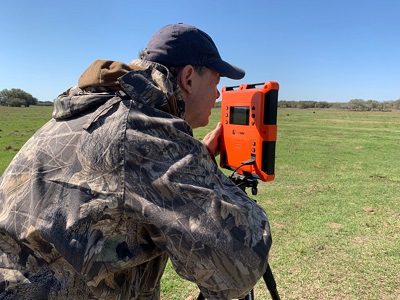
darrel barnette testing kinetic energy of bows and arrows

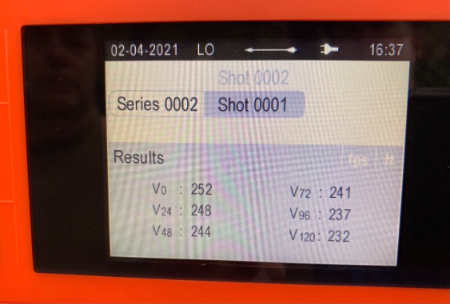
Here’s the Rocketman “aiming’ what is known as a lab radar. NOTE: (If you have a bowhunting idea or concept, Darrel does testing and you can reach him at d_********@******ef.com.)

Heretofore, Darrel is known as “the Rocketman.” 

When the Rocketman starts talking, he gives me about 15-20 minutes (until steam starts to come out of my ears) and then he pulls back on the reigns. 

Ballistic coefficient, Poncelet equation, yaw, lift, aerodynamic friction and drag, the Physics Hyper Textbook on and on and on. 

Bro! He has me doing calculus!


SKYROVER X1 Fly More Combo, Drone with Camera 4K for Adults, 8K Photo, Under 249g, 50000ft Transmission, 96-Min Flight Time with 3 Batteries
$469.00
Buy Now
We earn a commission if you make a purchase, at no additional cost to you.
07/30/2026 06:06 am GMT


kinetic energy arrow test machine

The Rocketman brought some fancy gadgets to the Kinetic Energy show…


Kinetic Energy And Arrow Flight

So on to Kinetic Energy (KE), which is super boring. But, we’ll play along, since it is the most common measurement of bow efficiency.

But is it the right one? 

More to come, but for now,  I’ll stay on the rails with Kinetic Energy so the speed bow guys can relate with ‘hitting the target’.  

ki·net·ic en·er·gy
/kəˈnedik ˈenərjē/
noun
energy which a body possesses by virtue of being in motion.

Oxford Languages


The first time Rocketman said, “well, Troy, a bow is just a spring with fixed Kinetic Energy,” I thought… BLASPHEMY! 

But, from what I understand, he is right. 

The bow can’t “make” more KE. It is what it is. 

BUT, you can change the arrow and gain some…..so hang on. Let me set the table here… 
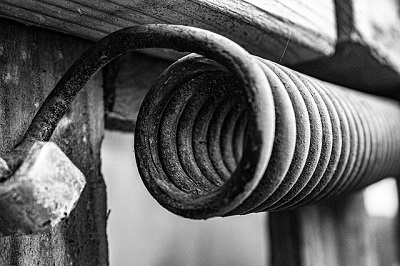
metal spring

A bow is just a spring with a fixed Kinetic Energy. It can’t make more kinetic energy than what it already possesses.

KE Arrow Testing

On a basic level, radar measures a projectile’s speed over distance. 

The testing unit that we used measures 5 total distances.  So, if you want to shoot 60 yards, the computer divides that distance into 5 increments. 

[NOTE TO SELF – you need to put the target further than 60 yards to capture the flight speed. To address this, we placed the target at 70 yards. Because, if impact is at 60 yards, the data would be flawed for velocity testing because the target stops the arrow at a yardage that it should be being measured.]


Sig Sauer Buckmasters 1500 6x22mm Red LED Wareproof Hunting Laser Rangefinder Monocular
$124.99
Buy Now
We earn a commission if you make a purchase, at no additional cost to you.
07/30/2026 09:01 am GMT

Below is the spreadsheet, graphs, etc., shooting 3 different bows under the conditions described above.  

Yeah, its super small. I don’t intend for you to read it and geek out (but that’s coming… keep reading!)

Just know that it’s a lot of information, and we ran the best test we know to do… today anyway.  (See my comments on being smart, today, included earlier in the article.  We will be smarter very soon!)
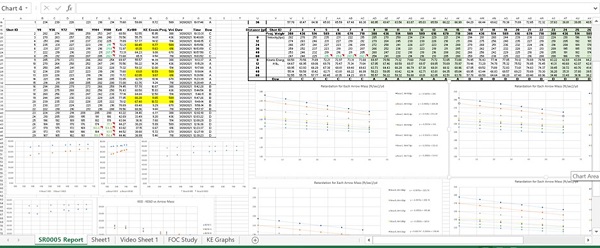
graph and spreadsheet of kinetic energy testing on bows and arrows

The Tools In Our Kinetic Energy Toolkit

The three bows we used in the Kinetic Energy testing were:

  1. Elite Kure 65#/28.5” draw
  2. Xpedition Xcursion 6 65#/28.5” draw length (my beloved “Pamela”)
  3. Mathews DXT 70#/29” draw length

I bare shaft tuned 350, 300, and 250 spine Sirius Apollo arrows to achieve the following arrow weights (in grains): 388, 436, 514, 589, 616, 670, and 718. (Learn more about arrow spine here.)

Our goal was to see the ‘launch’ velocity vs. 60 yard ‘impact’ velocity. (Remember the target was at 70 yards).

Just to revive our blasphemy! “A bow is a kinetic energy spring, with fixed kinetic energy”. 
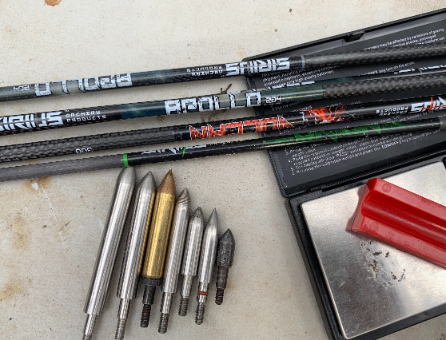
heavy arrows and filed points for kinetic energy arrow testing

Rocketman has his gadgets, but what would Kinetic Energy testing be without some “adult” arrows?


Test Results (and fancy graphs, oh boy!)

So, the charts below tell us the story.

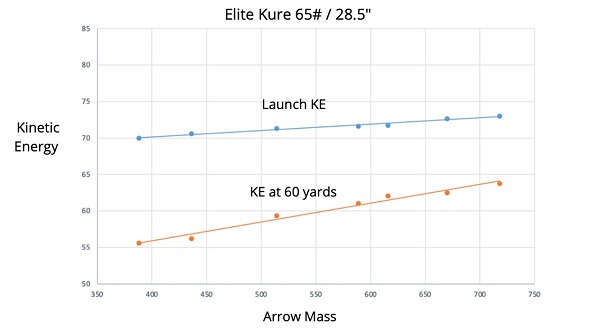
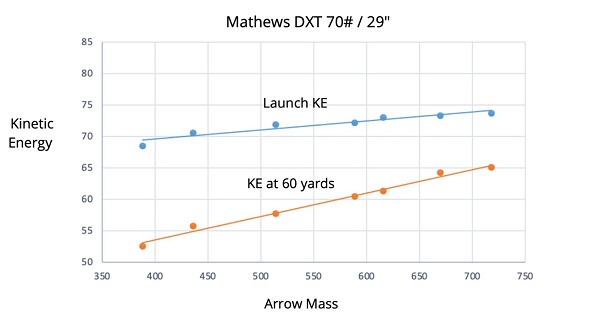
The top line is the launch velocity. The change in velocity is super boring… Until you look at the 60 yard impact KE. 

The gap in the data sets shows the significant reduction in KE over distance. However, you see that gap narrow as arrow mass increases. 
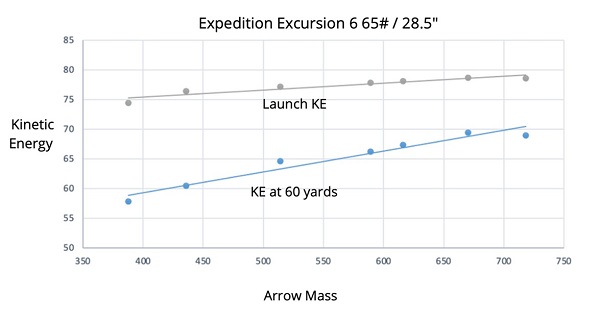
expedition excursion kinetic energy graph
elite kure kinetic energy graph
mathews dxt kinetic energy graph

As you can see, in all the above graphs, the launch KE is relatively constant, but alas, further away, at 60 yards, with higher mass projectiles, we see something worth pondering. (Well, only if you think math is correct!)


What are the results telling us? (Please pardon the steam coming out of my ears)

So, despite my heavy arrow bias, (I’m not much of a hair splitter), increasing launch KE 3-6 ft/pounds is really boring. 

But the lower line, at 60 yards, is worth chewing on. 

If you search around, many of the wide mechanical broadheads suggest KE’s of 45-60 ft-lb’s. Now, they don’t go out on a limb and say, “that will create a pass through, or break bones.” It’s just a recommended impact KE. 


Formula for Kinetic Energy:
K.E. = 1/2mv2
(where m=mass of object and v=velocity)


And be clear, just like the firearms world, this is launch KE, maximum velocity. This is because a projectile can’t go faster once it leaves the muzzle or the string… It’s always slowing down. 

Silly aerodynamic drag. 

Now in a vacuum… oh wow, throw in some zero gravity and guess what?

It still doesn’t go faster….. it would maintain launch velocity and you wouldn’t be able to breathe to test it. 

Aw Shucks.
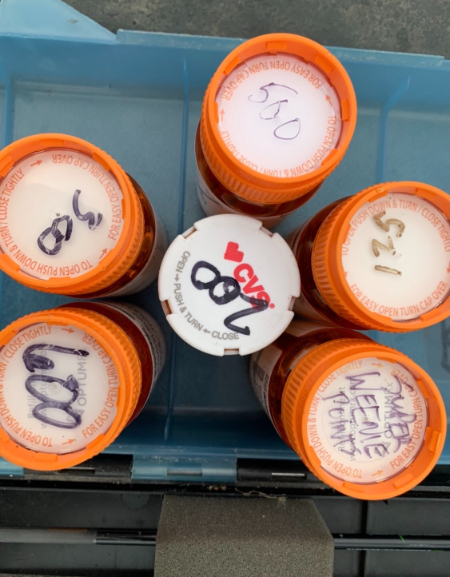


archery field points in prescription bottles

Some adult field points and some, ahem, “super weenie points.”

There have been multiple companies and YouTube personalities showing fixed blade vs. mechanical pressure testing on deer thoraxes and other items simulating a critter. They use very complicated mechanical devices down to something as simple as a bathroom scale. 

Let’s just say, the HUGE differences are eye popping.  

It’s not half a pound or 3, it’s exponential. The “precision” of the device doesn’t matter when the difference is 40 pounds.  Please search those tests up, because I know you’ll go do it anyway.   

sir isaac newton

When it comes to arrow penetration, harder things push back harder… you can just blame Sir Isaac Newton for that and keep my hate mail down!


Final Thoughts (For Now)

So, here’s the thing to ponder…

If X brand broadhead requires 50 ft-lbs to penetrate and another type takes, say, 10 ft-lbs., which one leaves you more energy to continue pushing? 

Remember Newton’s 3rd law…“For every action there is an equal and opposite reaction.”


So in this case, the tissue will push back 50 ft-lb on the one broadhead and 10 ft-lb on the other… but the arrow is exerting 70 ft-lb.

Given that, the broadhead requiring 50 ft-lbs has to have at least 50.1 ft-lbs. to continue moving and the 10 ft-lb broadhead requires 10.1 ft-lbs to keep moving.

The arrow has to overcome the equal and opposite push back exerted by the tissues: hair, meat, bone, etc.
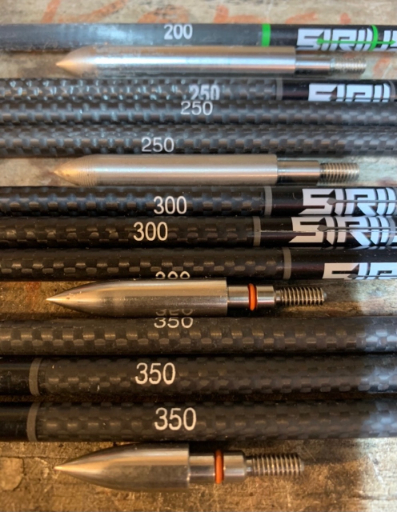
sirius arrow shafts and heavy field points

If you can shoot between the ribs every single time, none of this matters. I’m not that good, so give me the heavy stuff!


PLUS, here’s the kicker.  Harder things push back… harder.

You can just blame this on Newton’s 3rd law of physics. This will keep my hate mail down!

So, for the 50 ft-lb broadhead, if your bow produces 70 ft-lbs, you have 20 foot pounds of extra work potential.  

Now, with that same bow generating 70 ft-lbs, shooting a beefier broadhead that only requires 10 ft-lbs to penetrate, has 60 ft-lbs of extra work potential. 

If you could guarantee you’d never hit anything hard on a deer, elk or other critter, and always shoot between the ribs, none of this matters… you have a winner. 

I’m not that good. So, give me all the extra I can get!


What’s next…

What we haven’t studied, is actually shooting the different broadhead platforms to measure the exit velocities or impact velocity.  That one will take “some doing” to get it right. 

Trust me, I want to know if I am right and “why.”  The math here says I am.  But Dr. Ed always says, “we won’t know until we actually test it under those conditions”. 

So, we will. 

This is why you donate to the Ashby Bowhunting Foundation, so we can go test these things and increase your effectiveness. 

More to come.
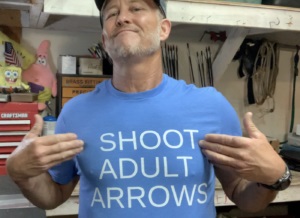
ranch fairy wearing shoot adult arrows shirt
Troy Fowler, aka “The Ranch Fairy”
barefoot buck girl

Barefoot Buck | How Aly From Alabama Found Her Love Of The Outdoors

The story of the “barefoot buck” was the kind memory that I would have never imagined experiencing in the outdoors.

I used to not even LIKE the outdoors…

(Not) Growing up in the outdoors

For people who know me, they know how unconventional my outdoor story is. Growing up, my parents did not raise me hunting or fishing, and being involved in the outdoors wasn’t something I knew much about. In fact, all my life I was classified as my family’s “girly girl.”

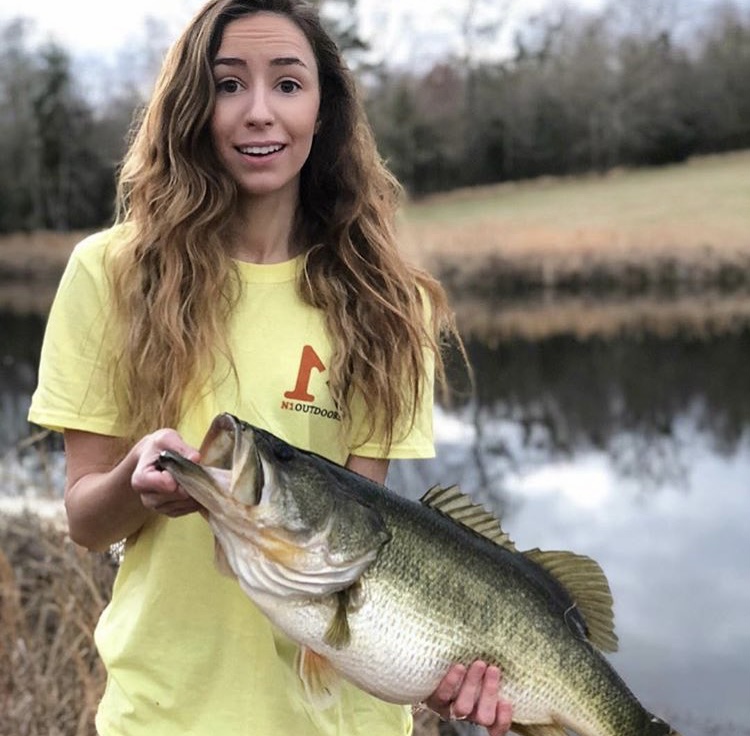
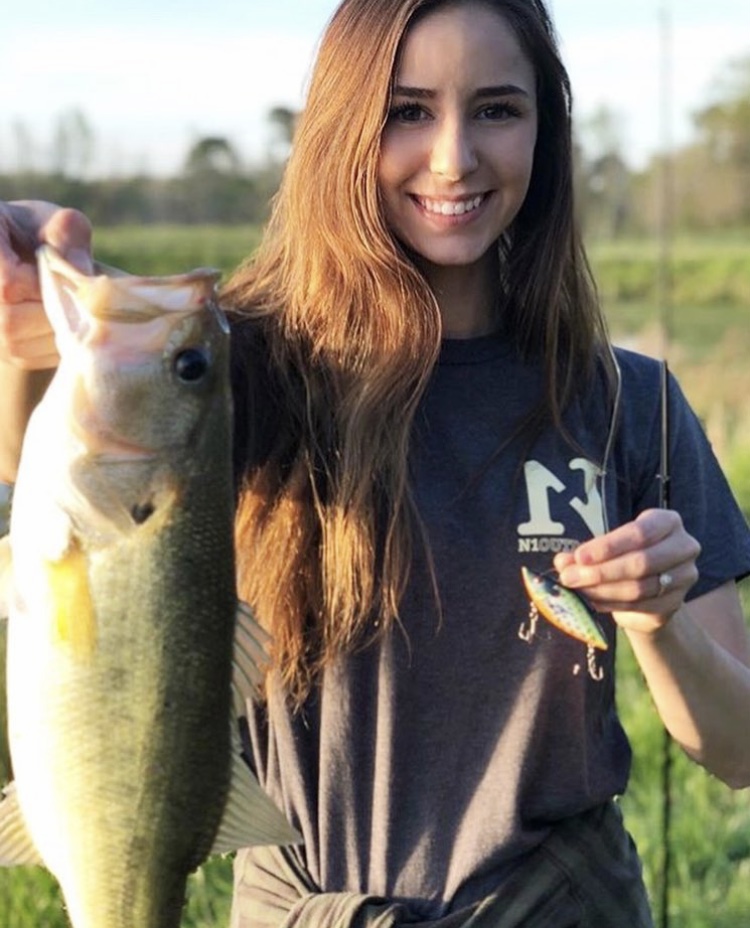
Aly from Alabama holding monster largemouth bass and wearing N1 Outdoors fishing shirt

I did not grow up hunting and fishing. In fact, I was a “girly-girl.”

I was a ballerina, then a cheerleader,  and on the dance team in middle-school. Oh, and I absolutely loved fixing my hair and dabbling in makeup.


Luckily for my poor dad, who has a wife and FOUR daughters, I played basketball, (mainly because, against my mom’s wishes, he convinced me to at the age of eight. Fortunately, I truly loved it and stuck with it every year until I graduated.

I had never hunted a turkey or harvested a deer.

Being called “girly” all my life, and not being introduced to the outdoors, definitely forced me to label myself as “unworthy” of ever trying to fish or hunt.

So, I never did.


Aly from Alabama holding largemouth bass and wearing N1 Outdoors fishing shirt

My view of those that hunted and fished was skewed by others I considered unethical and egotistical.


SKYROVER X1 Fly More Combo, Drone with Camera 4K for Adults, 8K Photo, Under 249g, 50000ft Transmission, 96-Min Flight Time with 3 Batteries
$469.00
Buy Now
We earn a commission if you make a purchase, at no additional cost to you.
07/30/2026 06:06 am GMT

I had several friends growing up that hunted, but most of them were pretty unethical and egotistical.

There were many disheartening moments I had witnessed because of them, and unfortunately, it left me with a bitter taste in my mouth toward the outdoor industry.

I started to hate seeing photos of successful hunts and fishing catches. I unfollowed people on social media that expressed their love for hunting. And, I even blocked hunting pages so Instagram’s algorithms would get the point.


The turning point

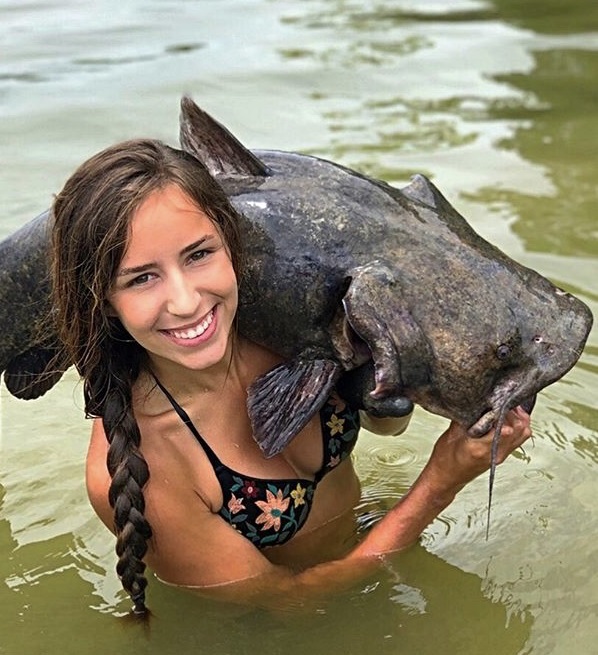
aly from alabama holding flathead catfish

I had hated fishing and hunting (and noodling) for all those years simply because… I didn’t understand it.

Luckily for me, I met someone who was patient enough to challenge my reasoning for hating outdoor sports and the so-called conservationists.

And, after I realized that I did not have any solid answers for him, I figured out that the reason I did not “like” hunting was because I did not understand it… not even a little bit.


As time went on, Cody finally convinced me to at least try it. So, I did… and I have been hooked ever since!

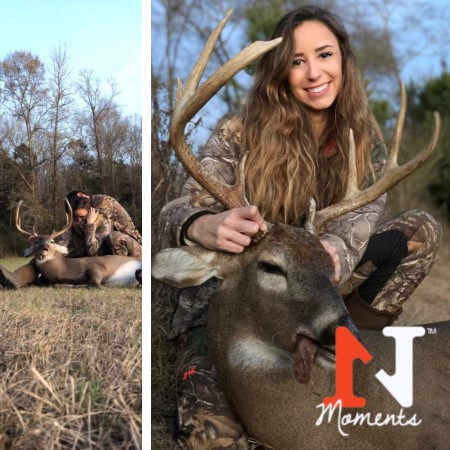
And just when I thought hunting could not get any better than what I had experienced over the previous year-and-a-half, I got to experience an incredible N1 moment… the Barefoot Buck.


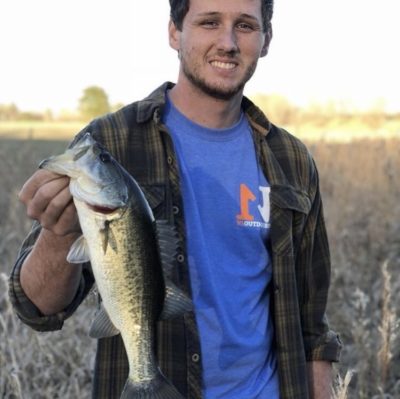
Cody Hall holding largemouth bass and wearing N1 Outdoors t-shirt

Thankfully, I met someone who changed my mind about the outdoors.… and I married him!

Hunting patience

I had sat in this same spot for two weeks straight. I watched and passed over 100 deer in the thirteen days that I hunted this area.

The majority of them were does, but I did have the opportunity to watch several small bucks chase during my hunts. I was starting to get discouraged. So, I mentioned to Cody that I may need to try a new spot if things didn’t start picking up.

Instead of encouraging me to try a different spot, Cody decided to come with me to the same spot, once again.


Big buck and barefoot stealth

We sat there, as usual, and watched several does graze and play, and then the occasional spike or young buck that would run them off. But shortly after we got settled, Cody said, “oh my gosh, big buck! Big buck, Alyssa!” He says this same phrase, A LOT.


He loves to get me excited only to tell me that he was “just kidding.” So, naturally, I didn’t believe him.

But when I was rolling my eyes at him, I spotted what he had already seen… a beautiful eight point that we had watched in this field the previous year. In fact, it was the same buck that Cody has missed in the previous year (just saying ?).


Anyway, the buck was well over 300 yards away. But that wasn’t going to discourage us from doing our best to get a shot on him.

We quickly grabbed our guns, ditched out spot, and made our way to the wood line so that we could walk through the trees until we were close enough for an ethical shot.

Cody insisted that we take our shoes off to be quiet, and I was too in shock to argue with him, so we made the 240-yard trek barefooted.


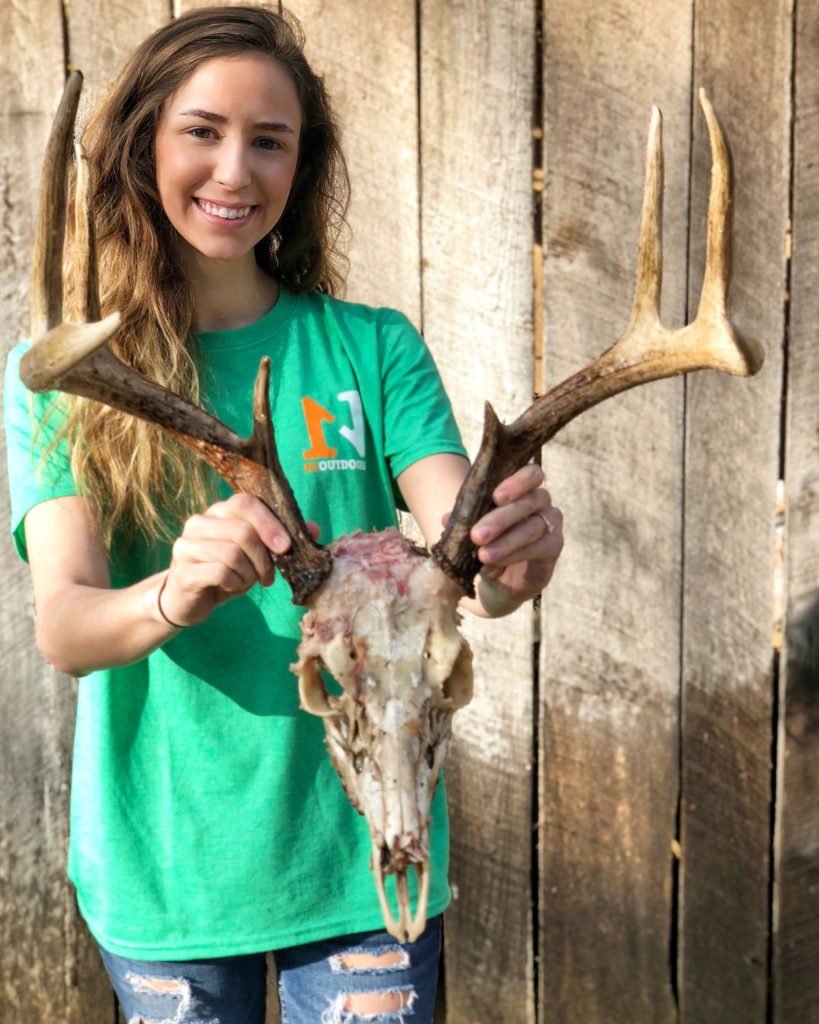
aly from Alabama holding deer skull

There are so many moments in the outdoors that are unforgettable… and the best are those you can experience with friends and family!


Put your gun on my shoulder

Once we got within 60 yards, Cody decided that we didn’t need to test our luck, so we didn’t go any further.

As both of us were trembling all over and praying to the Lord (not even exaggerating), Cody allowed me to prop my gun on his shoulder so I didn’t have to free-hand my shot. I swear, it didn’t make it any easier.


The adrenaline was rushing through my body and I couldn’t quit shaking to save my life. It took me over ten minutes to shoot the deer, and because of the anxiety during the moment, it felt like it was taking a stinking hour for me to get steady and make the shot.

Finally, the buck forced me to pull the trigger. He looked up at a snorting doe that was down wind from us, and was just about to take off running when I got the guts to pull the trigger.


The Barefoot Buck Goes Down

He ran, which was super hard to watch because that left me wondering if my shot was accurate and fatal. But instead of worrying, I hit my knees and cried.

I was so thankful, so excited, so anxious, and so completely overwhelmed. But mostly, I realized how rare and unforgettable this moment was and how lucky I was to experience it with my best friend.

We both sat there smiling, shaking, and laughing as we replayed the whole thing over and over.


After we let some time pass, Cody decided it was okay for us to go look for some blood… which we never recovered.

After frantically searching the area for just a single drop of blood or a strand of hair, and coming up with NOTHING, we decided to just move on to where we last saw him in the wood line.

Once we got there, there was no need to search any further… he was right there.

I can honestly say that moment was one of the best moments I have ever experienced; excitement, adrenaline, fear, and thankfulness… all N1.


You can follow Aly on Instagram: @alyfromalabama

Shop N1 Apparel

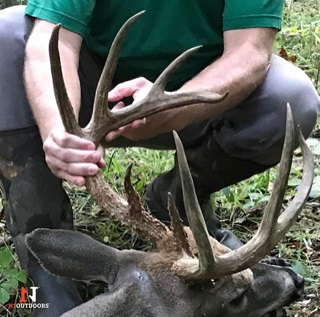
hand holding antlers

Scent control in deer hunting | How to hunt the wind so you can see and harvest more deer

So, what’s the big deal with deer hunting and all this “upwind” and “downwind” talk?

Every year hunters make mistakes by not paying attention to wind direction. You can have all the deer in the world on your property. You can have all the “best” and most expensive hunting gear.

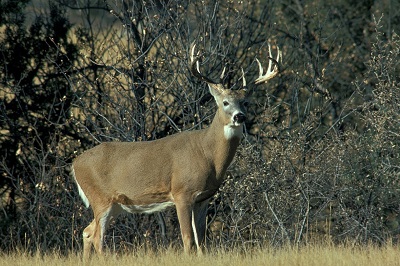
whitetail buck standing in field

When it comes to harvesting mature whitetails, you had better be on your A-game when it comes to scent control and wind direction.

But, if you don’t pay attention to wind direction, you will be severely limiting your chances of harvesting a whitetail.

So, let’s learn how to hunt the wind, so that you can give yourself the best chance for hunting success while in the field.

Wind direction doesn’t really matter when hunting whitetail deer… does it?

You’ve probably heard stories of the hunter who rolls out of bed, goes through the local breakfast joint drive-through and gets a greasy sausage biscuit and drives to the hunting land.

Then, gets out of the truck, rides his/her 4-wheeler straight to the bottom of the tree they plan to hunt, ascend, light up a cigarette and shoot the biggest buck of their life.

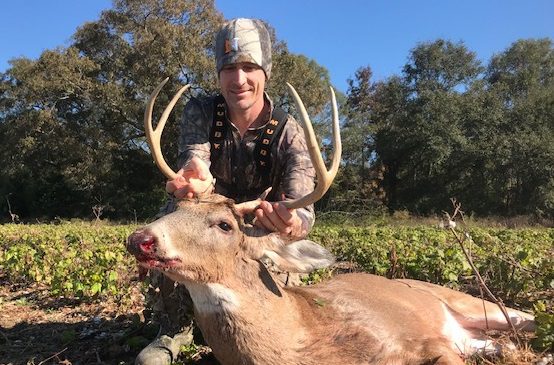
6-point buck

Don’t just think about where the wind is right for you to hunt… think about where the wind is right for a buck, and then figure out how you can get in and out of that area to hunt him without him knowing.

Then, when the subject of scent control and wind direction in deer hunting comes up, they point to the wall hanger in the den and say something like, “pffffft, I never pay attention to the wind and you can see I’m doing just fine.”

Sure these stories are out there, but don’t be fooled. A mature whitetail didn’t become mature by “throwing caution to the wind.” A whitetail’s nose is its best defense and you are one of the most offensive smells around.

So, if you hope to have sustained success in the deer woods, you need to be serious about scent control. For bowhunters, who typically need to get a close shot to get the kill, it’s even more critical.


SKYROVER X1 Fly More Combo, Drone with Camera 4K for Adults, 8K Photo, Under 249g, 50000ft Transmission, 96-Min Flight Time with 3 Batteries
$469.00
Buy Now
We earn a commission if you make a purchase, at no additional cost to you.
07/30/2026 06:06 am GMT


What is “upwind” and “downwind” in hunting?

So, if you’re still reading, you must want to learn about how to hunt the wind in a way that keeps your scent away from a buck’s nose.

When it comes to wind direction, the key is to stay “downwind” of the deer you are hunting. But, what does “downwind” and “upwind” really mean?

How to “hunt the wind”

Being “downwind” of a deer means that if you were looking straight at the deer you hope to shoot, the wind would be blowing in your face. Thus, the wind would be blowing your scent away from the deer.

Conversely, if you were “upwind” of the deer, the wind would carry your scent “downwind” toward the deer (not what you want).

So, you want the deer to be upwind of you, and you want to be downwind of them. Got it?

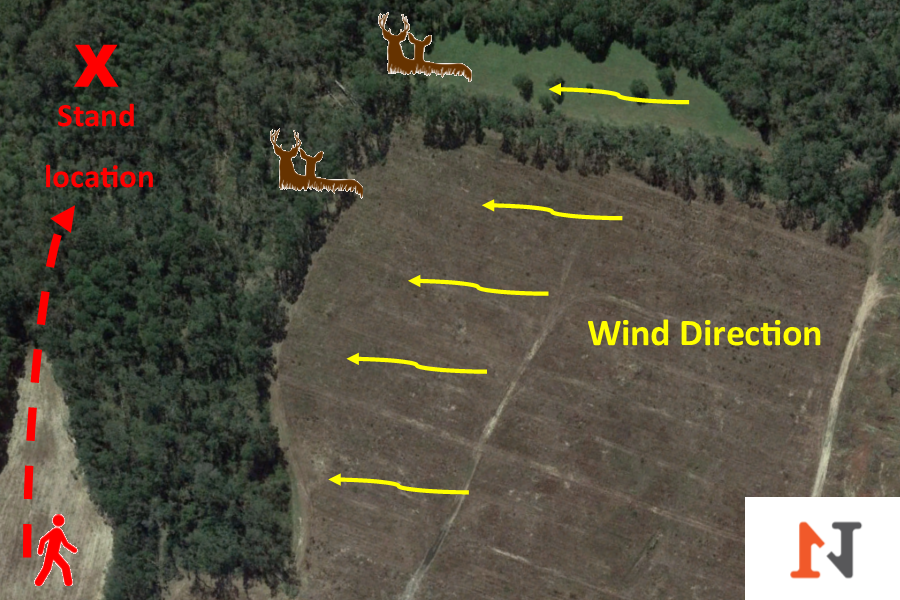
Let’s take a look at the diagram below, which might help clear things up.

hunting wind direction graphic

In this graphic, the yellow indicates wind direction. If deer are typically in the location indicated in this graphic, a hunter would want to approach the stand location from the “downwind” side of the deer, so they would not be alerted by the hunter’s scent.


It’s not just about being in the stand

So, let’s say you are in the stand (or from the ground) and you’re overlooking a field where you know the deer feed. You are downwind of where you think the deer will eventually be. You are golden, right?

Well, maybe not.

You’re scent doesn’t just matter when you are in the deer stand. It matters well before you even sat down!


Entry and exit routes when hunting

One thing deer hunters often ignore is how their entry and exit to and from their deer stand impacts the deer they are hunting.

So, the hunt actually begins before you take one step toward your hunting location.

When you are making your way to your deer stand, the wind is carrying your scent just as it does from the stand.

So, unless you want your hunt to end before it even gets started, you need to be sure that you have thought through the wind direction as it pertains to how you are going to get to your stand.

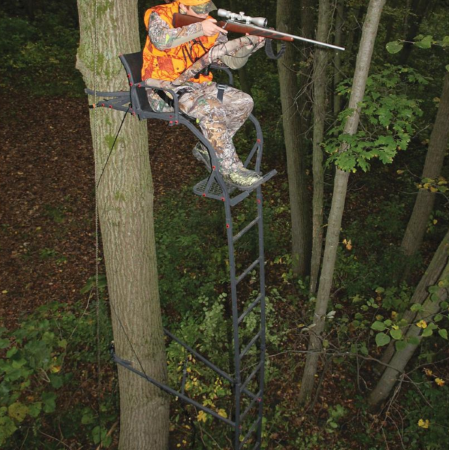
ladder stand pic

If you are going to use the wind to your advantage, your hunt begins long before you actually sit down in your stand.

This means you need to know where the deer typically are during the time you plan to enter. Are they bedding? Are they feeding? Where are these locations in regard to your entry route?

And it’s the same for your exit route. If your scent gets blown toward the deer when you leave your stand, you have just educated those deer to your location.

So, if you are trying to avoid danger, are you going to continue to go back to where the danger is every day? Well, neither would a deer. They are trying to stay alive and that means avoiding the danger, which in this case, is YOU!

So, be sure you are paying attention to wind direction as it pertains to your entry and exit routes.


How to fool a deer’s nose… well…

Let’s be clear, you can never truly “fool a deer’s nose.”

But, there are some things you can do to make it harder for them to bust you.

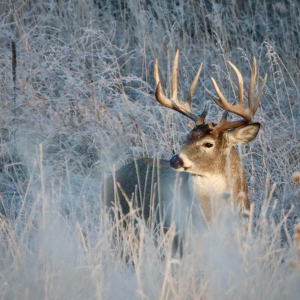
whitetail buck in grass

You can never totally fool a buck’s nose, but you should do everything you can to make things more difficult for him to bust you. (photo by Jeff Coldwell)

Kill that clothing scent

Take a whiff of your laundry detergent. Smells nice, doesn’t it?

Not to a deer.

What might smell great to you could make a deer want to leave the county. So, what can you do about that?

It’s a good idea to wash your clothes in a scent-free detergent. Baking soda is also a good scent “eliminator.” There are lots of these types of scent-killing hunting detergents on the market, so you’ll have no trouble finding them at you local sporting goods store.


Shower, for goodness sake!

Should you shower? For everyone’s sake, YES!

But, when it comes to deer hunting, that sweet smell of typical detergents that we discussed above… you want to avoid that in your shower soap as well.

Be sure to get a good scent-killing soap to use when showering before the hunt. And, don’t be afraid to be generous. You’re after an animal that lives and dies by its nose, so give yourself the best chance possible to NOT STINK!


Pitts are the pitts… don’t ignore them

Once you’re done showering, one more precaution you can take is to use a scent-free/scent-killing deodorant. There are lots of options out there.

Don’t forget to really scour those armpits. That is where a lot of the scent-causing bacteria is going to congregate, so be sure to cover ’em good!


Sweat the details, but please don’t sweat…

Sweat is your enemy.

When you sweat, odor follows. And, if you’ve been paying attention so far, you know that is not what you want when hunting deer.

So, how can you avoid sweating?

Well, one thing to be careful of is how much clothing you wear when you are walking to and from your stand or hunting location.

But, what if it’s cold outside?


Don’t let THIS happen to you while hunting!


Well, of course you want to have hunting clothing that will keep you warm in cold weather, but that doesn’t mean you have to wear all of it while you are walking to and from your stand or hunting location.

Plus, if you sweat on your way to the stand in an attempt to stay warm, you are going to end up being cold anyway when the sweat cools your body down. Nothing like being we in cold weather, right?


Many hunters are hunting on public land, which can mean a long trek to the final hunting destination. So, if you have a long walk to where you are headed and know you are going to work up a sweat, consider starting out by removing a layer or two. You might be a little bit cold when you start walking, but your body will warm up as you get moving.

Then, once you arrive at your stand or hunting location, you can put the layers back on, so that you will stay warm during the hunt. By doing this, you not only will be warmer, but you’ll avoid much of the odor that sweating causes.

This could be the difference in having hunting success… or getting busted.


Clothe your body with… nothing

No, don’t hunt naked.

But clothe your body with the most “invisible” clothing possible.

This means wearing scent control clothing and using scent killing sprays.

Scent control is a big market in hunting apparel world, and there are a wide variety of options to choose from. So, take advantage of some the products that can help shield human scent.

It’s also a good idea to spray down your clothing, as well as your boots and gear with a scent elimination spray.


“But, isn’t all of this overkill?”

Well, remember, wind direction is the most important scent control tactic you need to pay attention to, but if you can gain any kind of advantage in harvesting a whitetail (especially a mature buck), should you do it?

Use cover scents

The use of covers scents can be helpful in shielding a deer from your scent. There are a variety of cover scents available, such as racoon or fox urine, acorn scent, pine, etc.

Just be sure to choose a cover scent that you are sure is native to your area. So, if there are no oak trees in your area and you use an acorn cover scent, this could have the opposite effect you are intending.

A deer may be on high alert when smelling this, since it is not a smell they are used to in that particular area. So, take care in choosing the “right” cover scent.


Final Thoughts On Scent Control

So, remember, paying attention to the wind direction is paramount in your quest to consistently give yourself a chance to see deer.

Hopefully, when the moment of truth comes, you’ll shoot straight!

Hunt safely and good luck out there!

Check out the video below and learn how to play the wind to your advantage for better whitetail deer hunting success!

(Wind Direction video transcript)

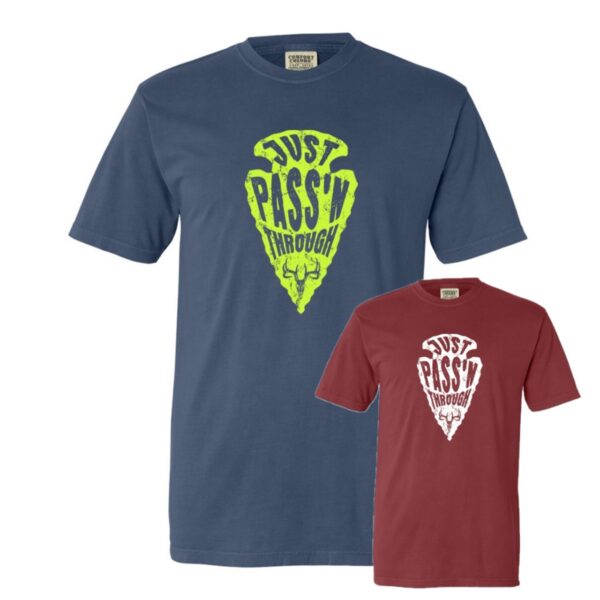
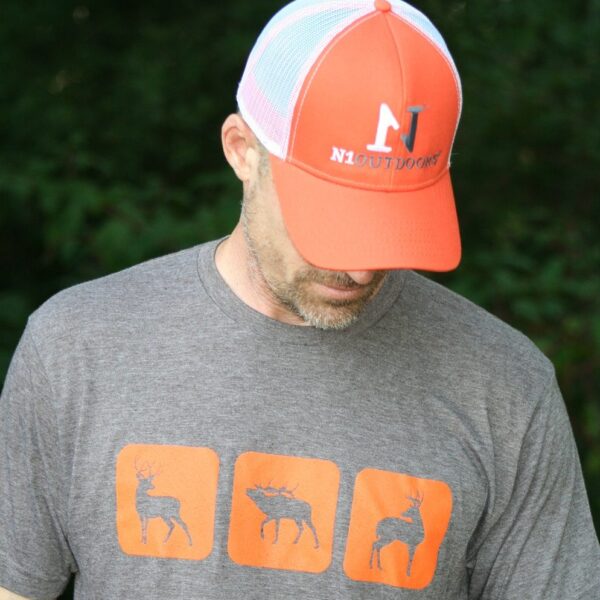
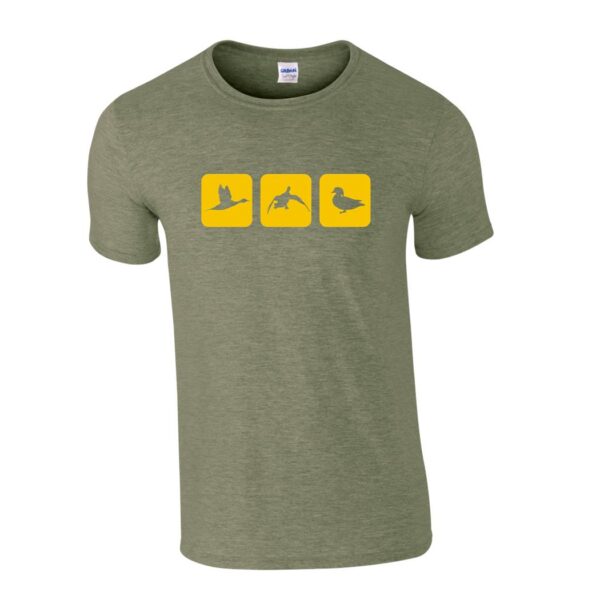
>>Read about all the N1 shirt designs

Find out what deer hunting and playing the lottery have in common. Stick with us for the N1 Outdoors N1 Minute.

Suppose I knew the five winging numbers to the lottery and all you had to do was guess the order they go into to win. How many of you would refuse that information and instead, decide to guess the numbers yourself and the order they go in?

Hopefully none of you, but that’s exactly what many deer hunters do every season by not paying attention to the wind.

Wind direction is critical in deer hunting

All the scouting and trail can picture is in the world won’t make up for poor planning when it comes to wind direction.

For you bow hunters out there, it’s even more critical. Always be aware of which way the wind is blowing, not only in regards to stand location, but also in relation to the entry and exit routes to and from your stand or hunting location. The last thing you want is for your hunt to end with deer blowing before it even gets started.

Stay downwind of the deer in all situations. For those of you not familiar with the terms “upwind” and “downwind,” an easy way to remember, is to be sure the wind is in your face when approaching and hunting your favorite trail or location.

Paying careful attention to wind direction certainly won’t help you win the lottery, but when combined with effective scouting, planning and accuracy, it will increase your chances of seeing and taking more deer.

We hope you have a great week and remember… “where the moments happen, we’ll meet you there.” We’ll see you next time.