man shooting shotgun in field

Trigger Types For Outdoors Shooters Explained

Outdoor shooting puts pressure on your hands, your breathing, and your focus. Trigger choices can either support that focus or fight it.

To start, we’ll take a look at some essential information on triggers, the terms people use, and the options that matter in cold, wet, and dusty conditions.

Trigger Basics You Should Know

The trigger is a control lever that releases the shot when pressure reaches a certain point. The “trigger shoe” is the surface your finger presses. “Take-up” is the early movement, before you hit firm resistance. Afterward, the “wall” is the point where resistance feels steady and clear. The “break” is the instant the shot releases. “Overtravel” is movement after the break, and “reset” is how far forward the trigger must move before it can fire again. It may be helpful to refer back to these terms throughout the article.

It’s important to note that outdoor shooting adds variables that range work can hide. For example, cold hands reduce fine control. Gloves are, therefore, among the most important things to take with you outdoors when shooting.

Uneven footing makes you tense your grip, rain can make surfaces slick, and dust can add roughness. For these reasons, a predictable press of the trigger often matters more than a light press. However, a pull that is too heavy can drag your sights off target if you rush it.

Also, it’s important to remember that any modifications should be within the manufacturer’s specs. If you are unsure, use a qualified gunsmith. After any work, do a careful inspection before a live fire.

Different Trigger Types

Trigger shoe shape can become a comfort issue and a control issue. A straight trigger uses a flat face, which provides a broad contact area. A cut trigger, as many makers describe it, uses a contoured face that guides the finger into a repeatable spot. In contrast, a curved shoe can feel familiar to shooters who grew up on classic designs.

man holding gun over shoulder with bird dog in field

However, placement changes leverage when it comes to the straight vs. cut trigger issue. Pressing lower on a straight face can make the pull feel lighter. Pressing higher can make it feel heavier, and it can increase sideways input. With a cut face, the contour can reduce that drift by nudging the finger to the same point each time. Always keep safety first and keep the muzzle in a safe direction while testing any new trigger position or feel.

Gloves can affect trigger feel. Thick gloves can slide on edges, so a wider straight face can feel calmer. Thin gloves can benefit from a contoured cut face because the finger finds the trigger faster.
What Good Trigger Feel Means

“Good” trigger feel usually means “repeatable.” A smooth take-up lets you prep without surprise. A clear wall lets you pause with control. A clean break reduces the urge to snatch the shot. Creep is slow movement at the wall, while grit is rough drag during travel. Both can raise tension, and that tension can leak into your hands, hindering your good eye-hand coordination, which is essential for a shooter.

Trigger choices that feel easy on a bench can feel jumpy in outdoor use, when you are breathing hard on a climb. Still, a moderate pull with a clean break can be easier to manage than a very light pull with a vague wall. Overtravel matters for the same reason follow-through matters. If your finger keeps moving far after the break, your grip can keep pushing, and the muzzle can drift.

semi auto shotgun with shell coming out

At the same time, the reset preference depends on the pace. A short, positive reset can help control follow-up shots. A longer reset can still work well for slow, deliberate hunting shots.


Decibullz Percussive Moldable Earplugs for Hunting & Shooting, Gun Range Hearing Protection for Shooters, Reusable Ear Plugs for Shooting Range
$69.99
Buy Now
We earn a commission if you make a purchase, at no additional cost to you.
03/20/2026 01:00 pm GMT

Single-Stage, Two-Stage, And Set Triggers

To begin, a single-stage trigger moves and breaks in one continuous press. It can feel simple, and it suits many general hunting setups.

A two-stage trigger has stage one you can take up, and then a wall that breaks with less added movement. That design lets you prep, settle your sights, and finish the press with small added pressure.

Each style has field tradeoffs for your hunting setup. A single-stage can be faster when the shot window is short. A two-stage trigger can help when you need a steady hold on a small target at a distance.

Finally, set triggers can reduce the final release to a very light press. For that reason, they demand strict discipline and practice, especially when stress is high.

It’s important to remember that any design can suffer if grit builds up or if maintenance is neglected. So, keep all gun parts clean, use light lubrication per manufacturer’s specifications, and practice the same press you will use outdoors.


Evergreen Pistol Ammo Case Compatible with 5.7/9mm/.40/.380-100 Rounds Lockable USA Made
$42.95


Buy Now
We earn a commission if you make a purchase, at no additional cost to you.
03/20/2026 10:00 pm GMT

Choosing Trigger Type For Your Terrain And Routine

Next, match features to the way you actually shoot. If you hike through brush, you may prefer a clear wall and a pull that resists accidental contact. If you shoot from sticks, a pack, or a bipod, you may value a wall you can prep while the sights stay steady.

Another factor is climate. Dust can add drag. Snow can add moisture. Heat can thin some oils. For these reasons, be sure to choose parts with good finishes and simple upkeep.
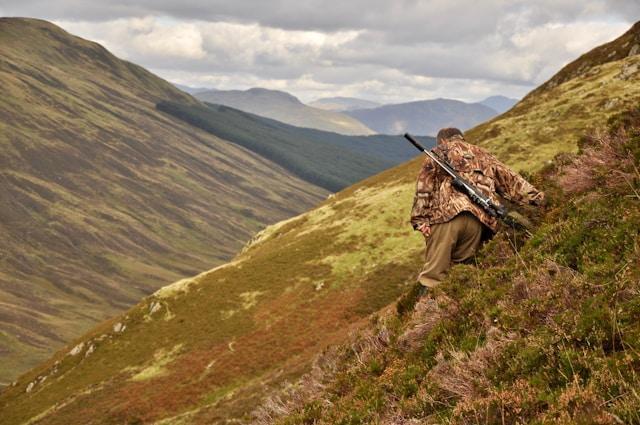
In addition, think about shoe width and surface texture. A wider shoe can spread pressure across the finger pad. Light texture can add grip without biting. In contrast, extreme shapes can catch gloves or feel sharp in recoil. Trigger choices should protect safety margins, not squeeze them in search of tiny gains. As a result, the safest upgrade is often the one that improves clarity, not the one that only drops weight.

Safety First

In summary, the best setup is the one that stays predictable when conditions get messy. A clear wall, a comfortable shoe, and a safe pull help you press straight back. Trigger choices should serve safety first, and accuracy second, every time you head outdoors in season.
 

man standing with gun in holster

Understanding the Different Types of Gun Holsters and How They’re Used

When carrying a firearm is allowed by law within a state, it obviously prompts important decisions for the one carrying that firearm.

And, we’re not just talking about the huge responsibility that comes with owning it.

But yes, obviously, responsibility and safety definitely come into play when you’re thinking about getting a gun.

And since we’re on the topic of guns, we need to talk about gun holsters. So, let’s dive right in.

The need for a gun holster

Gun holsters… they’re basically what keep your firearm secured and safe. You might think that any gun holster probably does the job, but there are certainly different types. Some offer more concealment. Some offer more accessibility.

Of course, for a person buying a gun for the first time, these differences might seem totally irrelevant. But those who carry firearms as part of their daily duties (policemen, security officers, etc) know exactly which type of holster works in which situation.

gun belt on man

Responsible possession of a firearm

Before we get to the main part, we need to remind you to take gun possession seriously. Just because you’re allowed to own one, it doesn’t mean you’re meant to treat it as a toy.

On average, there are more than 48,000 firearm fatalities in the USA annually. And, the number of injured is even higher. This reinforces the importance of responsible gun ownership.

It means you need to keep guns safely stored in your home, especially where kids may be present.

The same rules apply if you have to carry your firearm outside. If your job requires you to take your gun with you, that’s when you’ll need a holster.

Safety should always be a priority, no matter what.


Gun holsters and various options

As promised, here comes the list of the most popular types of gun holsters you’ll find in a store or online…

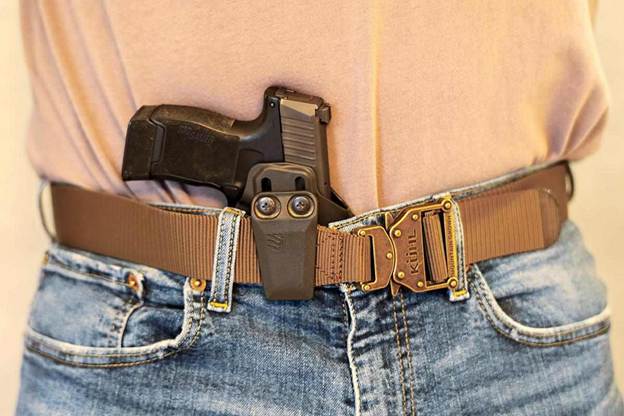
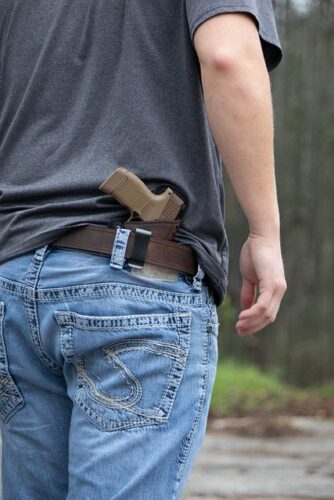
Appendix carry holsters

The first type of gun holster we’ll look at is an appendix carry holster. You’ve probably seen these quite frequently on TV in your favorite crime TV shows.

Appendix holsters are positioned inside the waistband at the front of the body.

If fast access to firearms is your priority, this is one of the top choices. You’ll be aware of your firearm at all times and it’ll be easily accessible.

appendix gun holster example

Image source: handgunsmag.com

Appendix holsters might seem a bit uncomfortable at first, but sometimes that’s an acceptable sacrifice for a practical choice. However, most modern designs are a bit more flexible and adjust more easily to your body’s movements.


Evergreen Pistol Ammo Case Compatible with 5.7/9mm/.40/.380-100 Rounds Lockable USA Made
$42.95


Buy Now
We earn a commission if you make a purchase, at no additional cost to you.
03/20/2026 10:00 pm GMT

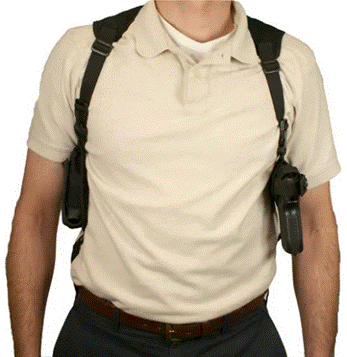
Shoulder holsters

Option number two is yet another popular one: a shoulder holster.

As the name itself suggests, they are worn over the shoulder and support the gun under the arm.

The main advantage of a shoulder holster is that the weight is equally distributed on the upper body. It’s not focused only on one part of the body like appendix holsters.

With a shoulder holster, you can easily put on a coat or jacket and hide the firearm if that’s what you prefer.

shoulder gun holster example

Image source: canarmor.ca

The way the shoulder holster works is what makes it the number one choice of most drivers or office professionals who spend long periods of time sitting in one place.

Shoulder holsters make carrying a gun a bit more comfortable. You also have different materials to choose from, with leather being one of the top choices.

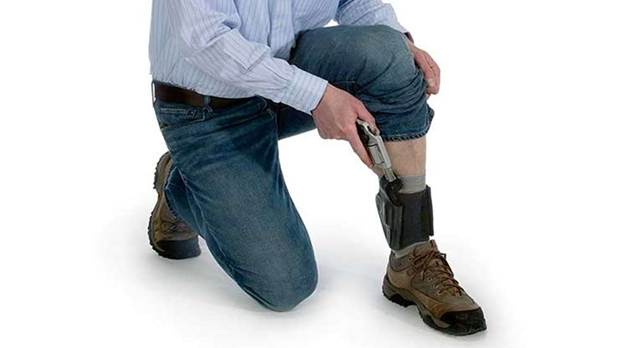
Ankle holsters

You know those scenes in movies where they check their enemy for weapons and yet the enemy still manages to get a gun out?

Well, that’s because they often have an ankle holster that’s not immediately visible and keeps the gun hidden.

Ankle holsters are basically what you would choose if concealment of the firearm is paramount. Or, if you want to bring an extra small gun just in case, as a backup carry option.

Image source: shootingillustrated.com

Those working in law enforcement and wearing formal attire often opt for this one, as it’s discreet and often overlooked by others.

However, it ankle holsters might not be the best choice for you if quick access to your firearm is your priority. An ankle holster gun is not the easiest to reach, especially if you’re not really an expert with handling a gun.


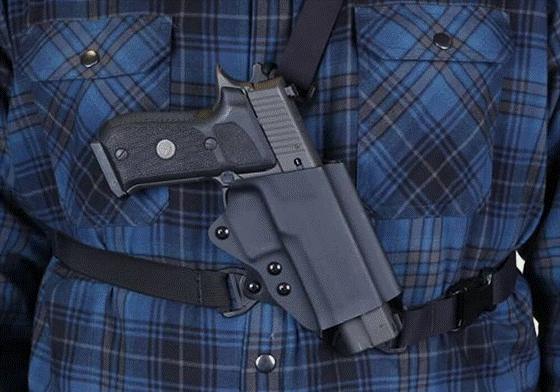
Chest holsters

With chest holsters, the gun is positioned across the upper torso, using either straps or harnesses.

Hikers, hunters and trail adventure enthusiasts often opt for this one.

A chest holster is quite practical for many reasons:

  • It doesn’t interfere with your backpack or belt
  • You can still wear heavy clothing when going hiking
  • It’s functional and accessible, allowing fast reaction in case of an emergency

Image source: sigsauer.com

This type of holster is a bit more visible, so if you’re hiking with a group of tourists, chances are there’s someone in that group that may not be comfortable with seeing a gun. In that case, you might want to opt for a more concealed option.

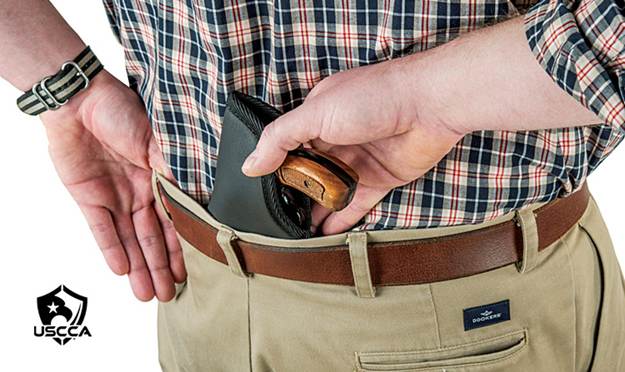
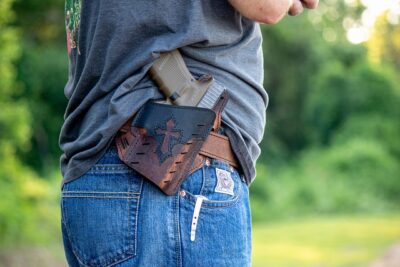
Small of back holster

And, finally, there’s a small of back holster.

These holsters are carried at the center of the lower back.

Image source: usconcealedcarry.com

When using a small of back holster, the gun is well hidden and often unnoticeable under clothing. That’s the biggest advantage of this holster actually.

But, they can be a bit uncomfortable, especially when sitting or moving a lot. Make sure to have that in mind when making your purchase.

The right material matters as well

Before we summarize everything, we also want to just quickly emphasize that you should also pay attention to the material of the gun holster you are considering, as it affects comfort and durability. As mentioned, leather is both sustainable and durable, making it a great option. It’s also soft to the touch and adds a note of style and luxury.

Apart from leather, there are also kydex holsters. They’re a bit more rigid, but that means you’ll have extra security, as your gun won’t be falling out.

Key takeaways: The right holster for you

We hope our short explanations, along with the visuals, help you know the difference between the various types of gun holster options so you’re able to choose the one best suited to your needs.

It’s also important to take the material into consideration, so make sure to ask around if you’re inexperienced and not really sure what you need.

Finally, once again, remember that safety is top priority and that’s exactly why choosing a right gun holster matters.


best pontoon boat lifts

What Are The Best Pontoon Boat Lifts? These Are the 5 Top Options

on . Posted in Blog, boating

Owning a twin-tube boat usually means you care about easy days on the water, not extra chores at the dock. A lift for a pontoon boat helps protect your investment by keeping the tubes cleaner, reducing algae buildup and making launches more predictable. It also reduces wear that occurs when a craft is left tied up all season.

But, what’s the best lift for a pontoon boat right now? Well, the answer depends on how you use your watercraft, the type of shoreline and how much hands-on work you want after each outing.

Let’s do a practical breakdown of the top options for pontoon boat lifts, starting with a standout choice for convenience-focused boaters.

The 5 Best Lifts for a Pontoon Boat in 2026

These are the top five lifts pontoon owners should consider for their unique docking situation and aquatic environment.

1. Optimus Floatport — EZ Dock

EZ Dock designed the Optimus Floatport specifically for twin-tube craft, focusing on ease of use and long-term durability, creating the best lift for a pontoon boat today. Instead of hoisting the vessel with cables or hydraulics, this system enables you to drive directly onto a floating port that remains level, regardless of changing water conditions.

Simplicity is the main appeal, as there are no motors, winches or seasonal adjustments. Once installed, docking becomes a repeatable and low-effort process that works well for frequent use. This is an appealing option for owners who prioritize convenience, minimal maintenance and consistent access throughout the season.

Key Features:

  • Drive-on, drive-off port design in 20-to-30-foot lengths
  • Durable polyethylene construction that resists rot and splintering
  • Modular layout that adapts to the different twin-based craft sizes and shorelines

2. HarborHoist®— HydroHoist®Boat Lifts

hydrohoist pontoon boat lifts

Hydrohoist® Boat Lifts is best known for its hydraulic hoists, and the HarborHoist® reflects that approach. This free-floating system raises the entire pontoon out of the water using hydraulic power.

This system operates quickly and can be controlled remotely, which appeals to marina settings and owners with heavier craft. The trade-off is that it’s a more complex setup compared to traditional ports. The option suits boaters who want machine-powered lifting with dry storage above the waterline to protect boats from damage.

Key Features:

  • Hydraulic system that hoists the craft fully out of the water
  • Galvanized steel frame for high load capacity
  • Remote-controlled operation for faster docking


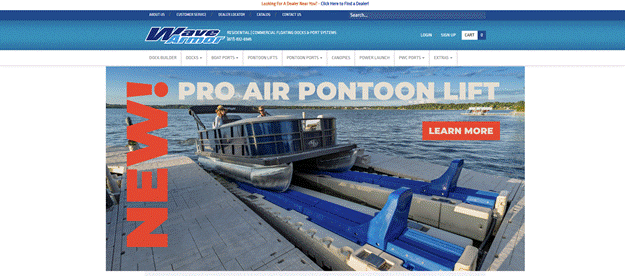
3. Pro Air Pontoon Lift — Wave Armor

Pro air pontoon boat lifts

Wave Armor offers another drive-on solution with its Pro Air Pontoon Lift. Like other floating ports, it naturally adjusts to water level changes and prioritizes ease of entry and exit. Integrated water and air chambers raise and lower the entrance.

The design is optimized for two-tube boats ranging in length from 18 to 24 feet. Additional buoyancy boosters are available for heavier vessels. The company emphasizes alignment and visual finish, making this a popular choice for owners who want drive-on functionality with added design details. The Pro Air Series controller is available in either battery or AC power functionality, allowing for the raising and lowering of the entrance with a simple lever.

Key Features:

  • Drive-on port design
  • Adjustable guide wheels for craft alignment
  • Textured surface finish for durability and appearance

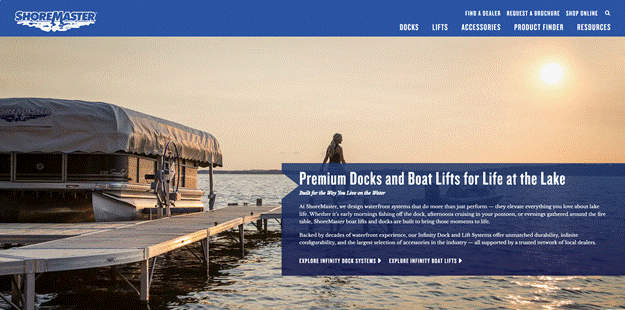
4. 4010PTN Pontoon Lift — ShoreMaster

4010PTN Pontoon Lift — ShoreMaster

ShoreMaster takes a more traditional approach with its product lineup. These systems use aluminum frames and are available in vertical or hydraulic configurations. Choose between a winch or a motorized system.

Canopy length is 23 to 35 feet long. The canopy is available in two frame styles and various colors, offering greater customization options. The framework is constructed from heavy-duty marine-grade aluminum.

Key Features:

  • Joints that are dime-welded and through-bolted for maximum rigidity
  • Low maintenance design due to welded seams, reducing bolts
  • UHMW rollers that are abrasion-resistant and require no lubrication

AWSUM Inflatable Floating Dock Air Dock Platform, 6ft x 5ft Floating Island Raft with Non-Slip Surface for Lake Pool Beach Ocean
$129.99


Buy Now
We earn a commission if you make a purchase, at no additional cost to you.
03/20/2026 11:05 pm GMT

5. SUNLIFT X — SUNSTREAM

Sunlift X sunstream pontoon boat lift

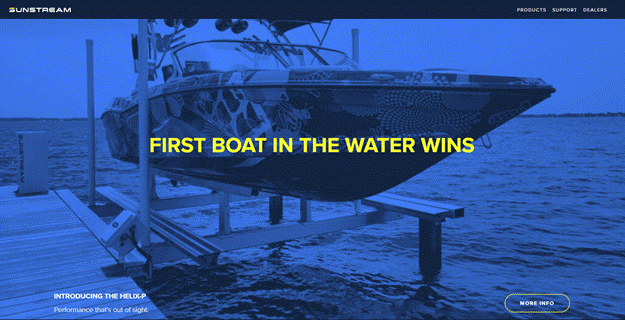
SUNSTREAM epitomizes speed and automation. The SUNLIFT X is a freestanding hydraulic lift engineered to raise boats in seconds for rapid departures. The hoist range can accommodate vessels up to 16 feet in length, and includes two to four cylinders for hydraulic elevation. The SPS system allows up to 24 horsepower, enabling increased raising and lowering speed.

The technology-forward design appeals to owners who value seamless transitions from dock to water and are willing to invest in a more advanced system.

Key Features:

  • High-speed hydraulic elevation system
  • Remote-controlled operation
  • Remote connectivity to controls via a Bluetooth transmitter

Which Pontoon Boat Lift Is Right for You?

A side-by-side comparison reveals which twin-tube vessel elevation system is best suited for your specific setting and needs.

Brand NameLift TypePrimary AdvantageMaintenance LevelBest For
EZ Dock Optimus FloatportFloating drive-on portSimple, mechanical-free dockingLowFrequent use and minimal upkeep
HydroHoist HarborHoistHydraulic systemFast, full elevation out of waterModerateHeavy flat-deck vessels and marinas
Wave Armor Pro Air Pontoon LiftFloating drive-on portAdjustable alignmentLowDrive-on enthusiasts wanting flexibility
ShoreMaster Pontoon LiftVertical or hydraulicTraditional designModerateStable water levels
SUNSTREAM SUNLIFT XRemote-controlled hydraulic optionHigh-speed operationModerate to highTech-focused boaters


Choosing the Best Pontoon Boat Lifts: What Matters Most?

Twin-tube owners should consider real-world factors in addition to the spec sheets.

CriteriaWhy It Matters
Durability and materialsMarine environments are tough, and owners prioritize systems built to handle constant water exposure and seasonal changes.
Ease of useA hoist should make boating easier, not add steps. Simple operation ranks highest.
Design approachDrive-on ports, hydraulic lifts and traditional vertical systems all solve different problems.
Brand track recordEstablished manufacturers with proven designs are more credible than untested options.

What Are the Different Types of Pontoon Boat Lifts?

When comparing brands, it helps to understand the main categories available.

  • Floating drive on ports: These allow you to guide your watercraft directly onto an adaptable platform. Water level changes don’t require adjustment, which appeals to many lakefront owners.
  • Hydraulic lifts: These systems raise the entire vessel out of the water using hydraulic power, often controlled remotely.
  • Cable or vertical options: A more traditional option that uses cables and a winch to raise the watercraft into a cradle.

What Should I Consider When Buying a Pontoon Boat Lift?

Match the system to your shoreline, water level changes and boating habits. Flexible ports adapt naturally to changing surface conditions, while fixed systems may need manual or seasonal adjustment. Consider your vessel’s weight so you don’t buy something that lacks the right carrying capacity.

For frequent boaters, ease of use matters more than nice-to-have add-ons, so consider your daily routine. Hoists with fewer mechanical parts often need less long-term attention, which eases maintenance requirements.

Pontoon Boat Lift FAQ

Q: What Type of Lift Do I Need for a Pontoon Boat?

A: The right hoist depends on your water conditions and how you use your boat. Floating drive-on ports are suitable for changing water levels and frequent use, while hydraulic or vertical systems are ideal for owners who want full hoisting from the water.

Q: Is a Floating Port or Hydraulic Lift Better for a Pontoon Boat?

A: Neither is universally better. Non-fixed ports focus on simplicity with low maintenance, while hydraulic options offer powered hoisting and dry storage. The best option depends on how much hands-on effort and upkeep you’re comfortable with.

Q: Does a Pontoon Boat Lift Require a Lot of Maintenance?

A: Maintenance varies by brand type. Floating drive-on ports typically need less ongoing attention since they don’t rely on motors or cables. Hydraulic and vertical options may require periodic inspections and servicing over time.

Making the Right Choice for Your Dock

people on pontoon boat

Floating drive-on ports are the go-to choice for those who prioritize convenience and long-term ease. If raising the boat completely clear of the water is a priority, hydraulic and vertical options are ideal. At the end of the day, the right choice is the one that fits how you actually use your watercraft, season after season.

Happy and safe boating!